Bladderwrack (Fucus vesiculosus) is a brown seaweed that grows along cold coastlines and has long been used in folk traditions as a source of iodine, with proponents claiming it supports thyroid function. The core idea has a real biological basis: the thyroid gland needs iodine to make thyroid hormones, and bladderwrack is naturally iodine-rich. But ‘contains iodine’ is not the same as ‘safely supports thyroid health,’ and the gap between those two claims is where most of the marketing overreach happens.
This article separates what’s actually documented about bladderwrack’s iodine content from the broader wellness claims attached to it online. The honest summary up front: the clearest, oldest evidence here concerns bladderwrack’s iodine-containing compounds themselves, not clinical outcomes in people with thyroid conditions. That distinction matters, especially because too much iodine can be just as disruptive to thyroid function as too little.
Key Takeaways
- Bladderwrack is iodine-rich, and iodine is essential for thyroid hormone production, this is the real basis for the thyroid-support claim.
- Bladderwrack’s iodinated compounds, including diiodotyrosine, have been documented chemically [1], but this is compositional analysis, not clinical proof it improves thyroid function.
- Excess iodine can worsen thyroid dysfunction just as easily as too little, and bladderwrack’s iodine content is not standardized across products.
- Unregulated wildcrafted seaweed carries heavy metal contamination risk depending on harvest waters and processing.
- Anyone with a thyroid condition, on thyroid medication, or pregnant/breastfeeding should consult a doctor before using bladderwrack.
Why Bladderwrack Is Linked to Thyroid Function
The thyroid gland uses iodine as a raw material to build the hormones thyroxine (T4) and triiodothyronine (T3), which regulate metabolism, energy, and body temperature. In populations without adequate dietary iodine, thyroid function can suffer, which is why iodine-rich foods and supplements, including seaweeds like bladderwrack, get proposed as thyroid support.
Bladderwrack belongs to a family of brown seaweeds known to concentrate iodine and related iodinated compounds from seawater. Older chemical analyses of Baltic Sea Fucus specimens documented the presence of diiodotyrosine, an iodine-containing amino acid derivative, in the seaweed’s tissue [1]. Diiodotyrosine is chemically related to the building blocks the thyroid itself uses to synthesize T4 and T3, which is part of why bladderwrack has historically been associated with thyroid physiology.
It’s worth being precise about what that finding does and doesn’t establish: it confirms bladderwrack contains iodinated organic compounds, consistent with it being an iodine-dense food. It does not demonstrate that eating bladderwrack normalizes thyroid hormone levels, treats hypothyroidism, or improves any measured clinical outcome in humans.

What the Evidence Does and Doesn't Show
The chemical analysis of diiodotyrosine in Baltic Sea Fucus [1] is a compositional study, the kind of work that tells you what’s in the plant, not a clinical trial testing whether bladderwrack improves thyroid function in people. That’s an important distinction for anyone considering bladderwrack as a supplement rather than as a subject of academic interest.
Much of what circulates online about bladderwrack, thyroid ‘boosting,’ metabolism, or weight loss goes well beyond what compositional chemistry can support. Iodine content alone doesn’t tell you how much is bioavailable from a given product, how consistently a supplement delivers that amount batch to batch, or what happens to thyroid hormone levels in someone taking it daily for months. None of that has been established in the material available here, and readers should treat sweeping claims about bladderwrack ‘fixing’ thyroid problems as unsupported.

The Iodine Double-Edged Sword
Iodine is a case where more is not automatically better. The thyroid operates within a fairly narrow iodine range, too little impairs hormone production, but too much can also disrupt thyroid function, triggering or worsening both hypothyroidism and hyperthyroidism in susceptible people. This is sometimes called the Wolff-Chaikoff effect in clinical literature: excess iodine can paradoxically suppress thyroid hormone output.
Bladderwrack is one of the most iodine-concentrated seaweeds sold as a supplement, and unlike a regulated medication, iodine content in bladderwrack products is not standardized. Two bottles labeled similarly can contain very different iodine doses depending on where the seaweed was harvested, the season, and how it was processed. That variability is the practical risk: someone could unknowingly consume several times the recommended daily iodine intake from a single serving.
This risk is highest for people who already have thyroid disease (Hashimoto’s, Graves’, nodules), are pregnant or breastfeeding (where iodine needs and sensitivities shift), or are taking thyroid medication like levothyroxine, where destabilizing iodine intake can throw off carefully calibrated dosing.

Sourcing and Contamination Concerns
Beyond iodine variability, wildcrafted seaweed products, including bladderwrack and the related Chondrus crispus (Irish sea moss), carry a documented risk of heavy metal contamination, since seaweed absorbs whatever is in its growing water, including arsenic, lead, and cadmium. This risk depends heavily on harvest location and how rigorously a brand tests its raw material.
For anyone considering a bladderwrack product, third-party testing for both iodine content and heavy metals is a more meaningful signal of safety than marketing language about ‘wildcrafted’ or ‘ocean-sourced’ purity. A product without published testing data is an unknown quantity on both fronts.
Who Should Be Cautious or Avoid It
People with any diagnosed thyroid condition, whether hypothyroid, hyperthyroid, autoimmune (Hashimoto’s or Graves’), or with thyroid nodules, should not add bladderwrack without first talking to the clinician managing that condition. The same caution applies to anyone on thyroid replacement medication, since an unpredictable iodine load can interfere with dose stability.
Pregnant and breastfeeding individuals have distinct iodine requirements and should not use bladderwrack or other iodine-concentrated seaweed supplements without medical guidance, given how sensitive fetal and infant thyroid development is to iodine excess or deficiency.
For people without a thyroid condition considering bladderwrack for general mineral intake, the reasonable approach is to check the supplement’s labeled iodine content against the recommended daily intake, favor products with third-party testing, and avoid stacking it with other iodine sources (iodized salt, kelp, other seaweed supplements) without accounting for the total.
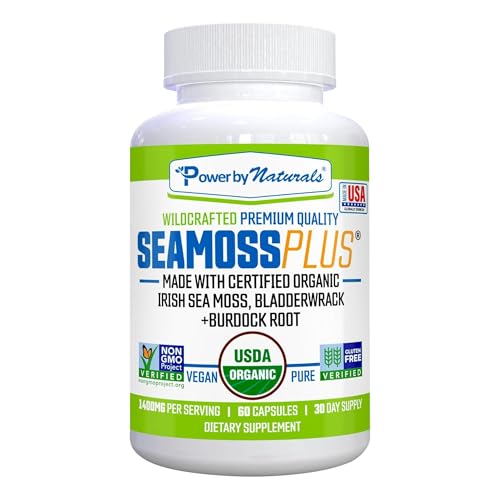

🛒 Where to Buy Sea Moss & Bladderwrack
- CleanseParasites Intra-Cellular Superfood Editor’s Pick
Contains sea moss and bladderwrack alongside black cumin seed and other superfood ingredients. - American Standard Supplements Organic Sea Moss, Bladderwrack & Burdock Root Capsules
capsules, 1200mg sea moss / 1200mg bladderwrack / 225mg burdock root per serving, 120 capsules — High-dose transparent-label blend, vegan, non-GMO, made in USA; clearly stated per-ingredient milligrams rather than a proprietary blend - Secret Element Sea Moss Capsules with Burdock Root, Bladderwrack & Muira Puama
capsules, 120 capsules — Budget-friendly 4-ingredient blend, gluten-free, made in USA - Nutrivein Organic Sea Moss 1600mg with Bladderwrack & Burdock
capsules, 1600mg sea moss per serving plus bladderwrack and burdock — Widely available mid-tier brand, marketed for immune/digestive/thyroid/skin support claims
As an Amazon Associate we earn from qualifying purchases. Quality varies widely — always choose a product with a published third-party test (COA) before buying.
A Note on the Evidence
This article is informational, not medical advice, and the underlying evidence for bladderwrack’s thyroid effects in humans is limited to chemical composition data, not clinical trials. Anyone with a thyroid condition, taking thyroid medication, or who is pregnant or breastfeeding should consult a doctor before using bladderwrack, and any product should ideally carry third-party testing for both iodine content and heavy metals.
Frequently Asked Questions
Does bladderwrack actually support thyroid health?
Bladderwrack is a natural source of iodine, and iodine is required for thyroid hormone production, so there’s a plausible mechanism. Chemical analysis confirms bladderwrack contains iodinated compounds like diiodotyrosine [1], but there’s no clinical evidence here showing it improves thyroid function or treats a thyroid condition in people.
Can bladderwrack cause thyroid problems instead of helping?
Yes. Excess iodine intake, which is easy to get from an unstandardized bladderwrack supplement, can disrupt thyroid hormone production and trigger or worsen both hypothyroidism and hyperthyroidism, particularly in people with existing thyroid disease.

Is bladderwrack safe if I take levothyroxine?
Not without medical supervision. An unpredictable iodine dose from bladderwrack can interfere with how your thyroid medication is calibrated. Talk to your prescriber before adding it.
How much iodine is in bladderwrack?
It varies significantly by product, harvest location, season, and processing, since bladderwrack is not a standardized supplement. This variability is a key reason to check for third-party testing on any product rather than assuming a consistent dose.
Is wildcrafted sea moss or bladderwrack safer than a processed supplement?
Not inherently. Wildcrafted seaweed can carry heavy metal contamination (arsenic, lead, cadmium) depending on the waters it grew in, and ‘wildcrafted’ labeling says nothing about testing. Third-party lab results are a more reliable safety signal than sourcing language.
Should pregnant women take bladderwrack for thyroid support?
This should only be done under a doctor’s guidance. Iodine needs shift during pregnancy and breastfeeding, and both fetal and infant thyroid development are sensitive to iodine excess as well as deficiency.
References
- POHLOUDEK-FABINI R et al. [ON THE PRESENCE OF DIIODOTYROSINE IN BALTIC SEA FUCUS]. Die Pharmazie (1965). PMID 14289556
These statements have not been evaluated by the Food and Drug Administration. This information is not intended to diagnose, treat, cure, or prevent any disease. Content is for informational purposes only and is not medical advice; consult a qualified healthcare provider before starting any supplement. As an Amazon Associate we earn from qualifying purchases.
