Sea Moss Smoothie Recipes That Don’t Taste Like the Ocean: Practical Dosing in Real Meals
The biggest reason people quit sea moss isn’t the science, it’s the taste. Here’s how to actually get a consistent dose down without gagging.

The biggest reason people quit sea moss isn’t the science, it’s the taste. Here’s how to actually get a consistent dose down without gagging.
No research sets a best time to take sea moss. Why people choose morning, evening or with meals, and what matters far more than timing.
Sea moss from Irish famine food to Caribbean tradition to Dr. Sebi and social media, and why that history still shapes what is sold today.
Compare wildcrafted and farmed sea moss for heavy metal, radionuclide, and iodine variability. Learn why third-party testing matters more than marketing claims.
Evidence review on sea moss (Chondrus crispus) and bladderwrack for skin: topical gel masks vs. oral supplements, acne, barrier repair, and safety gaps.
Learn how to calculate safe sea moss dosage based on iodine content and the Tolerable Upper Intake Level (UL). Evidence-based guide with safety considerations.
An evidence-based comparison of sea moss and bladderwrack supplement forms, covering absorption, dosing consistency, cost, and safety considerations.
Much of the sea moss sold online is Gracilaria, not Chondrus crispus. How the two red algae differ in taxonomy, chemistry and product quality.
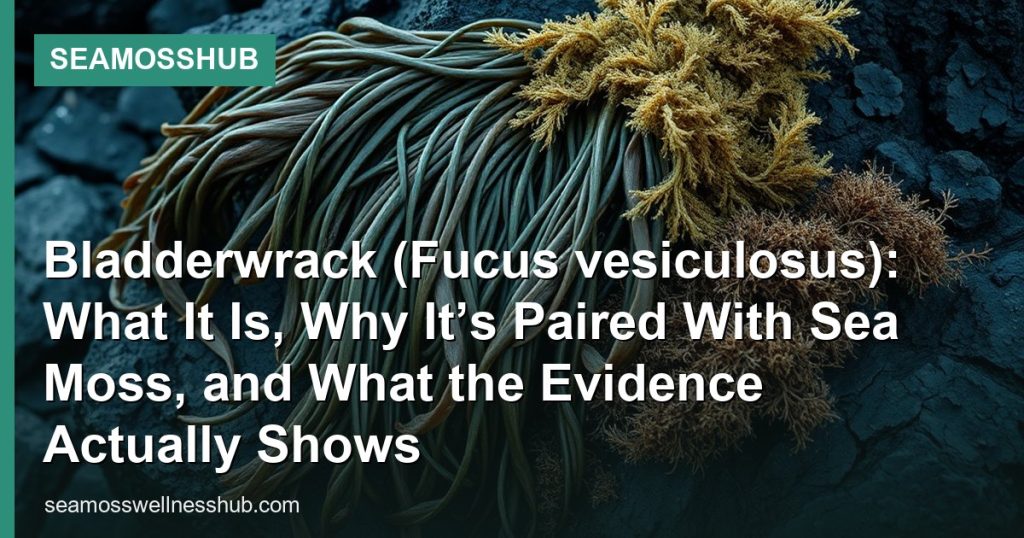
Bladderwrack explained: its iodine and fucoidan content, why it is paired with sea moss, the safety risks, and why sourcing matters most.
A plain-language guide to bladderwrack (Fucus vesiculosus): what it is, its traditional uses, iodine content, thyroid considerations, and safety notes.
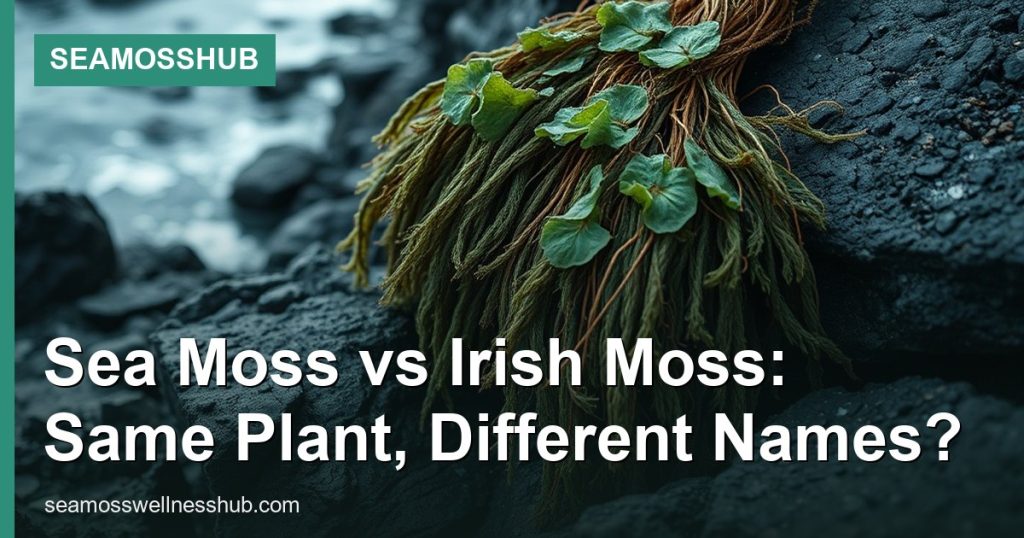
Sea moss and Irish moss both usually mean Chondrus crispus. Here’s when the names overlap, when they don’t, and what that means for what’s in the jar.
Sea moss and bladderwrack are iodine-rich seaweeds that can trigger thyroid dysfunction or goiter in some people. Here’s what the evidence says.