Sea Moss for Hair Growth: What the Mineral and Sulfated Polysaccharide Evidence Actually Shows
Sea moss shows up in every hair-growth roundup online. Here’s what the underlying mineral and thyroid research actually supports, and what it doesn’t.
Sea moss shows up in every hair-growth roundup online. Here’s what the underlying mineral and thyroid research actually supports, and what it doesn’t.
Fertility, libido, detox, alkaline balance. We graded the ten most common TikTok sea moss claims against what’s actually been published.
TikTok claims sea moss cures anemia. The mineral content is real, but the bioavailability question is where the claim gets complicated.
Sea moss has barely been tested against placebo. What such a trial would need to show, where indirect evidence exists, and what to expect.
Very little human trial data exists on whole sea moss. What has actually been studied, and how to read the marketing claims built on it.
How sea moss works in the body: iodine and thyroid hormone synthesis, carrageenan in the gut, mineral cofactors and antioxidant content.
Comparing wildcrafted, ocean-farmed, and pool-grown sea moss: iodine variability, heavy metal risks, polysaccharide profiles, and ecological impact.
Compare wildcrafted and farmed sea moss for heavy metal, radionuclide, and iodine variability. Learn why third-party testing matters more than marketing claims.
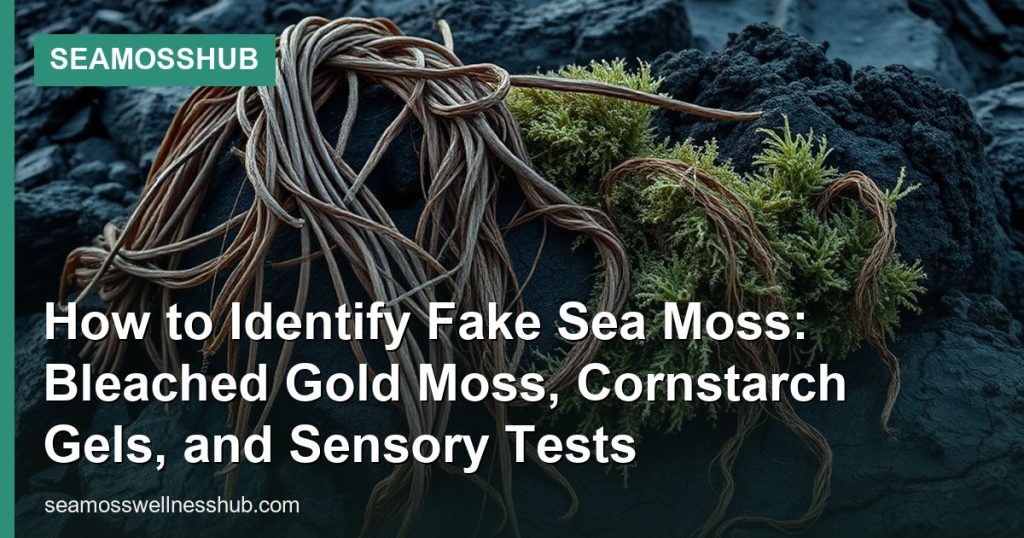
Learn to spot fake sea moss using visual, smell, and texture tests. Understand risks of bleached gold moss and cornstarch-adulterated gels.
A science-based breakdown of sea moss, bladderwrack, and burdock root—their nutrient profiles, proposed mechanisms, iodine risks, and contamination concerns.
Sea moss iodine varies widely and the thyroid has a narrow safe window. How sufficiency and autoimmune flare risk both depend on the dose.
Evidence review on sea moss (Chondrus crispus) and bladderwrack for skin: topical gel masks vs. oral supplements, acne, barrier repair, and safety gaps.