Natural Sources of Sea Moss: How to Get It Through Diet (2026)
How to eat sea moss as food rather than a supplement: dried fronds, homemade gel, the Caribbean sea moss drink, and use as a thickener.
How to eat sea moss as food rather than a supplement: dried fronds, homemade gel, the Caribbean sea moss drink, and use as a thickener.
Sea moss from Irish famine food to Caribbean tradition to Dr. Sebi and social media, and why that history still shapes what is sold today.
How sun-drying, gel-making and milling change the iodine, polysaccharides and minerals in sea moss, plus what each method means for safety.
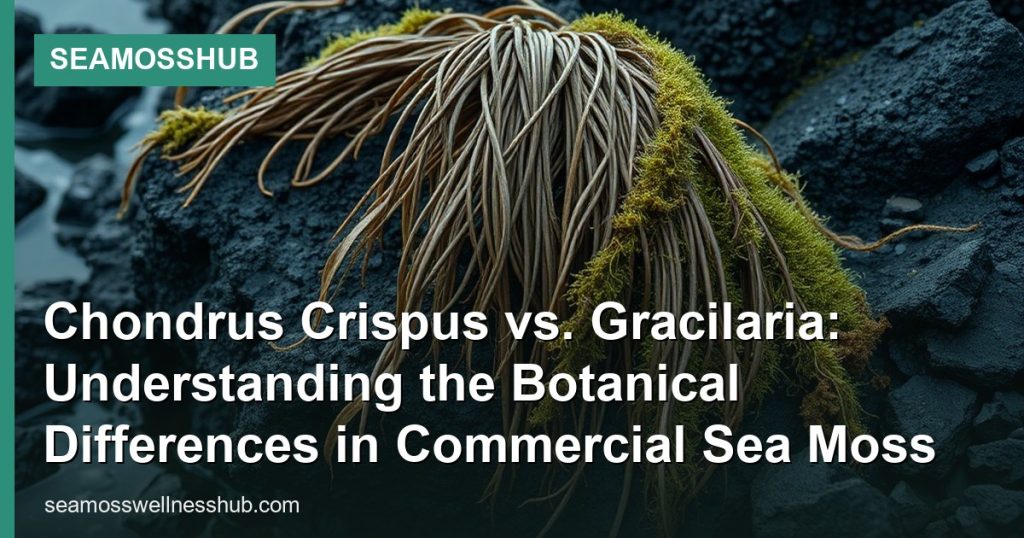
Much of the sea moss sold online is Gracilaria, not Chondrus crispus. How the two red algae differ in taxonomy, chemistry and product quality.

Explore the history of Irish moss (Chondrus crispus) in Caribbean culture, from survival food to its role in Dr. Sebi’s dietary philosophy.
Bladderwrack explained: its iodine and fucoidan content, why it is paired with sea moss, the safety risks, and why sourcing matters most.
What sea moss (Chondrus crispus) actually is, its traditional uses, nutrient claims, and the safety issues around iodine and heavy metals.
A plain-language guide to bladderwrack (Fucus vesiculosus): what it is, its traditional uses, iodine content, thyroid considerations, and safety notes.
Sea moss and Irish moss both usually mean Chondrus crispus. Here’s when the names overlap, when they don’t, and what that means for what’s in the jar.
A clear look at sea moss’s actual nutrient profile, its fiber and carrageenan content, and what’s proven versus marketed. Not medical advice.

How sea moss went from a Caribbean household staple to a Dr. Sebi-linked wellness product to a TikTok trend, and what changed (and didn’t) along the way.

A grounded look at bladderwrack’s iodine, fucoidan, fiber, and mineral content, plus the safety issues that matter more than marketing claims.