Sea moss (Chondrus crispus, also called Irish moss) has become a fixture of gut-health content online, usually paired with claims about “healing” the gut lining or curing digestive disorders. The more measured version of the story is about its polysaccharides, including carrageenans and related fibers, and whether they can act as prebiotics, substrates that feed beneficial gut bacteria rather than being digested directly by the body.
That question has actual research behind it, mostly in vitro (test-tube or simulated-gut models) and small animal studies rather than large human trials. This article covers what red seaweed polysaccharides are, what fermentation studies show about their effect on gut bacteria, and where the evidence stops well short of proving sea moss improves gut health in a real person eating it.
Key Takeaways
- Sea moss (Chondrus crispus) contains sulfated polysaccharides, including carrageenan, that resist digestion; carrageenan-oligosaccharides can be fermented by gut bacteria, but a review of algal prebiotics found the evidence for sulfated polysaccharides more questionable than for alginate or laminaran, and carrageenan use is limited by safety concerns [1]
- An in vitro human gut model found red seaweeds including Chondrus crispus modulated gut microbiota composition and activity [2]
- An animal study found cultivated Chondrus crispus produced prebiotic-like effects on colonic microbiota and metabolites, comparable in some respects to FOS [3]
- Marine polysaccharides are fermented by gut bacteria into short-chain fatty acids and other metabolites that influence intestinal ecology [4]
- No human clinical trials have tested sea moss supplements directly for digestive symptom outcomes; claims of “gut healing” go well beyond current evidence
What's actually in sea moss that might affect the gut
Chondrus crispus is a red seaweed whose cell walls are rich in sulfated polysaccharides, primarily carrageenan, along with smaller amounts of other complex carbohydrates. Unlike starches, these polysaccharides are largely resistant to digestion by human enzymes in the small intestine, meaning they pass through to the colon largely intact.
Once in the colon, these fibers become available to resident gut bacteria as a fermentation substrate. This is the same basic principle behind prebiotics like inulin or fructo-oligosaccharides (FOS): the fiber itself isn’t the point, what gut bacteria do with it is. A review of algal polysaccharides as prebiotics lays out this general mechanism while also flagging important caveats about how consistently it holds up across different seaweed species and preparations [1].

What in vitro human gut models show
A 2025 study used an in vitro model of the human gut to test how three red seaweeds, including Chondrus crispus, affected gut microbiota composition and activity. The researchers found that these seaweeds modulated the microbial community, shifting the presence and activity of specific bacterial groups when used as a fermentation substrate [2].
This kind of study is useful for understanding mechanism, seaweed polysaccharides can be fermented and can shift bacterial populations in a controlled model, but it isn’t the same as evidence that eating sea moss changes a living person’s gut microbiome in a measurable, health-relevant way. In vitro models simplify a system that in the human body involves diet variability, transit time, individual microbiome composition, and the food matrix the seaweed is consumed in.
Animal research on cultivated Chondrus crispus as a prebiotic
A 2015 study fed animals a diet supplemented with cultivated Chondrus crispus and compared it against a diet supplemented with FOS, a well-established prebiotic fiber. The study looked at host immune markers, colonic microbiota composition, and gut microbial metabolites, and found that Chondrus crispus supplementation produced prebiotic-like effects on the colonic microbiota and its metabolic output, in some respects comparable to FOS [3].

This is one of the more direct pieces of evidence that whole Chondrus crispus, not just an isolated extract, can behave like a prebiotic fiber in a living digestive system. It’s still an animal study, though, and animal gut physiology and microbiome composition differ from human in ways that don’t always translate directly. It hasn’t been replicated in human dietary trials specific to sea moss.

How marine polysaccharides get fermented and what that means downstream
A broader review of gut microbiota fermentation of marine polysaccharides describes the general process: specific bacterial species and their enzymes break down complex marine fibers (including carrageenan-type polysaccharides) into short-chain fatty acids and other metabolites, which in turn interact with intestinal ecology, barrier function, and the surrounding microbial community [4].
This overview reinforces that marine polysaccharides as a category, not sea moss specifically, are fermentable substrates with downstream effects on gut ecology. It also underscores that this is a mechanistic, ecosystem-level story rather than a claim about clinical outcomes like reduced bloating, improved regularity, or resolved digestive disease, none of which have been directly tested for sea moss in humans.
The pros and cons of algal polysaccharides as prebiotics
The prebiotic-potential review is worth returning to for its “cons” side as much as its “pros” side. It notes that structural variability between seaweed species, harvest conditions, and processing methods makes it hard to generalize findings from one algal polysaccharide (or one study) to “seaweed” broadly, including sea moss sold as a raw or gel supplement [1].
It also raises a point rarely mentioned in consumer content: some algal polysaccharides, carrageenan among them, have been studied for both prebiotic-like fermentation effects and, in certain forms and doses, potential to provoke gut inflammation or irritate a sensitive gut lining. The research area is genuinely mixed rather than uniformly positive, which is a more honest picture than “sea moss heals your gut.”
Where the evidence stops and marketing claims begin
None of the four studies referenced here were conducted in humans eating commercial sea moss gel, powder, or capsules over a period of time and having their symptoms or microbiome tracked. The evidence base is: one human-gut in vitro fermentation model [2], one animal feeding study on cultivated Chondrus crispus [3], and two reviews synthesizing mechanism and caveats across marine polysaccharides generally [1][4].
That’s a real but early-stage evidence base, sea moss polysaccharides plausibly act as a prebiotic substrate, but there is no published human clinical trial demonstrating that sea moss supplementation resolves bloating, leaky gut, IBS, or other digestive complaints, despite these being common claims in social media and supplement marketing.

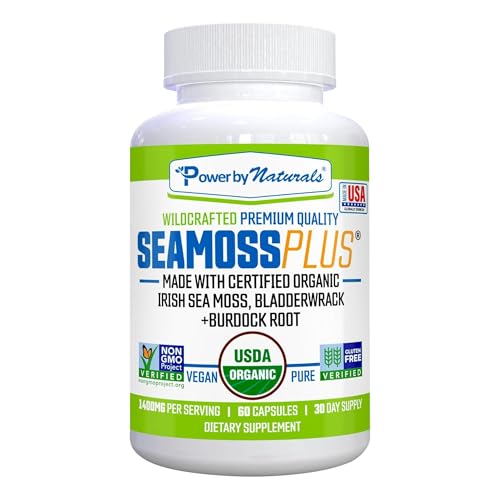
🛒 Where to Buy Sea Moss & Bladderwrack
- CleanseParasites Intra-Cellular Superfood Editor’s Pick
Contains sea moss and bladderwrack alongside black cumin seed and other superfood ingredients. - American Standard Supplements Organic Sea Moss, Bladderwrack & Burdock Root Capsules
capsules, 1200mg sea moss / 1200mg bladderwrack / 225mg burdock root per serving, 120 capsules — High-dose transparent-label blend, vegan, non-GMO, made in USA; clearly stated per-ingredient milligrams rather than a proprietary blend - Secret Element Sea Moss Capsules with Burdock Root, Bladderwrack & Muira Puama
capsules, 120 capsules — Budget-friendly 4-ingredient blend, gluten-free, made in USA - Nutrivein Organic Sea Moss 1600mg with Bladderwrack & Burdock
capsules, 1600mg sea moss per serving plus bladderwrack and burdock — Widely available mid-tier brand, marketed for immune/digestive/thyroid/skin support claims
As an Amazon Associate we earn from qualifying purchases. Quality varies widely — always choose a product with a published third-party test (COA) before buying.

A Note on the Evidence
This evidence is limited to in vitro models, animal studies, and mechanistic reviews, not human clinical trials of sea moss supplements, so claims about resolving digestive symptoms are not supported. Sea moss products are also unstandardized and can carry heavy metal contamination risk depending on sourcing; anyone with a digestive disorder, thyroid condition, or who is pregnant should talk to a doctor before adding sea moss, and this is not a substitute for medical advice.
Frequently Asked Questions
Does sea moss act as a prebiotic?
Its polysaccharides, mainly carrageenan-type fibers, resist digestion and can be fermented by gut bacteria in ways consistent with prebiotic activity, shown in an in vitro human gut model and an animal feeding study [2][3]. This hasn’t been confirmed in human clinical trials specific to sea moss supplements.
Can sea moss change my gut microbiome?
Lab and animal research suggests red seaweed polysaccharides, including from Chondrus crispus, can shift gut bacterial populations and their metabolic output [2][3]. Whether eating commercial sea moss products produces a similar, health-relevant shift in a real person hasn’t been directly studied.
Is sea moss the same as taking a fiber supplement like FOS?
An animal study found Chondrus crispus supplementation had prebiotic-like effects on colonic microbiota comparable in some respects to fructo-oligosaccharides (FOS), a well-studied prebiotic [3]. That’s one animal study, not proof of equivalence in humans.

Can sea moss's fiber upset digestion instead of helping it?
Reviews of algal polysaccharides note that some, including carrageenan-family compounds, have been studied for potential to irritate the gut lining in certain forms or amounts, alongside their prebiotic-like fermentation effects, so the research is mixed rather than uniformly positive [1].
What happens to sea moss fiber once it reaches the colon?
Gut bacteria ferment marine polysaccharides into short-chain fatty acids and other metabolites that interact with intestinal ecology and barrier function, a general process described for marine polysaccharides as a category [4].
Is there human clinical trial evidence that sea moss improves gut health?
No. The current evidence is limited to an in vitro human gut fermentation model, an animal feeding study, and mechanistic reviews [2][3][1][4]. No published trial has tested sea moss supplements in humans for digestive outcomes.
References
- Gotteland M et al. The Pros and Cons of Using Algal Polysaccharides as Prebiotics. Frontiers in nutrition (2020). PMID 33072794
- López-Santamarina A et al. Modulatory effects of red seaweeds (Palmaria palmata, Porphyra umbilicalis and Chondrus crispus) on the human gut microbiota via an in vitro model. Food chemistry (2025). PMID 39987804
- Liu J et al. Prebiotic effects of diet supplemented with the cultivated red seaweed Chondrus crispus or with fructo-oligo-saccharide on host immunity, colonic microbiota and gut microbial metabolites. BMC complementary and alternative medicine (2015). PMID 26271359
- Shang Q et al. Gut microbiota fermentation of marine polysaccharides and its effects on intestinal ecology: An overview. Carbohydrate polymers (2018). PMID 29111040
These statements have not been evaluated by the Food and Drug Administration. This information is not intended to diagnose, treat, cure, or prevent any disease. Content is for informational purposes only and is not medical advice; consult a qualified healthcare provider before starting any supplement. As an Amazon Associate we earn from qualifying purchases.
