Sea moss (Chondrus crispus / Irish moss) is sold in two very different formats: homemade or store-bought gel, and standardized capsules or powders. People often assume one form is ‘more absorbable’ or ‘more potent’ than the other, but the honest answer is that neither format has been directly studied head-to-head for bioavailability in humans. What differs in practice isn’t absorption biology so much as dosing consistency, iodine exposure, and how much of the plant’s fiber-like polysaccharides you’re actually consuming per serving.
This article breaks down what’s knowable about gel versus capsule dosing, why iodine content is the real variable that matters for safety, and why ‘more absorption’ claims made about either format are largely marketing rather than measured fact. None of this is medical advice, and if you have a thyroid condition or take thyroid medication, the format you choose matters less than talking to your doctor first.
Key Takeaways
- No published research directly compares gel versus capsule absorption for sea moss; claims that one form is ‘more bioavailable’ are not supported by clinical evidence.
- Capsules offer more consistent, labeled dosing per serving; homemade gel dosing varies based on preparation ratios and the concentration of the original seaweed.
- Iodine content, not format, is the primary safety variable, and it varies widely by seaweed species, harvest location, and whether bladderwrack is blended in.
- Heavy metal contamination risk from unregulated or wildcrafted sea moss applies equally to gel and capsule products, since it originates at harvest and processing.
- Anyone with thyroid conditions, anyone pregnant, or anyone on levothyroxine should treat both gel and capsule sea moss with the same caution and consult a doctor before use.
What's Actually Different Between Gel and Capsules
Sea moss gel is made by soaking the dried seaweed, then blending it into a thick, mucilaginous paste. A tablespoon of gel is mostly water and the seaweed’s own soluble fiber (carrageenan-family polysaccharides), with a variable amount of actual dried seaweed solids depending on how concentrated the batch is. Capsules and powders, by contrast, are made from dried, ground seaweed with the water removed, so a single capsule contains a fixed, known weight of raw material.
This is the core practical difference: gel dosing is inherently inconsistent unless you know exactly how much dried moss went into the batch and how much water was added, while a capsule’s label tells you the milligram amount per serving. Neither format has been shown in clinical research to be absorbed differently by the gut; the seaweed’s minerals, iodine, and polysaccharides are still delivered in a food matrix either way, just at different concentrations per spoonful or capsule.

Why Iodine Content Is the Variable That Actually Matters
The most clinically relevant compound in sea moss (and especially in bladderwrack, which is sometimes blended into sea moss products) is iodine. Iodine content in seaweed varies enormously by species, harvest location, and processing, which means the same ‘one tablespoon of gel’ or ‘two capsules’ serving can deliver very different iodine doses from one brand or batch to the next [1].
This variability is why dosing format matters less than sourcing and labeling. A capsule product that lists milligrams of dried seaweed per serving still doesn’t tell you the iodine content unless the label specifically states it, and homemade gel gives you even less certainty, since you likely don’t know the iodine concentration of the raw seaweed you started with. Anyone with thyroid dysfunction, anyone pregnant, or anyone on levothyroxine should treat both formats with the same caution, because the risk comes from unpredictable iodine load, not from the gel-versus-capsule format itself.

What's Actually Been Studied vs What Hasn't
Direct clinical evidence on sea moss specifically is limited. Most of the human research in this space concerns bladderwrack’s iodine and thyroid effects, and separately, preliminary research on fucoidan (a polysaccharide found in brown seaweeds like bladderwrack, less prominent in red seaweeds like Irish moss). There is no published human research directly comparing gel-form versus capsule-form dosing or absorption for sea moss.
This means any claim that gel is ‘more bioavailable’ or that capsules are ‘more standardized and therefore more effective’ is an extrapolation, not a documented finding. The standardization claim about capsules is reasonable as a manufacturing statement (a fixed weight per capsule is more consistent than a variable-strength gel), but that is a claim about dosing consistency, not about how well the body absorbs the material once swallowed.
Practical Dosing Considerations for Each Format
If you use gel, the practical way to manage dosing is consistency in preparation: using the same ratio of dried moss to water each time, and starting with a small amount (a teaspoon, not a heaping spoonful) to gauge tolerance before increasing. Because homemade gel has no label, you’re relying entirely on your own preparation habits to keep the dose roughly the same day to day.

If you use capsules or standardized powders, look for a product that states the amount of raw seaweed per capsule and, ideally, third-party testing for iodine content and heavy metals. A labeled product removes the guesswork of homemade preparation, but it does not remove the underlying iodine variability problem across different seaweed sources and species blends; it just makes the serving size itself consistent from dose to dose.
Sourcing and Contamination Risk Apply to Both Forms Equally
Regardless of format, the metal content of sea moss depends on the waters it was harvested from: surveys have generally found low health risk from metals in seaweed at typical intakes [2] [4], but lead exceeded the limit for food supplements in seaweed from one Mediterranean site [3]. This risk exists whether the seaweed ends up as gel you made at home or as capsules from a manufacturer, because the contamination happens at the harvest and processing stage, not during gel-making or encapsulation.
This is why third-party testing and transparent sourcing matter more than the gel-versus-capsule decision. A well-tested capsule product from a reputable source is a safer bet than homemade gel from an unverified bulk seaweed supplier, but a poorly sourced capsule product carries the same contamination risk as poorly sourced raw moss used for gel. The format is a convenience and dosing-consistency choice; the sourcing and testing question is the actual safety question.

🛒 Where to Buy Sea Moss & Bladderwrack
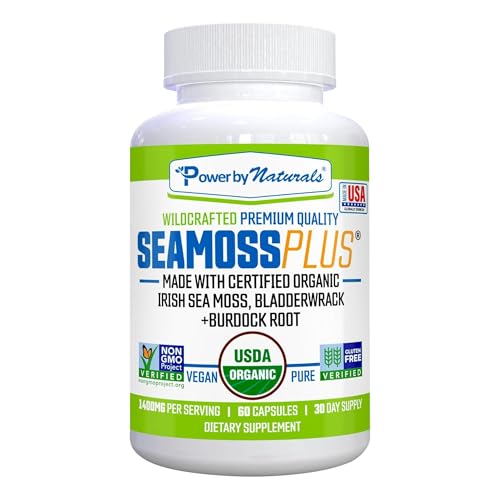
- CleanseParasites Intra-Cellular Superfood Editor’s Pick
Contains sea moss and bladderwrack alongside black cumin seed and other superfood ingredients. - American Standard Supplements Organic Sea Moss, Bladderwrack & Burdock Root Capsules
capsules, 1200mg sea moss / 1200mg bladderwrack / 225mg burdock root per serving, 120 capsules — High-dose transparent-label blend, vegan, non-GMO, made in USA; clearly stated per-ingredient milligrams rather than a proprietary blend - Secret Element Sea Moss Capsules with Burdock Root, Bladderwrack & Muira Puama
capsules, 120 capsules — Budget-friendly 4-ingredient blend, gluten-free, made in USA - Nutrivein Organic Sea Moss 1600mg with Bladderwrack & Burdock
capsules, 1600mg sea moss per serving plus bladderwrack and burdock — Widely available mid-tier brand, marketed for immune/digestive/thyroid/skin support claims
As an Amazon Associate we earn from qualifying purchases. Quality varies widely — always choose a product with a published third-party test (COA) before buying.
A Note on the Evidence
This article is informational and not medical advice; direct human research comparing sea moss gel and capsule absorption does not exist, and iodine content in either form is unpredictable, so anyone with thyroid conditions, who is pregnant, or on thyroid medication should consult a doctor before use.
Frequently Asked Questions
Is sea moss gel absorbed faster than capsules?
There’s no published clinical research directly comparing absorption speed or extent between sea moss gel and capsules. Any claim to the contrary is not backed by documented evidence and should be treated as marketing rather than fact.
How do I know how much iodine is in my sea moss gel or capsules?
Unless the product label specifically states iodine content, you generally don’t know, since iodine varies by species, harvest location, and processing. This uncertainty applies to both homemade gel and most commercial capsule products unless the manufacturer has tested for it.
Are capsules safer than gel because the dose is more consistent?
Capsules do provide more consistent dosing of raw seaweed weight per serving, but consistent dosing of the seaweed itself does not guarantee consistent iodine content or reduced contamination risk, both of which depend on sourcing rather than format.

Can I switch between gel and capsules and expect the same effect?
Since there’s no clinical data on comparative absorption, and both formats have highly variable iodine content depending on source, switching between them is unlikely to produce a predictable, measurable difference either way. Focus on sourcing and labeled content rather than format.
Does bladderwrack absorb differently than sea moss in gel or capsule form?
Format aside, bladderwrack and sea moss are different species with different natural iodine and fucoidan content, and most existing human research on iodine/thyroid effects concerns bladderwrack specifically rather than sea moss. This species difference matters more than whether either is taken as gel or capsule.
Who should be most cautious about dosing regardless of format?
People with existing thyroid dysfunction, those who are pregnant, and those taking levothyroxine should be cautious with either gel or capsule sea moss because of unpredictable iodine content, and should consult a doctor before starting either form.
References
- Teas J et al. Variability of iodine content in common commercially available edible seaweeds. Thyroid (2004). PMID 15588380
- Phaneuf D et al. Evaluation of the contamination of marine algae (seaweed) from the St. Lawrence River and likely to be consumed by humans. Environmental Research (1999). PMID 10092431
- Squadrone S et al. Trace metal occurrence in Mediterranean seaweeds. Environmental science and pollution research international (2018). PMID 29368198
- Hwang YO et al. Total arsenic, mercury, lead, and cadmium contents in edible dried seaweed in Korea. Food additives & contaminants. Part B, Surveillance (2010). PMID 24785310
These statements have not been evaluated by the Food and Drug Administration. This information is not intended to diagnose, treat, cure, or prevent any disease. Content is for informational purposes only and is not medical advice; consult a qualified healthcare provider before starting any supplement. As an Amazon Associate we earn from qualifying purchases.
