Sea moss (Chondrus crispus) and bladderwrack (Fucus vesiculosus) are marketed widely as natural thyroid support supplements due to their naturally high iodine content. While iodine is an essential substrate for thyroid hormone synthesis, the concentration in these seaweeds varies dramatically by species, harvest location, and processing, making consistent dosing nearly impossible without third-party batch testing.
This variability creates a narrow margin between correcting iodine insufficiency and triggering iodine excess, which is a known environmental trigger for autoimmune thyroiditis and thyroid dysfunction in susceptible individuals. Understanding the evidence on iodine absorption, autoimmune mechanisms, and vulnerable populations is essential before using these products for thyroid health.
Key Takeaways
- Iodine content in sea moss and bladderwrack varies by orders of magnitude; a single serving can exceed the adult Upper Limit (1,100 mcg) without batch-specific testing.
- Iodine excess is a proven trigger for autoimmune thyroid flares (Hashimoto’s, Graves’) via oxidative stress and TH17 cell activation, with seaweed matrices potentially modifying this risk.
- High maternal seaweed/iodine intake is linked to infant hypothyroidism in large cohort studies, making these supplements contraindicated in pregnancy without medical supervision.
- No clinical trials support sea moss or bladderwrack for treating hypothyroidism; they are unstandardized foods, not regulated thyroid medications.
- Third-party testing for iodine content and heavy metals is the only way to quantify exposure; marketing claims (“wildcrafted,” “organic”) do not guarantee safety or consistency.
Iodine Content Variability and Bioavailability in Edible Seaweeds
Research on edible seaweeds confirms that iodine concentrations span orders of magnitude depending on the species, season, water temperature, and processing method (e.g., drying, boiling). A 2019 review of iodine in edible seaweeds, including data relevant to Arctic populations with high traditional intake, highlighted that brown algae (Phaeophyceae) such as bladderwrack (Fucus vesiculosus) typically accumulate significantly higher iodine levels than red algae (Rhodophyta) like sea moss (Chondrus crispus), though both categories show wide ranges [1].
The same review notes that bioavailability is not uniform; cooking and soaking can leach substantial amounts of iodine into water, while drying concentrates it. This means a “serving” of raw, dried, or gel-prepared sea moss delivers an unpredictable iodine dose, complicating any attempt to meet the Recommended Dietary Allowance (RDA) of 150 mcg/day for adults without laboratory verification of the specific batch [1].

The Thyroid's Narrow Therapeutic Window for Iodine
The thyroid gland requires a steady, adequate supply of iodine to synthesize thyroxine (T4) and triiodothyronine (T3), but it possesses autoregulatory mechanisms (the Wolff-Chaikoff effect) to temporarily inhibit hormone synthesis when iodine intake is acutely high. A comprehensive review on iodine deficiency and therapeutic considerations emphasizes that chronic iodine excess—just as much as deficiency—can precipitate thyroid dysfunction, including hypothyroidism, hyperthyroidism (Jod-Basedow phenomenon), and autoimmune thyroiditis [2].
The review outlines that populations previously deficient in iodine are particularly vulnerable to adverse effects when intake increases rapidly, a scenario relevant to individuals suddenly adding high-iodine seaweed supplements to a low-iodine diet. The therapeutic window is narrow: the Tolerable Upper Intake Level (UL) for adults is 1,100 mcg/day, a threshold easily exceeded by a single gram of some dried bladderwrack or sea moss products [2].
Autoimmune Thyroiditis Risk: Mechanisms of Iodine-Induced Flare
Excess iodine is a well-established environmental trigger for autoimmune thyroid disease (AITD), including Hashimoto’s thyroiditis and Graves’ disease, particularly in genetically susceptible individuals. A mechanistic study using iodine-deficient NOD.H-2(h4) mice—a model prone to autoimmune thyroiditis—compared the effects of iodine-rich herbs versus potassium iodate [3].
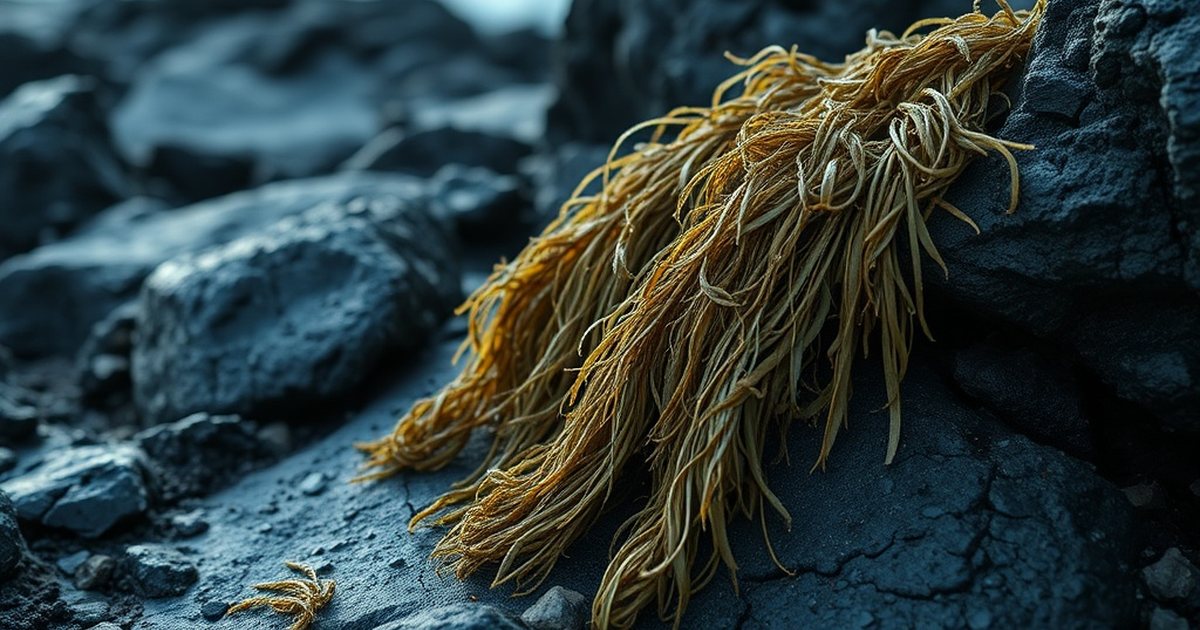
The study found that both iodine sources increased thyroid oxidative stress and promoted the differentiation of pro-inflammatory TH17 cells, a key driver of autoimmune tissue destruction. However, the iodine-rich herb extract demonstrated a different (and in some measures more pronounced) effect on TH17 differentiation and oxidative stress markers compared to pure potassium iodate, suggesting that the food matrix and co-occurring compounds in seaweeds may modulate—but not eliminate—the immunogenic risk of high iodine loads [3]. This supports clinical observations that seaweed-based iodine can trigger flares in patients with pre-existing thyroid autoimmunity.
Maternal Iodine Exposure and Infant Thyroid Vulnerability
The developing fetus and neonate are exquisitely sensitive to maternal iodine status. The Japan Environment and Children’s Study (JECS), a large birth cohort study, investigated the association between maternal iodine exposure—largely driven by frequent seaweed consumption—and infant thyroid function [4].

Researchers found that excessive maternal iodine intake (often > 2,000 mcg/day from seaweed) was associated with an increased risk of hypothyroidism in infants, likely due to the immature thyroid’s inability to escape the Wolff-Chaikoff effect effectively. This evidence underscores that “natural” high-iodine foods like sea moss and bladderwrack pose specific risks during pregnancy and lactation, where the margin for error is effectively zero [4].
Practical Implications: Sourcing, Testing, and Clinical Context
Given the extreme variability in iodine content documented in seaweed literature [1] and the established risks of excess intake on autoimmune flares [3] and infant development [4], unstandardized sea moss or bladderwrack supplements cannot be reliably dosed for thyroid support. Products labeled “wildcrafted” or “organic” without a Certificate of Analysis (CoA) specifying iodine content per serving (not just per 100g) and heavy metal screening (arsenic, cadmium, lead) carry significant uncertainty.
Clinically, these supplements are not appropriate substitutes for prescription thyroid hormone replacement (levothyroxine) or standardized potassium iodide therapy. Patients with diagnosed thyroid nodules, Hashimoto’s, Graves’ disease, or a family history of autoimmunity should avoid high-iodine seaweed supplements unless explicitly directed and monitored by an endocrinologist. For the general population, obtaining iodine from iodized salt, dairy, eggs, and low-iodine seaweeds (like nori) in moderation offers a more controllable intake profile.
🛒 Where to Buy Sea Moss & Bladderwrack
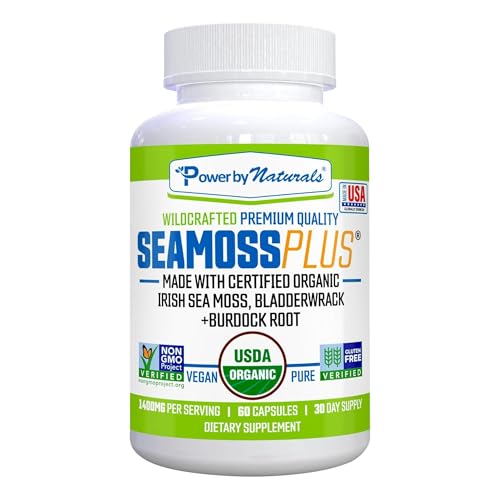
- CleanseParasites Intra-Cellular Superfood Editor’s Pick
Contains sea moss and bladderwrack alongside black cumin seed and other superfood ingredients. - American Standard Supplements Organic Sea Moss, Bladderwrack & Burdock Root CapsulesLab-tested / studied
capsules, 1200mg sea moss / 1200mg bladderwrack / 225mg burdock root per serving, 120 capsules — High-dose transparent-label blend, vegan, non-GMO, made in USA; clearly stated per-ingredient milligrams rather than a proprietary blend - Secret Element Sea Moss Capsules with Burdock Root, Bladderwrack & Muira Puama
capsules, 120 capsules — Budget-friendly 4-ingredient blend, non-GMO, gluten-free, made in USA - Nutrivein Organic Sea Moss 1600mg with Bladderwrack & Burdock
capsules, 1600mg sea moss per serving plus bladderwrack and burdock — Widely available mid-tier brand, marketed for immune/digestive/thyroid/skin support claims
As an Amazon Associate we earn from qualifying purchases. Quality varies widely — always choose a product with a published third-party test (COA) before buying.
A Note on the Evidence
This article summarizes scientific evidence on iodine and thyroid physiology; it does not constitute medical advice. Sea moss and bladderwrack supplements are not standardized drugs—their iodine content varies widely and can worsen thyroid dysfunction, trigger autoimmune flares, or harm fetal development. Consult a qualified healthcare provider before use, especially if you have thyroid disease, take thyroid medication, are pregnant, or are breastfeeding.
Frequently Asked Questions
Can sea moss cure hypothyroidism?
No. Sea moss provides unpredictable iodine doses that can worsen thyroid dysfunction. Hypothyroidism requires standardized hormone replacement (levothyroxine) under medical supervision; excess iodine from seaweed can inhibit thyroid function (Wolff-Chaikoff effect) or trigger autoimmunity [2][3].
Is bladderwrack safer than sea moss for thyroid support?
Generally, no. Bladderwrack (Fucus vesiculosus) is a brown algae that typically accumulates significantly higher iodine concentrations than red algae like sea moss (Chondrus crispus), increasing the risk of exceeding safe intake limits [1].
Does sea moss cause Hashimoto's disease?
Sea moss does not “cause” Hashimoto’s directly, but its high and variable iodine content is a known environmental trigger that can initiate or flare autoimmune thyroiditis in genetically susceptible individuals by increasing thyroid oxidative stress and TH17-driven inflammation [3].

Is it safe to take sea moss during pregnancy?
High iodine intake from seaweed during pregnancy is associated with increased risk of infant hypothyroidism, as the fetal thyroid cannot effectively regulate against iodine excess [4]. Prenatal vitamins with standardized potassium iodide (150 mcg) are the evidence-based standard.
How much iodine is in a typical serving of sea moss gel?
There is no “typical” amount. Studies show iodine in Chondrus crispus ranges widely (e.g., ~100–500+ mcg/g dry weight) depending on origin and processing [1]. Without a Certificate of Analysis for your specific batch, the dose is unknown.
Should I test my thyroid before starting sea moss?
Yes. Anyone considering iodine-rich supplements should have baseline TSH, Free T4, and thyroid antibody (TPOAb, TgAb) testing. Those with positive antibodies, nodules, or existing thyroid disease are at highest risk for adverse effects from unregulated iodine loads [2][3].
References
- Andersen S et al. Iodine in Edible Seaweed, Its Absorption, Dietary Use, and Relation to Iodine Nutrition in Arctic People. Journal of medicinal food (2019). PMID 30990756
- Patrick L et al. Iodine: deficiency and therapeutic considerations. Alternative medicine review : a journal of clinical therapeutic (2008). PMID 18590348
- Gao CH et al. Iodine-Rich Herbs and Potassium Iodate Have Different Effects on the Oxidative Stress and Differentiation of TH17 Cells in Iodine-Deficient NOD.H-2(h4) Mice. Biological trace element research (2018). PMID 28803408
- Yokomichi H et al. Mother's iodine exposure and infants' hypothyroidism: the Japan Environment and Children's Study (JECS). Endocrine journal (2022). PMID 34433732
These statements have not been evaluated by the Food and Drug Administration. This information is not intended to diagnose, treat, cure, or prevent any disease. Content is for informational purposes only and is not medical advice; consult a qualified healthcare provider before starting any supplement. As an Amazon Associate we earn from qualifying purchases.
