Sea moss (Chondrus crispus) and bladderwrack (Fucus vesiculosus) are mineral-dense seaweeds traditionally used for thyroid support and general nutrition, but their iodine content varies dramatically between batches, species, and harvest locations. This variability makes it difficult to translate a “spoonful” or “capsule” into a reliable iodine dose, which matters because iodine has a well-established Tolerable Upper Intake Level (UL) of 1,100 µg per day for adults set by the Institute of Medicine.
Exceeding the UL chronically can trigger or worsen thyroid dysfunction, particularly in people with pre-existing thyroid conditions, those taking levothyroxine, or during pregnancy. A UK market survey of seaweed-containing foods found wide iodine ranges and frequent labeling gaps, underscoring that consumers cannot rely on front-of-package claims to gauge actual intake [1]. This article explains how to estimate your personal iodine ceiling, why third-party testing matters, and who should avoid or strictly limit these supplements.
Key Takeaways
- The adult UL for iodine is 1,100 µg/day from all sources; sea moss and bladderwrack can exceed this in a single small serving.
- Iodine content varies by species, harvest, and processing — often 100-fold or more — so batch-specific third-party testing (CoA) is essential for any dosage calculation.
- People with thyroid disease, on thyroid medication, pregnant, or taking iodine-containing drugs should avoid unstandardized seaweed supplements unless directed by a clinician.
- Heavy metal contamination (arsenic, lead, cadmium) is a documented co-risk in wildcrafted seaweeds; CoAs must include these analytes.
- No human clinical trials establish broad wellness benefits for sea moss; the evidence base is limited to iodine/thyroid effects and preliminary fucoidan research.
Understanding the Tolerable Upper Intake Level (UL) for Iodine
The UL is the maximum daily nutrient intake unlikely to cause adverse health effects in almost all individuals. For iodine, the UL for adults is 1,100 µg/day (1.1 mg/day), established by the Food and Nutrition Board of the Institute of Medicine. This limit applies to total iodine from all sources: food, water, salt, supplements, and medications. It is not a recommended target; the Recommended Dietary Allowance (RDA) for adults is 150 µg/day, and most people in iodine-sufficient regions meet or exceed this through diet alone.
Chronic intakes above the UL increase the risk of thyroid dysfunction, including both hypothyroidism and hyperthyroidism, depending on underlying thyroid status and iodine history. The Wolff–Chaikoff effect — a temporary shutdown of thyroid hormone synthesis after a large iodine load — protects most people acutely, but escape from this block can fail in susceptible individuals, leading to sustained hypothyroidism or iodine-induced thyrotoxicosis (Jod-Basedow phenomenon). Because sea moss and bladderwrack are concentrated iodine sources, even small daily servings can push total intake past the UL if dietary iodine is already adequate.

Why Sea Moss Iodine Content Is Unpredictable
Iodine concentration in Chondrus crispus and Fucus vesiculosus depends on species, season, water temperature, salinity, geographic origin, and post-harvest processing (drying method, rinsing, heat exposure). Bladderwrack generally accumulates higher iodine than Irish moss, and blends labeled “sea moss” often contain undisclosed ratios of the two. A UK retail survey of 224 seaweed-containing products found that only 10% stated any iodine content at all; among the products that could be assessed the median was 110 µg/g dry weight (interquartile range 21 to 503 µg/g), or about 585 µg per estimated serving, and 26 of them could push an adult past the European tolerable upper level of 600 µg/day [1]. A separate analysis of 12 edible seaweed species found a far wider spread, from 16 µg/g in nori up to 8,165 µg/g in a single sample of processed kelp granules sold as a salt substitute [2]. Those extremes are not interchangeable with “sea moss”: they come from a red alga at one end and a concentrated kelp product at the other. Seasonal measurements of temperate seaweeds place the kelps on the order of 1,270 to 12,700 µg/g, the brown Fucales such as bladderwrack around 127 to 1,270 µg/g, and the red algae that Chondrus crispus belongs to around 13 to 127 µg/g [3].

This variability means a 5 g serving could deliver well under 100 µg of iodine if the product is genuinely Chondrus, or several thousand micrograms if it is blended with, or quietly substituted by, a brown seaweed: the difference between a fraction of the RDA and several times the UL. Without a certificate of analysis (CoA) from the specific batch you purchased, any dosage recommendation is a guess. Powdered, gel, and capsule forms add further uncertainty because processing losses or concentration steps are rarely disclosed.
How to Estimate a Safe Daily Amount for Your Batch
If you have a third-party CoA showing iodine content in µg per gram (or per serving), you can calculate a maximum daily serving that keeps added iodine within a prudent margin below the UL. First, estimate your baseline dietary iodine (iodized salt, dairy, eggs, seafood, bread). In the U.S., median intake from food alone is ~200–300 µg/day. Subtract this from 1,100 µg to find your “supplemental ceiling.” For example, if baseline is ~250 µg, your ceiling is ~850 µg from supplements.
Next, divide your ceiling by the product’s iodine concentration (µg/g). If the CoA shows 5,000 µg iodine per gram of dried sea moss, 850 µg ÷ 5,000 µg/g = 0.17 g (170 mg) maximum per day — roughly a pinch, not a tablespoon. If no CoA exists, you cannot calculate a safe dose; the only evidence-based action is to choose a tested product or avoid supplementation. Reputable brands publish batch-specific CoAs for iodine, heavy metals (arsenic, lead, cadmium), and microbiological limits.

Populations Who Should Avoid or Strictly Limit Sea Moss
People with diagnosed thyroid disorders (Hashimoto’s thyroiditis, Graves’ disease, multinodular goiter, thyroid cancer history) are especially vulnerable to iodine-induced flares. Even modest supplemental iodine can destabilize euthyroid patients on levothyroxine or trigger thyrotoxicosis in autonomous nodules. The American Thyroid Association recommends against iodine supplements exceeding the RDA for these groups unless directed by an endocrinologist.
Pregnant and lactating individuals have higher iodine needs (RDA 220 µg and 290 µg, respectively) but also tighter safety margins; excess iodine crosses the placenta and concentrates in breast milk, risking neonatal hypothyroidism or goiter. Anyone taking amiodarone, lithium, potassium iodide, or contrast media should also avoid additional iodine sources. For these populations, the safest approach is to meet iodine needs through a varied diet and a prenatal vitamin with a known, moderate iodine dose (typically 150 µg), not through unstandardized seaweed products.
Heavy Metal Co-Contamination: A Parallel Safety Concern
Seaweeds bioaccumulate arsenic, lead, cadmium, and mercury from seawater. Wildcrafted sea moss harvested near industrial runoff, shipping lanes, or volcanic regions carries higher risk. The same UK survey that documented iodine variability noted that seaweed products can contribute significantly to dietary exposure to inorganic arsenic and cadmium, depending on origin and processing [1]. Chronic low-level exposure to these metals is linked to renal, cardiovascular, and neurodevelopmental harm.
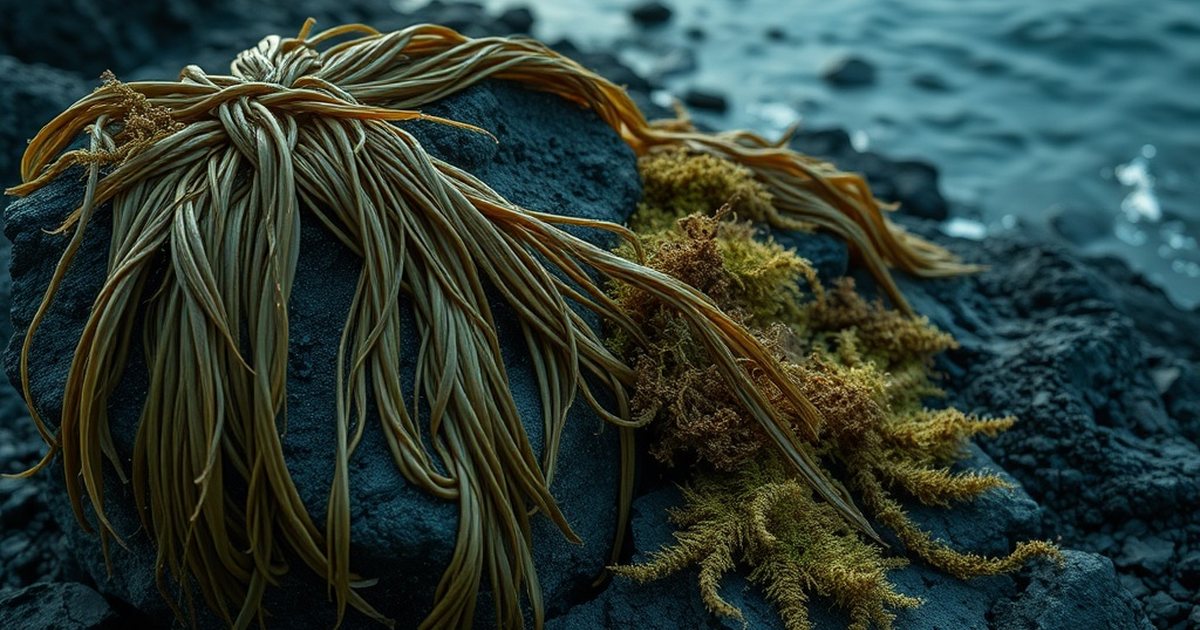
Third-party testing for heavy metals (reported in µg per serving) should be a non-negotiable purchasing criterion. Look for results compared to Proposition 65 (California) limits or USP/NSF standards. Products that only test for “microbiological safety” or “pesticides” but omit heavy metals and iodine quantification do not provide sufficient safety data for daily use.
Practical Checklist for Safer Supplementation
1) Request a batch-specific CoA for iodine (µg/g or µg/serving) and heavy metals before buying. 2) Calculate your personal supplemental ceiling: 1,100 µg minus estimated dietary iodine. 3) Divide ceiling by product iodine density to get max daily grams. 4) Start at 10–25% of that max for 1–2 weeks and monitor TSH, free T4, and symptoms if you have thyroid history. 5) Use cyclical dosing (e.g., 2 weeks on, 2 weeks off) to reduce chronic UL breach risk. 6) Stop immediately if you develop palpitations, tremor, heat intolerance, neck swelling, fatigue, or cold intolerance — and seek thyroid testing.
Remember that “more minerals” is not better when the mineral in question has a narrow therapeutic window. The FDA has not evaluated sea moss or bladderwrack for the treatment, cure, or prevention of any disease. These products are not standardized, and social media wellness claims far outpace human clinical evidence.
🛒 Where to Buy Sea Moss & Bladderwrack
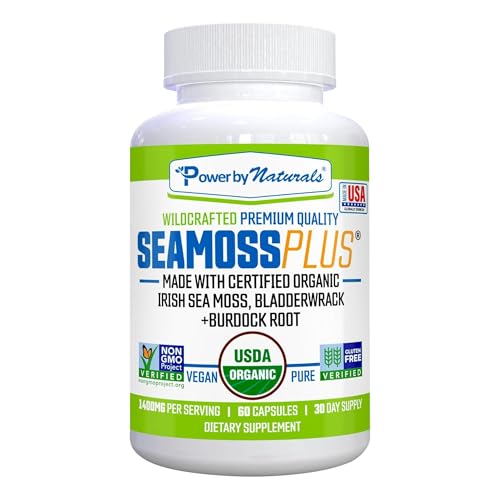
- CleanseParasites Intra-Cellular Superfood Editor’s Pick
Contains sea moss and bladderwrack alongside black cumin seed and other superfood ingredients. - American Standard Supplements Organic Sea Moss, Bladderwrack & Burdock Root CapsulesLab-tested / studied
capsules, 1200mg sea moss / 1200mg bladderwrack / 225mg burdock root per serving, 120 capsules — High-dose transparent-label blend, vegan, non-GMO, made in USA; clearly stated per-ingredient milligrams rather than a proprietary blend - Secret Element Sea Moss Capsules with Burdock Root, Bladderwrack & Muira Puama
capsules, 120 capsules — Budget-friendly 4-ingredient blend, non-GMO, gluten-free, made in USA - Nutrivein Organic Sea Moss 1600mg with Bladderwrack & Burdock
capsules, 1600mg sea moss per serving plus bladderwrack and burdock — Widely available mid-tier brand, marketed for immune/digestive/thyroid/skin support claims
As an Amazon Associate we earn from qualifying purchases. Quality varies widely — always choose a product with a published third-party test (COA) before buying.

A Note on the Evidence
This article is informational, not medical advice. Iodine sensitivity varies; people with thyroid conditions, on levothyroxine, pregnant, or taking iodine-containing medications should consult a clinician before using seaweed supplements. The cited evidence [1] describes market variability and labeling gaps — it does not establish safe dosing for any individual.
Frequently Asked Questions
What is the Tolerable Upper Intake Level (UL) for iodine?
The UL for adults is 1,100 µg (1.1 mg) per day from all sources combined, set by the Institute of Medicine to avoid thyroid dysfunction risk.
How much iodine is in a typical serving of sea moss?
It varies widely, and mostly by species: the red algae that Chondrus crispus belongs to sit at the low end of published seaweed iodine measurements, the brown Fucales such as bladderwrack around ten times higher, and the kelps higher again, so the headline figures quoted for seaweed generally come from kelp rather than from sea moss. A UK market survey found only 10% of seaweed products declared iodine on the label at all [1]. Without a batch CoA, you cannot know the dose.
Can I take sea moss if I have Hashimoto's thyroiditis?
Excess iodine can flare autoimmune thyroiditis. Most clinicians advise Hashimoto’s patients to avoid iodine supplements above the RDA (150 µg) unless an endocrinologist directs otherwise.

Is bladderwrack higher in iodine than Irish moss?
Generally yes. Fucus vesiculosus (bladderwrack) tends to accumulate more iodine than Chondrus crispus (Irish moss), and blends often contain undisclosed ratios, increasing unpredictability.
How do I calculate a safe daily amount from a Certificate of Analysis?
Subtract your estimated dietary iodine (~200–300 µg) from 1,100 µg to get your supplemental ceiling. Divide that ceiling by the product’s iodine concentration (µg/g) to get max grams per day.
Does cooking or making gel reduce iodine content?
Soaking, rinsing, and boiling can leach some iodine, but losses are inconsistent and not standardized. You cannot rely on home preparation to bring a high-iodine batch into a safe range.
References
- Bouga M et al. Emergence of Seaweed and Seaweed-Containing Foods in the UK: Focus on Labeling, Iodine Content, Toxicity and Nutrition. Foods (Basel, Switzerland) (2015). PMID 28231201
- Teas J et al. Variability of iodine content in common commercially available edible seaweeds. Thyroid (2004). PMID 15588380
- Nitschke U et al. Variability in iodine in temperate seaweeds and iodine accumulation kinetics of Fucus vesiculosus and Laminaria digitata (Phaeophyceae, Ochrophyta). Journal of Phycology (2018). PMID 29130494
These statements have not been evaluated by the Food and Drug Administration. This information is not intended to diagnose, treat, cure, or prevent any disease. Content is for informational purposes only and is not medical advice; consult a qualified healthcare provider before starting any supplement. As an Amazon Associate we earn from qualifying purchases.
