Bladderwrack (Fucus vesiculosus) is a brown seaweed that grows along cold-water coastlines and has a long history of use as both a food and a folk remedy, particularly for thyroid support. Its nutritional profile is genuinely distinctive among land plants: it concentrates iodine to levels many multiples higher than typical foods, and it contains a mix of soluble fibers, including fucoidan and alginate, not found in the standard diet.
That said, ‘nutrition facts’ for bladderwrack are unusually inconsistent from one product to the next. Iodine content varies with where and when the seaweed was harvested, how it was processed, and how it’s dosed, which makes generic nutrition labels less useful than they’d be for a food like broccoli or oats. This article covers what’s actually known about bladderwrack’s iodine, fucoidan, and fiber content, what the proposed mechanisms are, and where the real risks lie.
Key Takeaways
- Bladderwrack is exceptionally iodine-dense, but iodine content varies widely and is often not accurately reflected on labels.
- Fucoidan and alginate are real, distinctive polysaccharides in bladderwrack, but most research on their effects is early-stage (cell/animal models), not confirmed in humans.
- Trace minerals come from the same seawater-absorption process that can introduce arsenic, lead, and cadmium contamination.
- People with thyroid conditions, those on levothyroxine, and pregnant individuals should be especially cautious with iodine-rich seaweed supplements.
- Third-party testing for iodine content and heavy metals matters more than marketing claims when choosing a product.
Iodine: The Defining Nutrient in Bladderwrack
Iodine is the mineral most associated with bladderwrack, and it’s the one with the clearest link between seaweed intake and thyroid physiology. The thyroid gland requires iodine to produce thyroid hormones (T3 and T4), and bladderwrack is one of the most iodine-dense foods available, far exceeding iodized salt or dairy on a per-gram basis.[1]
The challenge is that bladderwrack’s iodine content is not standardized. Wild-harvested seaweed can vary tremendously in iodine concentration depending on species, growing region, season, and part of the plant used, and supplement processing (drying, grinding, extraction) further changes the final dose.[1] A capsule or tincture labeled ‘bladderwrack’ does not reliably tell you how much iodine you’re actually getting unless the product has been third-party tested.
Because of this variability, both too little and too much iodine are possible outcomes from the same product line, and both directions can disrupt thyroid function rather than support it.[2][3]

Fucoidan: The Signature Polysaccharide
Fucoidan is a sulfated polysaccharide found in the cell walls of brown seaweeds like bladderwrack, and it’s structurally distinct from the carrageenan found in red seaweeds like sea moss. Fucoidan research is an active but still early area of study, with most published work focused on cell and animal models exploring anti-inflammatory, anticoagulant, and gut-barrier-related effects rather than confirmed outcomes in general human populations.
It’s worth being direct about the evidence gap here: fucoidan is frequently marketed with sweeping health claims, but rigorous human clinical trials establishing dosing, bioavailability, and consistent benefit in healthy people are limited.[4] What’s accurate to say is that fucoidan is a real, measurable component of bladderwrack with an active research pipeline, not that its benefits are established.

Fiber and Alginate Content
Beyond fucoidan, bladderwrack contains other soluble fibers, most notably alginate, which contributes to the slippery, gel-forming texture characteristic of brown seaweeds when hydrated. These polysaccharides are not digested by human enzymes and behave similarly to other viscous soluble fibers, potentially slowing gastric emptying and adding bulk in the gut.
As with fucoidan, most of what’s known about alginate’s physiological effects comes from food science and in vitro digestion research rather than large human trials on bladderwrack specifically. It’s reasonable to think of bladderwrack’s fiber fraction as nutritionally similar in concept to other seaweed and plant fibers, just without a large dedicated evidence base isolating it from the rest of the plant.

Trace Minerals Beyond Iodine
Brown seaweeds including bladderwrack also contain a range of trace minerals absorbed from seawater, such as potassium, calcium, magnesium, and iron, though at levels that vary as widely as its iodine content depending on harvest location and processing. These minerals are part of why bladderwrack is often marketed as a general ‘superfood’ mineral source.
The caveat is the same one that applies to iodine: seawater doesn’t just concentrate beneficial minerals, it can also concentrate heavy metals like arsenic, lead, and cadmium[5][6] depending on the waters the seaweed grew in and how it was processed. A product’s mineral content and its contamination risk come from the same absorption mechanism, which is why sourcing and testing matter as much as the nutrition label.
Why Sourcing Matters More Than the Marketing Claims
Because bladderwrack is unregulated as a dietary supplement in most markets, there’s no guarantee that a product’s iodine content, fucoidan concentration, or heavy metal load matches what’s on the label, or that two bottles from the same brand are consistent batch to batch. The FDA has not evaluated these products for the treatment, cure, or prevention of any disease.
Third-party testing for both iodine content and heavy metals is the single most useful piece of information a buyer can look for, more useful than any specific nutrient claim on the packaging. Without it, a bladderwrack product is essentially an unknown dose of iodine wrapped in fiber and trace minerals.
🛒 Where to Buy Sea Moss & Bladderwrack
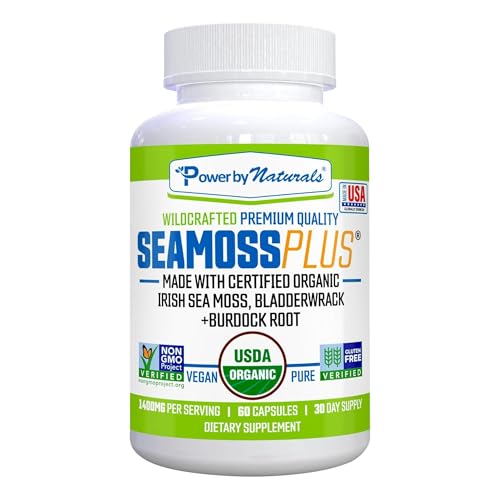
- CleanseParasites Intra-Cellular Superfood Editor’s Pick
Contains sea moss and bladderwrack alongside black cumin seed and other superfood ingredients. - American Standard Supplements Organic Sea Moss, Bladderwrack & Burdock Root Capsules
capsules, 1200mg sea moss / 1200mg bladderwrack / 225mg burdock root per serving, 120 capsules — High-dose transparent-label blend, vegan, non-GMO, made in USA; clearly stated per-ingredient milligrams rather than a proprietary blend - Secret Element Sea Moss Capsules with Burdock Root, Bladderwrack & Muira Puama
capsules, 120 capsules — Budget-friendly 4-ingredient blend, gluten-free, made in USA - Nutrivein Organic Sea Moss 1600mg with Bladderwrack & Burdock
capsules, 1600mg sea moss per serving plus bladderwrack and burdock — Widely available mid-tier brand, marketed for immune/digestive/thyroid/skin support claims
As an Amazon Associate we earn from qualifying purchases. Quality varies widely — always choose a product with a published third-party test (COA) before buying.
A Note on the Evidence
This article is informational, not medical advice. Bladderwrack’s iodine content is highly variable and unregulated, so anyone with thyroid disease, anyone pregnant, and anyone on thyroid medication should talk to a doctor before use, and all buyers should look for third-party heavy metal and iodine testing rather than relying on label claims.

Frequently Asked Questions
Does bladderwrack contain a lot of iodine?
Yes, bladderwrack is one of the most iodine-dense foods available, but the exact amount varies significantly by harvest region, season, and processing method, so labeled amounts should be treated as estimates unless third-party tested.
What is fucoidan and is it proven to work?
Fucoidan is a sulfated polysaccharide unique to brown seaweeds like bladderwrack. Most research on it is preliminary, done in cell or animal models, so it’s accurate to call it a promising research area rather than a proven human benefit.

Is bladderwrack safe for people with thyroid conditions?
Not necessarily. Because bladderwrack’s iodine content is variable and can be high, it can trigger or worsen thyroid dysfunction, especially in people with existing thyroid conditions or those taking levothyroxine. This is a case where medical guidance before use matters.
Can bladderwrack contain heavy metals?
Yes. As a seaweed that absorbs minerals directly from seawater, unregulated or wildcrafted bladderwrack can carry arsenic, lead, or cadmium depending on where it was harvested and how it was processed. Third-party testing is the main way to screen for this.
Is bladderwrack's fiber content meaningfully different from other seaweeds?
It shares some similarities with other seaweed fibers, but its alginate and fucoidan content are more characteristic of brown seaweeds specifically, distinct from the carrageenan-family fibers found in red seaweeds like sea moss.
Should I take bladderwrack instead of iodized salt for iodine?
That’s a decision to make with a doctor, not a supplement label. Because bladderwrack’s iodine dose is inconsistent and can be quite high, it’s a less predictable iodine source than standardized options like iodized salt.
References
- Teas J et al. Variability of iodine content in common commercially available edible seaweeds. Thyroid (2004). PMID 15588380
- Leung AM et al. Consequences of excess iodine. Nature reviews. Endocrinology (2014). PMID 24342882
- Eliason BC. Transient hyperthyroidism in a patient taking dietary supplements containing kelp. The Journal of the American Board of Family Practice (1998). PMID 9876004
- Irhimeh MR et al. Pilot clinical study to evaluate the anticoagulant activity of fucoidan. Blood coagulation & fibrinolysis (2009). PMID 19696660
- Yu Y et al. Survey of arsenic content in edible seaweeds and their health risk assessment. Food and chemical toxicology (2024). PMID 38499235
- Amster E et al. Case report: potential arsenic toxicosis secondary to herbal kelp supplement. Environmental health perspectives (2007). PMID 17450231
These statements have not been evaluated by the Food and Drug Administration. This information is not intended to diagnose, treat, cure, or prevent any disease. Content is for informational purposes only and is not medical advice; consult a qualified healthcare provider before starting any supplement. As an Amazon Associate we earn from qualifying purchases.
