Sea moss (Chondrus crispus, also called Irish moss) doesn’t come with a universal ‘safe daily dose’ the way a vitamin supplement does. There’s no FDA-regulated standard, and the actual iodine and mineral content of a given batch depends heavily on the seaweed species, where it was harvested, and how it was processed. That variability is the central problem with any blanket dosage recommendation you’ll see online.
The most well-studied safety concern with sea moss and related seaweeds like bladderwrack isn’t a mystery toxin, it’s iodine. Seaweeds are naturally iodine-dense, and iodine intake has a well-defined upper limit before it starts interfering with thyroid function. This article walks through what’s actually known about seaweed iodine content, why that determines a reasonable daily amount, and who needs to be more careful.
Key Takeaways
- There is no universally ‘safe’ sea moss dose because iodine content varies widely by species, harvest location, and processing [1] [2]
- Bladderwrack tends to run higher in iodine than red seaweeds like Irish moss, and its iodine content itself varies by season [3]
- Iodine from seaweed is genuinely absorbed by the body, not just present on paper, so serving size matters [4]
- People already eating iodine-rich diets (iodized salt, dairy, seafood) have less room before a seaweed supplement pushes intake too high [5] [6]
- Pregnant women and anyone with a thyroid condition or on thyroid medication should talk to a doctor before regular sea moss or bladderwrack use [7]
Why Iodine Is the Dosage Question That Matters Most
Most sea moss dosage advice on social media focuses on tablespoons of gel or capsule counts, but the more clinically relevant variable is how much iodine that serving actually delivers. Seaweeds as a category show enormous variability in iodine content, even within the same species harvested from different locations or at different times. One analysis of commercially available edible seaweeds found iodine concentrations spanning a wide range depending on species and preparation [1], and later work confirmed that variability persists across wild-harvested and cultivated seaweed batches, to the point that species-specific daily allowable consumption limits are needed rather than a single blanket number [2].

This matters because there’s no way to eyeball a ‘safe’ tablespoon of sea moss gel and know its iodine load without lab testing. A batch of bladderwrack, for instance, can vary substantially in iodine depending on harvest season and how the plant accumulates iodine from seawater over time [3].
What Counts as Too Much Iodine?
Regulatory bodies like the European Food Safety Authority (EFSA) set a tolerable upper intake level for iodine, and several studies have used that threshold to evaluate real-world seaweed and seaweed-adjacent products. One study testing commercially available kelp and seaweed products found that iodine content in some products was high enough to risk exceeding that upper intake level with normal serving sizes, raising the question of whether these products are a reliable iodine source or an excess-intake risk depending on the specific product tested [8].
Excess intake isn’t just theoretical. Research on Saharawi women found that unexpectedly high iodine content in local animal milk pushed habitual intake above the EFSA upper limit for a subset of the population, illustrating how iodine from food sources can stack up in ways people don’t anticipate [5]. A similar principle applies to sea moss and bladderwrack: if you’re already getting iodine from iodized salt, dairy, or seafood, adding a seaweed supplement on top can push total intake higher than expected.

It’s also worth noting iodine excess isn’t limited to diet. A case report on povidone-iodine mouthwash found that regular use dramatically raised iodine ingestion, demonstrating just how easily iodine can accumulate from sources people don’t think of as ‘supplements’ at all [9].

What Typical Population Iodine Intake Looks Like (For Context)
To judge whether a sea moss serving is a meaningful addition to someone’s iodine intake, it helps to know baseline population intake. Dutch data has shown that as iodized salt use has declined, population iodine intake has decreased but generally remains sufficient, without seaweed as a major dietary factor [10]. In Japan, where seaweed consumption is culturally high, dietary surveys have found a notable share of adults with iodine intake above the tolerable upper level purely from food sources, without any supplement use [11], and detailed 16-day diet records confirmed habitual iodine intake in Japanese adults is substantially higher than in many Western populations due to regular seaweed consumption [6].
This context matters for dosage decisions: someone whose baseline diet already includes regular seaweed, iodized salt, or seafood has much less headroom before a sea moss supplement pushes them into excess territory, compared to someone whose baseline iodine intake is low.
Bioavailability: Does the Body Absorb All of a Seaweed's Iodine?
One nuance in dosage discussions is that not all of the iodine measured in a seaweed sample is necessarily absorbed when eaten. A randomized crossover trial looking at a meal containing wakame seaweed salad found measurable iodine bioavailability from the meal, supporting the idea that seaweed iodine is absorbed and contributes meaningfully to intake, not just theoretically present in the food [4]. This is relevant because it confirms that the iodine content numbers on a nutrition label or lab analysis translate to real physiological exposure, not just an inert mineral that passes through unabsorbed.
Sea Moss Blend Dosage & Cost Calculator
Based on the labeled dose options for Infinite Age Sea Moss Advanced 1250mg and the published 60-count bottle at $43.00.
Open the full dosage & cost calculator →
Estimate only – based on the current listed price of the 60-count Infinite Age Sea Moss Advanced 1250mg bottle. Actual Amazon price can change; check the live price before buying.
Why no height/weight input? Unlike per-kg supplements (creatine, protein), Sea Moss Blend has no published bodyweight-adjusted dosing in the research behind it. This calculator doesn't fabricate a per-kg formula that doesn't exist in the literature.
Get Infinite Age Sea Moss Advanced 1250mg on Amazon(paid link) As an Amazon Associate we earn from qualifying purchases.
Special Populations: Pregnancy and Existing Thyroid Conditions
Iodine needs and sensitivities aren’t uniform across all adults. Pregnant women have distinct iodine requirements, and European guidance has specifically addressed the need for adequate but not excessive iodine supplementation during pregnancy, given both the risks of deficiency and the risks of excess for maternal and fetal thyroid function [7]. Sea moss and bladderwrack products marketed for general wellness typically aren’t formulated or tested with these pregnancy-specific thresholds in mind, which is a meaningful gap between marketing claims and the underlying evidence.
People with pre-existing thyroid conditions (hypothyroidism, hyperthyroidism, Hashimoto’s, or those on levothyroxine) are particularly vulnerable to iodine swings in either direction, since thyroid hormone regulation is iodine-dependent and can be destabilized by sudden large intakes. This is a case where consulting a physician before adding sea moss or bladderwrack is more than a routine disclaimer, it’s a genuine clinical consideration given how variable seaweed iodine content is.

How Countries Approach Iodine Standardization (And Why Sea Moss Isn't There Yet)
Some perspective on how seriously iodine dosing is treated at a population level: China’s approach to setting iodine content in table salt has been the subject of dedicated nutritional policy analysis, weighing regional dietary patterns and health outcomes to land on a standardized, regulated iodine delivery method [12]. That level of standardization, regulated content, population monitoring, adjustable dosing, simply doesn’t exist for sea moss or bladderwrack supplements. Products vary batch to batch, and there’s no equivalent regulatory oversight ensuring consistent iodine delivery the way there is for iodized salt.

🛒 Where to Buy Sea Moss & Bladderwrack
- CleanseParasites Intra-Cellular Superfood Editor’s Pick
Contains sea moss and bladderwrack alongside black cumin seed and other superfood ingredients. - American Standard Supplements Organic Sea Moss, Bladderwrack & Burdock Root Capsules
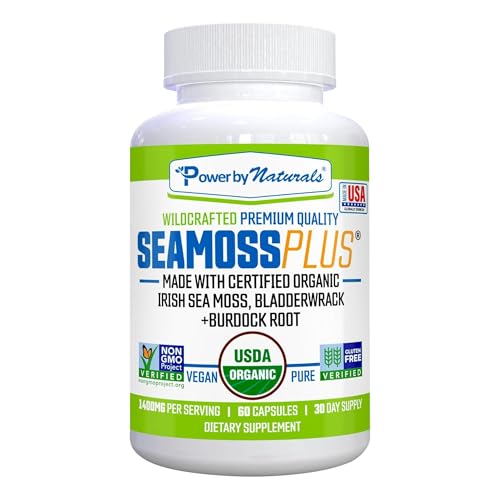
capsules, 1200mg sea moss / 1200mg bladderwrack / 225mg burdock root per serving, 120 capsules — High-dose transparent-label blend, vegan, non-GMO, made in USA; clearly stated per-ingredient milligrams rather than a proprietary blend - Secret Element Sea Moss Capsules with Burdock Root, Bladderwrack & Muira Puama
capsules, 120 capsules — Budget-friendly 4-ingredient blend, gluten-free, made in USA - Nutrivein Organic Sea Moss 1600mg with Bladderwrack & Burdock
capsules, 1600mg sea moss per serving plus bladderwrack and burdock — Widely available mid-tier brand, marketed for immune/digestive/thyroid/skin support claims
As an Amazon Associate we earn from qualifying purchases. Quality varies widely — always choose a product with a published third-party test (COA) before buying.

A Note on the Evidence
This article is informational, not medical advice, and the FDA has not evaluated sea moss or bladderwrack products for treating, curing, or preventing any disease. Because iodine content in these products is unstandardized and highly variable, and because unregulated wildcrafted seaweed can carry heavy metal contamination risk, talk to a doctor before regular use, especially if pregnant, thyroid-compromised, or on thyroid medication.
Frequently Asked Questions
Is there an official recommended daily amount of sea moss?
No. There’s no FDA-regulated standard dose for sea moss, and because iodine content varies so much between products and species, a fixed tablespoon or capsule count doesn’t reliably tell you your actual iodine exposure [2].
Is bladderwrack more risky than sea moss (Irish moss)?
Bladderwrack (Fucus vesiculosus) is a brown seaweed that has been shown to have variable, and often higher, iodine accumulation compared to some red seaweeds, and its iodine content changes with the season it’s harvested [3]. Blends that lean heavily on bladderwrack warrant more caution around iodine intake.
Can I get too much iodine from food alone, without supplements?
Yes. Population studies in Japan found meaningful numbers of adults exceeding the tolerable upper iodine intake level purely through diet, primarily seaweed consumption, without any supplement use [11] [6].
Does cooking or preparing sea moss reduce its iodine content?
The available evidence doesn’t establish a reliable preparation method for reducing iodine in these products; bioavailability research instead shows that iodine in a seaweed-containing meal is measurably absorbed by the body [4], so preparation isn’t a substitute for knowing the product’s actual iodine content.

Should I get my sea moss product tested or check for sourcing info?
Given how much iodine content varies between commercial seaweed products, and that some have been found to risk exceeding safe upper intake levels [8], checking for third-party testing or transparent sourcing is a reasonable precaution, especially for daily or long-term use.
Who should avoid sea moss or bladderwrack without medical guidance?
Pregnant women, people with existing thyroid conditions, and anyone on thyroid medication like levothyroxine should consult a doctor first, since iodine needs and sensitivities in these groups are distinct from the general population [7].

References
- Teas J et al. Variability of iodine content in common commercially available edible seaweeds. Thyroid : official journal of the American Thyroid Association (2004). PMID 15588380
- Roleda MY et al. Iodine content in bulk biomass of wild-harvested and cultivated edible seaweeds: Inherent variations determine species-specific daily allowable consumption. Food chemistry (2018). PMID 29548461
- Nitschke U et al. Variability in iodine in temperate seaweeds and iodine accumulation kinetics of Fucus vesiculosus and Laminaria digitata (Phaeophyceae, Ochrophyta). Journal of phycology (2018). PMID 29130494
- Aakre I et al. Bioavailability of iodine from a meal consisting of sushi and a wakame seaweed salad-A randomized crossover trial. Food science & nutrition (2023). PMID 38107121
- Morseth MS et al. High iodine content in local animal milk and risk of exceeding EFSA upper intake level for iodine among Saharawi women. PloS one (2019). PMID 30768637
- Katagiri R et al. Estimation of habitual iodine intake in Japanese adults using 16 d diet records over four seasons with a newly developed food composition database for iodine. The British journal of nutrition (2015). PMID 26197981
- Zimmermann M et al. Iodine supplementation of pregnant women in Europe: a review and recommendations. European journal of clinical nutrition (2004). PMID 15220938
- Aakre I et al. Commercially available kelp and seaweed products – valuable iodine source or risk of excess intake?. Food & nutrition research (2021). PMID 33889064
- Fuse Y et al. High Ingestion Rate of Iodine from Povidone-Iodine Mouthwash. Biological trace element research (2022). PMID 34674109
- Verkaik-Kloosterman J et al. Decreased, but still sufficient, iodine intake of children and adults in the Netherlands. The British journal of nutrition (2017). PMID 28516817
- Tsubota-Utsugi M et al. Evaluation of the prevalence of iodine intakes above the tolerable upper intake level from four 3-day dietary records in a Japanese population. Journal of nutritional science and vitaminology (2013). PMID 24064731
- Fan L et al. How to Decide the Iodine Content in Salt for a Country-China as an Example. Nutrients (2022). PMID 36364867
These statements have not been evaluated by the Food and Drug Administration. This information is not intended to diagnose, treat, cure, or prevent any disease. Content is for informational purposes only and is not medical advice; consult a qualified healthcare provider before starting any supplement. As an Amazon Associate we earn from qualifying purchases.
