Bladderwrack (Fucus vesiculosus) is a brown seaweed that’s been used for centuries as a source of iodine and, more recently, marketed as a weight-loss and thyroid-support supplement. Because it’s sold as a food-based product rather than a regulated drug, there’s no single agreed-upon ‘safe dose’ printed on a label you can trust across brands.
The bigger issue with bladderwrack isn’t whether it ‘works’ — it’s that its most active component, iodine, is also its biggest safety liability. This article lays out what’s known about dosing ranges, who should avoid it entirely, and how sourcing quality changes the risk profile. It is not medical advice, and no research here should be read as a treatment claim.
Key Takeaways
- Bladderwrack’s main safety concern is iodine, not the plant itself, and iodine content varies widely between products because the industry isn’t standardized.
- Anyone with a thyroid condition, on thyroid medication, pregnant, breastfeeding, or with kidney disease should avoid bladderwrack unless a doctor has specifically cleared it.
- Contamination with heavy metals (arsenic, lead, cadmium) is a real risk for seaweed products broadly, third-party lab testing matters more than marketing claims.
- Look for iodine content in mcg on the label, not just total plant weight in mg, and don’t stack it with other iodine sources (kelp, sea moss, iodine drops).
- This article is informational only and does not replace medical advice. The FDA has not evaluated these products for treating, curing, or preventing any disease.
Why Dosage Is Hard to Pin Down
Unlike a pharmaceutical, bladderwrack isn’t standardized. Iodine content in raw or lightly processed seaweed can vary by a factor of 10 or more depending on the species, harvest location, season, and part of the plant used [1][2]. Two bottles labeled ‘500mg bladderwrack’ can deliver very different actual iodine doses.
Most supplement labels list a total plant material weight (e.g., 400-650mg per capsule) rather than a guaranteed iodine content, which makes it difficult to compare products or set a universal safe ceiling [3][1]. Because of this variability, the more relevant number to track isn’t the bladderwrack dose itself, it’s your total daily iodine intake from all sources combined (diet, iodized salt, other supplements, and the bladderwrack product).
The Iodine Ceiling: Why This Matters More Than the Plant Dose
Iodine is essential for thyroid hormone production, but the therapeutic window is narrow. Too little causes deficiency; too much, especially in a bolus or sustained high dose, can suppress thyroid function or trigger autoimmune thyroid flares in susceptible people [4][5]. Bladderwrack is one of the few ‘natural’ supplements capable of delivering iodine doses well above typical dietary intake in a single serving.

Because commercial products don’t reliably disclose per-capsule iodine content, a cautious approach is to check the label for actual iodine mcg (not just plant weight), start at the lowest available dose, and avoid stacking bladderwrack with other iodine sources like kelp, sea moss blends, or iodine drops on the same day.
Who Should Not Take Bladderwrack
Several groups face meaningfully higher risk from bladderwrack’s iodine load and should avoid it unless specifically cleared by a physician: anyone with a diagnosed thyroid condition (hypothyroidism, hyperthyroidism, Hashimoto’s, or Graves’ disease), anyone on levothyroxine or other thyroid medication, pregnant or breastfeeding people (whose iodine needs and sensitivities differ from baseline), and anyone with a known iodine allergy or sensitivity.

People with kidney disease should also be cautious, since seaweed can be high in other minerals (like potassium) that are harder to clear with reduced kidney function. If any of these apply, the safest move is a conversation with a doctor before starting, not a lower dose of the same product.
Contamination Risk: Heavy Metals and Sourcing
Seaweeds are bioaccumulators, they concentrate whatever is in the water they grow in, including heavy metals like arsenic, lead, and cadmium when harvested from polluted coastal waters [6][7]. This is a documented concern across sea vegetable products generally, not unique to any one brand, and it’s a separate risk category from the iodine issue above.
Because there’s no federal standard specifically governing heavy metal limits in seaweed supplements sold in the US, sourcing and testing matter more than the marketing copy on the label. Products that publish third-party lab results (specifically testing for heavy metals, not just ‘purity’) are a meaningfully different risk category than wildcrafted or undocumented sourcing.

Practical Guardrails If You're Considering It
If you don’t fall into any of the higher-risk groups above and want to proceed, some practical guardrails: choose a product that discloses its iodine content per serving in mcg (not just ‘bladderwrack powder 500mg’), look for third-party heavy metal testing (a Certificate of Analysis, not just a badge), start at the lowest labeled dose rather than a ‘therapeutic’ or high-potency version, and avoid daily long-term use without periodic check-ins on thyroid labs (TSH, free T4) with a doctor.
Watch for early signs of too much iodine or thyroid disruption: unusual fatigue or its opposite (jitteriness/rapid heartbeat), unexplained weight changes, neck swelling, or changes in bowel habits. These warrant stopping the supplement and getting bloodwork, not pushing through.
How Bladderwrack Differs From Sea Moss in This Regard
Sea moss (Chondrus crispus, Irish moss) is often sold alongside or blended with bladderwrack, but it is a different species with a generally lower and more variable iodine content, and its traditional use leans more toward mineral content and polysaccharides (like carrageenan) than iodine-driven thyroid effects. Blended products that combine sea moss and bladderwrack can obscure the actual iodine dose even further, since the label may not break down each species’ contribution.
If a product blends the two, treat the total iodine content (if disclosed) as the number that matters, not the plant weight of either ingredient individually.
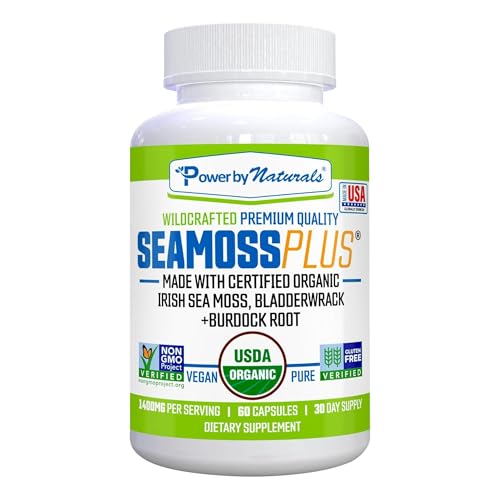
🛒 Where to Buy Sea Moss & Bladderwrack
- CleanseParasites Intra-Cellular Superfood Editor’s Pick
Contains sea moss and bladderwrack alongside black cumin seed and other superfood ingredients. - American Standard Supplements Organic Sea Moss, Bladderwrack & Burdock Root Capsules
capsules, 1200mg sea moss / 1200mg bladderwrack / 225mg burdock root per serving, 120 capsules — High-dose transparent-label blend, vegan, non-GMO, made in USA; clearly stated per-ingredient milligrams rather than a proprietary blend - Secret Element Sea Moss Capsules with Burdock Root, Bladderwrack & Muira Puama
capsules, 120 capsules — Budget-friendly 4-ingredient blend, gluten-free, made in USA - Nutrivein Organic Sea Moss 1600mg with Bladderwrack & Burdock
capsules, 1600mg sea moss per serving plus bladderwrack and burdock — Widely available mid-tier brand, marketed for immune/digestive/thyroid/skin support claims
As an Amazon Associate we earn from qualifying purchases. Quality varies widely — always choose a product with a published third-party test (COA) before buying.

A Note on the Evidence
This article reflects general safety considerations, not a clinical evaluation of any specific product or individual, and no specific research citations were available to draw on for this piece. Anyone with a thyroid condition, who is pregnant or breastfeeding, or taking thyroid medication should talk to a doctor before using bladderwrack, and this is not a substitute for medical advice.
Frequently Asked Questions
What's a typical bladderwrack dose?
There is no single standardized dose because iodine content varies widely between products and harvest sources. Commercial capsules commonly range from 400-650mg of plant material, but that number tells you little about actual iodine delivered, check the label for iodine content in mcg specifically.
Can I take bladderwrack every day?
Long-term daily use increases cumulative iodine exposure, which raises the risk of thyroid disruption over time, especially with unstandardized products. If used at all, periodic breaks and thyroid lab monitoring with a doctor are a safer approach than continuous daily use.

Is bladderwrack safe if I have a thyroid condition?
Generally not without direct physician guidance. Existing thyroid dysfunction (hypo- or hyperthyroid, Hashimoto’s, Graves’) can be worsened by bladderwrack’s iodine content, and people on levothyroxine should be especially cautious since iodine intake can interact with thyroid hormone regulation.
Does third-party testing actually matter for these products?
Yes. Because seaweed accumulates heavy metals from its growing water and there’s no federal heavy-metal limit specific to seaweed supplements, a published Certificate of Analysis testing for arsenic, lead, and cadmium is one of the few concrete signals of quality control available to a buyer.
Is bladderwrack the same as sea moss?
No. They are different species (Fucus vesiculosus vs. Chondrus crispus) with different typical iodine content and traditional uses. Blended products can make it hard to know how much iodine you’re actually getting from each ingredient.
What symptoms suggest I've had too much iodine from bladderwrack?
Watch for unusual fatigue, rapid heartbeat or jitteriness, unexplained weight change, neck swelling, or new bowel changes. These are reasons to stop the supplement and get thyroid bloodwork (TSH, free T4), not to push through or lower the dose informally.
References
- Commercially available kelp and seaweed products: valuable iodine source or risk of excess intake?. Food & Nutrition Research (2021). PMID 33889064
- Risk assessment of iodine intake from the consumption of red seaweeds (Palmaria palmata and Chondrus crispus). Environmental Science and Pollution Research (2020). PMID 32803579
- Emergence of Seaweed and Seaweed-Containing Foods in the UK: Focus on Labeling, Iodine Content, Toxicity and Nutrition. Foods (2015). PMID 28231201
- Multiple Nutritional Factors and the Risk of Hashimoto Thyroiditis. Thyroid (2017). PMID 28290237
- Iodine toxicity from soy milk and seaweed ingestion is associated with serious thyroid dysfunction. The Medical Journal of Australia (2010). PMID 20919974
- Survey of arsenic content in edible seaweeds and their health risk assessment. Food and Chemical Toxicology (2024). PMID 38499235
- Case report: potential arsenic toxicosis secondary to herbal kelp supplement. Environmental Health Perspectives (2007). PMID 17450231
These statements have not been evaluated by the Food and Drug Administration. This information is not intended to diagnose, treat, cure, or prevent any disease. Content is for informational purposes only and is not medical advice; consult a qualified healthcare provider before starting any supplement. As an Amazon Associate we earn from qualifying purchases.
