Sea moss (Chondrus crispus, also called Irish moss) has become a staple of “collagen-boosting” smoothies, gummies, and gel supplements, usually alongside bladderwrack in mineral blend products. The pitch is that its minerals and polysaccharides feed collagen production in the skin, supposedly firming skin and slowing visible aging from the inside out.
That claim deserves a closer look, because it is not built on sea moss studies. It is built on research into other seaweeds and seaweed-derived compounds, extrapolated across the algae family. Some of that adjacent research is genuinely interesting. None of it is a trial of sea moss itself boosting collagen in a human body.
Key Takeaways
- No published human study shows sea moss (Chondrus crispus) itself increases collagen production when eaten.
- The collagen-related seaweed evidence comes from different species (Ulva intestinalis [1], fucoidan-containing brown algae [2][3]), not sea moss.
- Most of the supporting research is in vitro (cell cultures) or in animal/topical models, not oral human supplementation.
- Sea moss’s better-supported roles are as a mineral and iodine source (via bladderwrack) and traditional food thickener, not a proven collagen booster.
- Iodine content in sea moss/bladderwrack blends is unstandardized and can worsen thyroid function in sensitive individuals; this is not a reason to add more without medical guidance.
What sea moss actually is, and what it isn't
Sea moss is a red algae harvested mostly for its carrageenan content, a gelling polysaccharide used in food and supplements. Bladderwrack, a separate brown algae, is the species most responsible for the iodine and thyroid-support claims that get bundled into the same products. Neither is the same organism as the seaweeds tested in the collagen research below.

That distinction matters because algae species vary enormously in what compounds they produce and in what concentration. A finding about fucoidan from brown algae in general, or about a protein extract from a green sea lettuce, does not automatically transfer to Chondrus crispus. The industry habit of citing “seaweed research” as if all algae behave identically is where a lot of the collagen marketing gets ahead of the evidence.
The actual collagen evidence: it's about other seaweeds, not sea moss
The strongest direct evidence for a seaweed compound affecting collagen production comes from Ulva intestinalis, a green sea lettuce, not sea moss. A protein extract from this algae increased collagen and hyaluronic acid output from human dermal fibroblasts grown in a lab dish [1]. That’s a real, measurable effect, but it’s an in vitro finding on isolated skin cells exposed directly to a concentrated extract, not a result from a person eating or drinking algae.
A separate compound class, fucoidan (a sulfated polysaccharide found in various brown algae), has been shown to modulate the enzymes that break down connective tissue, meaning it can influence the balance between collagen breakdown and collagen preservation [2]. A newer study found a low-molecular-weight fucoidan protected keratinocytes and the fibroblasts underneath them from inflammation triggered by fine particulate matter, in a lab-based skin culture model [3]. These are mechanistic, cell-culture findings, useful for understanding how fucoidan behaves, not proof that a fucoidan-containing supplement rebuilds collagen in your skin.

Alginate and alginic acid, also brown algae-derived, show up in wound-healing and tissue-repair research: an alginate hydrogel supported wound healing in an animal/lab model [4], a related hydrogel loaded with algae-derived extracellular vesicles promoted skin and bone repair by modulating fibroblasts and stem cells in vitro [5], and alginic acid from the brown algae Padina boryana reduced particulate-matter-induced inflammation in keratinocytes and dermal fibroblasts [6]. Again: cell and tissue-repair models, not sea moss, not oral collagen claims.

The photoaging research: a different mechanism entirely
A lot of “seaweed and skin” research is actually about photoprotection, shielding skin from UV damage, which is related to but distinct from stimulating new collagen. Mycosporine-like amino acids (MAAs), compounds several algae produce as natural sunscreens, have been studied for reducing UVB-induced skin damage: one study used MAAs from an Antarctic diatom [7], another used MAAs from Porphyra tenera (a red algae related to nori) to reduce photoaging markers in mouse skin after UV exposure [8].
A photoprotection study on the green algae Capsosiphon fulvescens found it reduced UVB-induced skin damage in both mice and cultured human keratinocytes [9]. A broader review of marine algae in skin care summarizes this category of research: antioxidant and UV-protective compounds from various seaweed species, evaluated mostly in vitro or in animal models [10]. A more recent seaweed extract study specifically targeted skin-aging pathways in human skin samples [11], and cellulose nanocrystals extracted from the green algae Cladophora glomerata have been explored for biomaterial applications rather than internal supplementation [12]. None of these are sea moss, and none measure collagen synthesis in a living human being who ingested the seaweed.
So does sea moss boost collagen? Here's the honest read
There is no published human study showing that eating sea moss, or a bladderwrack-sea moss blend, increases collagen production or measurably improves skin firmness. The marketing claim borrows credibility from a real and active area of algae research, but it applies findings from different species (Ulva, Porphyra, Padina, Capsosiphon, various fucoidan sources) and different delivery methods (topical extracts, lab-grown cell cultures, injectable hydrogels) to a food product consumed orally.
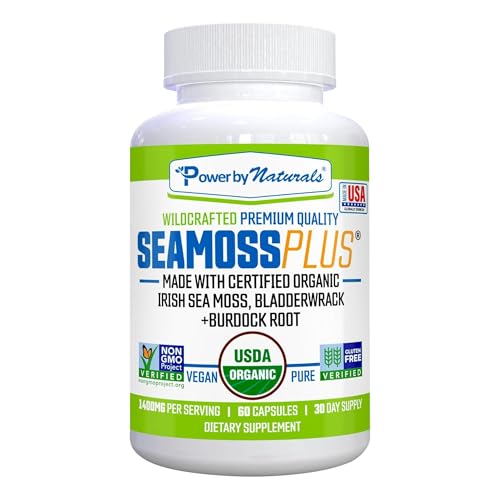
That doesn’t make the underlying science fake. Fucoidan’s effect on connective-tissue-degrading enzymes [2] and Ulva’s stimulation of fibroblast collagen output [1] are legitimate, published findings that justify continued research into seaweed-derived skincare ingredients, particularly topical formulations. But “a related compound did X to isolated skin cells in a dish” is a long way from “drinking sea moss gel will boost your collagen.”

What sea moss's mineral and carrageenan content is more plausibly good for
Sea moss’s actual documented strengths are more mundane than the collagen claim: it’s a source of trace minerals (iodine, potassium, calcium, magnesium) and carrageenan-family polysaccharides, and it has a long history as a traditional food thickener and mineral-dense ingredient. Bladderwrack’s iodine content is the piece of this category with the most direct human clinical grounding for thyroid function, though iodine dosing from unstandardized seaweed products is inconsistent and can just as easily disrupt thyroid function as support it, especially with existing thyroid conditions or levothyroxine use.
If skin support specifically is the goal, the algae compounds with the most direct collagen and skin-barrier evidence right now, fucoidan and Ulva-derived proteins, are studied as topical extracts rather than dietary sea moss. A topical product formulated with those specific, tested compounds has a more direct evidence trail than a sea moss gummy marketed on general “seaweed is good for skin” reasoning.

🛒 Where to Buy Sea Moss & Bladderwrack
- CleanseParasites Intra-Cellular Superfood Editor’s Pick
Contains sea moss and bladderwrack alongside black cumin seed and other superfood ingredients. - American Standard Supplements Organic Sea Moss, Bladderwrack & Burdock Root Capsules
capsules, 1200mg sea moss / 1200mg bladderwrack / 225mg burdock root per serving, 120 capsules — High-dose transparent-label blend, vegan, non-GMO, made in USA; clearly stated per-ingredient milligrams rather than a proprietary blend - Secret Element Sea Moss Capsules with Burdock Root, Bladderwrack & Muira Puama
capsules, 120 capsules — Budget-friendly 4-ingredient blend, gluten-free, made in USA - Nutrivein Organic Sea Moss 1600mg with Bladderwrack & Burdock
capsules, 1600mg sea moss per serving plus bladderwrack and burdock — Widely available mid-tier brand, marketed for immune/digestive/thyroid/skin support claims
As an Amazon Associate we earn from qualifying purchases. Quality varies widely — always choose a product with a published third-party test (COA) before buying.

A Note on the Evidence
This article is informational, not medical advice, and the cited studies are largely in vitro, animal, or topical research rather than trials of ingested sea moss; anyone with a thyroid condition, who is pregnant, or taking levothyroxine should talk to a doctor before adding iodine-containing sea moss or bladderwrack products, since unregulated seaweed supplements have unpredictable iodine content and heavy metal contamination risk depending on sourcing.
Frequently Asked Questions
Is there any human study on sea moss and collagen?
No. None of the current evidence base tests Chondrus crispus (sea moss) directly for collagen production in humans. The relevant collagen-related findings come from other algae species like Ulva intestinalis, studied on human dermal fibroblasts in a lab setting rather than in living skin [1].
What algae compound has the best collagen-related evidence?
Fucoidan, a sulfated polysaccharide from brown algae, has the clearest mechanistic link: it modulates the enzymes involved in breaking down connective tissue [2] and has protected fibroblasts from inflammation-driven damage in cultured skin models [3]. It is not the same compound sea moss is best known for (carrageenan).
Does bladderwrack help skin more than sea moss does?
The evidence doesn’t single out bladderwrack for skin/collagen effects either; its best-documented human relevance is iodine and thyroid function, not collagen. Skin-focused seaweed studies in this evidence set used species like Ulva, Porphyra, and Capsosiphon fulvescens, not bladderwrack specifically.
Can seaweed extracts protect against skin aging from sun exposure?
Several studies show mycosporine-like amino acids from specific algae (an Antarctic diatom [7], Porphyra tenera [8]) reduced UVB-induced skin damage in mouse and cell models. That’s a photoprotection mechanism, distinct from directly boosting collagen synthesis, and these studies used topical or lab exposure, not oral sea moss.


Should I stop taking sea moss if collagen support was my main reason?
That’s a reasonable question to raise with the specific claim in mind: the collagen-boost mechanism isn’t demonstrated for sea moss itself. If iodine, minerals, or digestive fiber are also part of why you take it, those are separate questions with their own evidence and risk profile, including thyroid caution.
Are topical seaweed skincare products better supported than oral sea moss supplements?
The studies with the most direct collagen and fibroblast evidence (Ulva protein extracts, fucoidan) were tested as topical or cell-culture applications, not ingested supplements. If skin benefit specifically is the goal, a topically applied, ingredient-specific product has a shorter evidentiary gap to close than a sea moss gel taken orally.
References
- Bodin J et al. Ulva intestinalis Protein Extracts Promote In Vitro Collagen and Hyaluronic Acid Production by Human Dermal Fibroblasts. Molecules (Basel, Switzerland) (2020). PMID 32365755
- Senni K et al. Fucoidan a sulfated polysaccharide from brown algae is a potent modulator of connective tissue proteolysis. Archives of biochemistry and biophysics (2006). PMID 16364234
- Kirindage KGIS et al. Fine-Dust-Induced Skin Inflammation: Low-Molecular-Weight Fucoidan Protects Keratinocytes and Underlying Fibroblasts in an Integrated Culture Model. Marine drugs (2022). PMID 36662185
- Yang P et al. Alginate-based composite hydrogel derived from Azotobacter vinelandii Av1: Preparation, properties, and wound-healing efficacy. Carbohydrate polymers (2026). PMID 42097779
- De Cesare N et al. Microalgae-Derived Extracellular Vesicle-Loaded 3D Alginate Hydrogels Promote In Vitro Skin and Bone Repair through Dual Fibroblast and Mesenchymal Stem Cell Modulation. ACS applied bio materials (2026). PMID 41482969
- Jayawardena TU et al. Alginic Acid from Padina boryana Abate Particulate Matter-Induced Inflammatory Responses in Keratinocytes and Dermal Fibroblasts. Molecules (Basel, Switzerland) (2020). PMID 33291461
- Wang K et al. Protective Effect of Mycosporine-like Amino Acids Isolated from an Antarctic Diatom on UVB-Induced Skin Damage. International journal of molecular sciences (2023). PMID 37894736
- Rui Y et al. Protective effect of MAAs extracted from Porphyra tenera against UV irradiation-induced photoaging in mouse skin. Journal of photochemistry and photobiology. B, Biology (2019). PMID 30665147
- Seo J et al. Photoprotective activities of Capsosiphon fulvescens in UVB-induced SKH-1 mice and human keratinocytes. Journal of food science (2024). PMID 38992886
- Berthon JY et al. Marine algae as attractive source to skin care. Free radical research (2017). PMID 28770671
- De Tollenaere M et al. Seaweed-Derived Extract Targets Porphyr'ageing to Modulate the Visible Signs of Aging in Human Skin. Marine drugs (2026). PMID 42346805
- Plianwong S et al. Cellulose nanocrystals from marine algae Cladophora glomerata by using microwave-assisted extraction. International journal of biological macromolecules (2024). PMID 38219928
These statements have not been evaluated by the Food and Drug Administration. This information is not intended to diagnose, treat, cure, or prevent any disease. Content is for informational purposes only and is not medical advice; consult a qualified healthcare provider before starting any supplement. As an Amazon Associate we earn from qualifying purchases.
