Sea moss (Chondrus crispus, often called Irish moss) has become a staple in smoothies, gels, and capsules marketed for gut health, skin, and general mineral support. Because it’s a seaweed, it’s also a naturally concentrated source of iodine, and iodine is the mineral your thyroid uses to build its hormones. If you already have a thyroid nodule, or you’re trying to figure out whether a new lump found on ultrasound might be connected to something you’re eating, that iodine content is the piece worth understanding before you add sea moss to your routine.
The honest answer is that the science on iodine and thyroid nodules is more mixed than most wellness content lets on. Some research ties higher iodine intake to a greater risk of nodule formation, while other reviews have pushed back on that assumption, finding the relationship weaker or less consistent than commonly assumed. This article lays out what the evidence actually says, why sea moss specifically complicates the picture, and what questions are worth asking your doctor if you already have a nodule.
Key Takeaways
- Sea moss iodine content is unpredictable and unstandardized; bladderwrack blends in particular can run high
- The research linking iodine to thyroid nodule formation is genuinely mixed, not a settled fact in either direction [1][2][3]
- Existing autoimmune thyroid disease (Hashimoto’s) or a ‘cold’/non-functioning nodule changes the risk calculation meaningfully
- Iodine excess can trigger hyper- or hypothyroidism even without a pre-existing nodule
- Know your nodule type, antibody status, and recent thyroid labs before deciding, and loop in your doctor if you already have one
Why Sea Moss Iodine Content Is Hard to Predict
Unlike a supplement with a standardized dose printed on the label, sea moss iodine content varies enormously depending on the species, the water it was harvested from, the season, and how it was processed. Bladderwrack (Fucus vesiculosus), a brown seaweed often blended into ‘sea moss’ products or sold alongside it, tends to run much higher in iodine than the red seaweed Chondrus crispus that ‘sea moss’ technically refers to. A gel or capsule labeled sea moss may contain a mix of species, and most commercial products don’t disclose iodine content at all.
This matters because the thyroid research on iodine and nodules is largely built around a known, measurable intake, whether from diet, iodized salt, or a supplement with a stated dose. When the intake itself is unpredictable, as it is with unregulated sea moss products, it becomes much harder to reason about your personal risk using population-level studies as a guide.

Does Iodine Actually Cause Thyroid Nodules? The Evidence Is Contested
This is the part where the research genuinely disagrees. A 2025 systematic review and meta-analysis went so far as to describe the assumed iodine-nodule link as partly a myth, finding the evidence connecting iodine intake to thyroid nodule formation weaker and less consistent than commonly believed [1]. That’s a meaningful pushback against the idea that iodine automatically drives nodule growth.
At the same time, other work points the other way. A comprehensive review of animal and human studies has identified iodine intake as a risk factor relevant to thyroid pathology, including nodular disease [2], and a more recent dose-response meta-analysis found correlations between iodine status and thyroid nodule risk [3]. A study in pregnant Chinese women, a population especially sensitive to iodine shifts, found that excessive iodine intake was associated with new nodule formation [4].
The practical takeaway: the relationship between iodine and nodules is not settled science, and it likely depends on baseline iodine status, thyroid autoimmunity, dose, and duration, not iodine intake in isolation. Anyone telling you it’s simple in either direction (iodine definitely causes nodules, or iodine has nothing to do with them) is oversimplifying a genuinely mixed evidence base.

If You Already Have a Nodule, a Few Distinctions Matter
Not all nodules are the same, and iodine’s relevance depends partly on nodule type. Older research on ‘cold’ nodules, ones that don’t take up radioactive iodine on a thyroid scan, found that cancer risk in these nodules is related to iodine intake alongside sex and age, but not in relation to whether the thyroid has multiple nodules [5]. Separately, a study looking at urinary iodine levels alongside thyroid autoantibodies found that more than adequate iodine intake was linked to larger papillary tumors in women, while thyroid autoantibodies were separately linked to risk of small papillary cancers, and iodine levels did not differ between cancer and nodular goiter [6], suggesting iodine may relate more to tumor growth than to the onset of cancer.
This is one reason a home decision to add or avoid sea moss isn’t really a substitute for knowing what kind of nodule you have. A nodule found to be non-functioning on imaging, in someone with positive thyroid antibodies, sits in a meaningfully different risk category than a benign, hormonally active nodule in someone with no autoimmune markers.
Autoimmune Thyroid Disease Changes the Calculation
If you have Hashimoto’s thyroiditis, or thyroid antibodies without a formal diagnosis yet, iodine deserves extra caution. Iodine excess has been described as playing a catalytic role in the loss of immune tolerance seen in autoimmune thyroiditis [7], and a study of nutritional factors in Hashimoto’s patients identified iodine among several dietary elements associated with disease risk [8]. A broader overview of Hashimoto’s metabolic characteristics likewise discusses the role microelements and diet, iodine among them, play in disease management [9].
Nodules are common in Hashimoto’s, and adding a concentrated, unlabeled iodine source like sea moss into that picture is a meaningfully different decision than adding it if you have a normal, antibody-negative thyroid. This is a case where ‘natural’ doesn’t translate to ‘lower risk.’
Iodine Excess Can Cause Thyroid Problems on Its Own, Independent of Nodules
Even setting nodules aside, too much iodine, delivered all at once from a concentrated source like seaweed, can push the thyroid into dysfunction in either direction. Iodine-induced hypothyroidism is a documented phenomenon, particularly in people with underlying thyroid autoimmunity or prior thyroid disease [10], and a broader review of iodine excess covers the range of thyroid effects triggered by high intake, including in people who seemed to tolerate iodine fine before [11]. On the other end, a 2025 review of hyperthyroidism diagnosis and treatment notes that excess iodine exposure is a recognized trigger for hyperthyroid episodes [12].
In other words, the harm doesn’t require a nodule to already exist. Someone with a completely normal thyroid can develop iodine-induced hyper- or hypothyroidism from a sea moss habit that quietly delivers far more iodine than intended, especially if bladderwrack is part of the blend.
Practical Steps If You're Considering Sea Moss and Have a Nodule
If you already have a diagnosed thyroid nodule, the most useful thing you can do before adding sea moss is find out what kind of nodule it is (functioning vs. non-functioning, benign vs. indeterminate), whether you have thyroid antibodies, and what your recent TSH and thyroid panel look like. That context is what turns the mixed research above from an abstract debate into something applicable to you specifically.

Beyond the nodule question, sourcing is its own issue: unregulated, wildcrafted sea moss has been found to carry heavy metal contamination (arsenic, lead, cadmium) depending on harvest waters and processing, so a product’s iodine content isn’t the only unknown you’re accepting. If you do use sea moss with a nodule on record, doing so under a clinician’s awareness, ideally someone tracking your thyroid labs, is a reasonable way to catch a problem early rather than after symptoms appear.
🛒 Where to Buy Sea Moss & Bladderwrack
- CleanseParasites Intra-Cellular Superfood Editor’s Pick
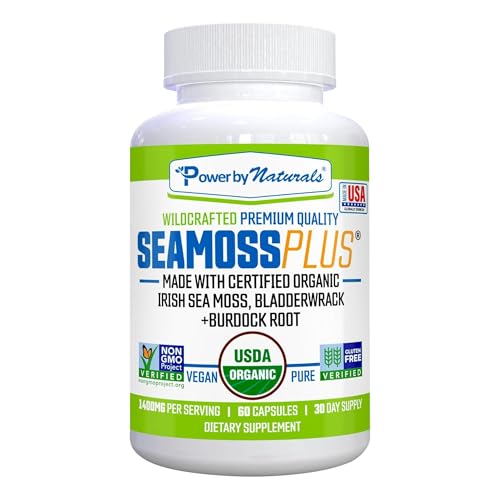
Contains sea moss and bladderwrack alongside black cumin seed and other superfood ingredients. - American Standard Supplements Organic Sea Moss, Bladderwrack & Burdock Root Capsules
capsules, 1200mg sea moss / 1200mg bladderwrack / 225mg burdock root per serving, 120 capsules — High-dose transparent-label blend, vegan, non-GMO, made in USA; clearly stated per-ingredient milligrams rather than a proprietary blend - Secret Element Sea Moss Capsules with Burdock Root, Bladderwrack & Muira Puama
capsules, 120 capsules — Budget-friendly 4-ingredient blend, gluten-free, made in USA - Nutrivein Organic Sea Moss 1600mg with Bladderwrack & Burdock
capsules, 1600mg sea moss per serving plus bladderwrack and burdock — Widely available mid-tier brand, marketed for immune/digestive/thyroid/skin support claims
As an Amazon Associate we earn from qualifying purchases. Quality varies widely — always choose a product with a published third-party test (COA) before buying.

A Note on the Evidence
This article is informational, not medical advice, and much of the underlying research is population-level or preliminary rather than a direct study of sea moss itself. If you have a thyroid nodule, thyroid autoimmunity, are pregnant, or take levothyroxine, talk to your doctor before adding sea moss or bladderwrack, and consider third-party testing for iodine and heavy metals given how unstandardized these products are.
Frequently Asked Questions
Does sea moss definitely cause thyroid nodules?
No. The evidence is contested. Some research finds iodine intake associated with nodule risk [2][3][4], while a 2025 systematic review found the overall link weaker and less consistent than assumed [1]. There’s no clean ‘sea moss causes nodules’ finding either way.
Is it more dangerous to use sea moss if I have Hashimoto's?
Likely yes. Iodine excess has been linked to a catalytic role in autoimmune thyroiditis and Hashimoto’s risk factors [7][8][9], so unmeasured iodine from sea moss is a bigger unknown if you already have thyroid antibodies.
Can sea moss cause hyperthyroidism or hypothyroidism even without a nodule?
Yes. Iodine excess is a recognized trigger for both iodine-induced hypothyroidism [10] and hyperthyroid episodes [12], and a broader review covers the range of thyroid effects from iodine excess [11].

Are 'cold' (non-functioning) nodules different when it comes to iodine risk?
Older research found cancer risk in cold nodules relevant to iodine intake alongside sex and age, but not multinodularity [5], and higher iodine intake has been linked to larger papillary thyroid tumors in women, and thyroid autoantibodies to risk of small papillary cancers [6]. Knowing your nodule type matters more than a blanket answer.
Is sea moss riskier during pregnancy if I have a nodule?
Pregnancy appears to be a particularly iodine-sensitive window: one study found excessive iodine intake associated with new thyroid nodule formation in pregnant women [4]. This is a reason to be especially cautious with unlabeled iodine sources like sea moss while pregnant.
What should I actually do before using sea moss with an existing nodule?
Get clarity on your nodule type (functioning vs. non-functioning), thyroid antibody status, and recent TSH/thyroid panel, then discuss sea moss with your clinician in that context rather than deciding from general internet claims.
References
- Gräfe W et al. The myth of iodine: A systematic review and meta-analysis on the relationship between iodine and thyroid nodule. Journal of endocrinological investigation (2025). PMID 40434566
- Zimmermann MB et al. Iodine intake as a risk factor for thyroid cancer: a comprehensive review of animal and human studies. Thyroid research (2015). PMID 26146517
- Lu C et al. Correlations between iodine status and the risk of thyroid nodules, a systematic review and dose-response meta-analysis. Frontiers in endocrinology (2026). PMID 41675569
- Gao M et al. Excessive iodine intake is associated with formation of thyroid nodules in pregnant Chinese women. Nutrition research (New York, N.Y.) (2019). PMID 30979661
- Belfiore A et al. Cancer risk in patients with cold thyroid nodules: relevance of iodine intake, sex, age, and multinodularity. The American journal of medicine (1992). PMID 1415299
- Zhao H et al. High Urinary Iodine, Thyroid Autoantibodies, and Thyroid-Stimulating Hormone for Papillary Thyroid Cancer Risk. Biological trace element research (2018). PMID 29164514
- Duntas LH et al. The catalytic role of iodine excess in loss of homeostasis in autoimmune thyroiditis. Current opinion in endocrinology, diabetes, and obesity (2018). PMID 30124478
- Hu S et al. Multiple Nutritional Factors and the Risk of Hashimoto's Thyroiditis. Thyroid : official journal of the American Thyroid Association (2017). PMID 28290237
- Mikulska AA et al. Metabolic Characteristics of Hashimoto's Thyroiditis Patients and the Role of Microelements and Diet in the Disease Management-An Overview. International journal of molecular sciences (2022). PMID 35743024
- Markou K et al. Iodine-Induced hypothyroidism. Thyroid : official journal of the American Thyroid Association (2001). PMID 11396709
- Bürgi H et al. Iodine excess. Best practice & research. Clinical endocrinology & metabolism (2010). PMID 20172475
- Mounsey A et al. Hyperthyroidism: Diagnosis and Treatment. American family physician (2025). PMID 40834371
These statements have not been evaluated by the Food and Drug Administration. This information is not intended to diagnose, treat, cure, or prevent any disease. Content is for informational purposes only and is not medical advice; consult a qualified healthcare provider before starting any supplement. As an Amazon Associate we earn from qualifying purchases.
