Sea moss (Chondrus crispus) and bladderwrack (Fucus vesiculosus) are sold with a growing list of badges: USDA Organic, MSC Certified, Friend of the Sea, and “wildcrafted” claims. Each label addresses a different slice of quality — farming method, fishery sustainability, or harvest location — but none single-handedly guarantees consistent iodine levels or heavy-metal safety.
This guide breaks down what each certification actually verifies, where the gaps remain, and how to read labels so you can choose a product that matches your priorities for purity, sustainability, and transparency.
Key Takeaways
- USDA Organic verifies farming/processing practices, not iodine levels or heavy-metal results.
- MSC and Friend of the Sea are sustainability certifications; they do not test for contaminants or standardize nutrients.
- “Wildcrafted” is an unregulated marketing term — demand harvest location and lot-specific COAs.
- Iodine content varies widely between Chondrus crispus and Fucus vesiculosus; blends without ratios are a black box.
- Third-party batch testing (COAs) is the only way to verify purity and potency for your specific bottle.
USDA Organic: What It Covers for Seaweed
USDA Organic certification for seaweed requires that the growing area meets organic standards for water quality, that no synthetic pesticides, fertilizers, or prohibited substances are used, and that handling and processing facilities are certified. For farmed sea moss (often grown on ropes in coastal waters), this means the surrounding marine environment is monitored and the operation follows an organic system plan.
Organic certification does not set limits on naturally occurring iodine — which varies by species, season, and location — nor does it require batch testing for heavy metals such as arsenic, lead, or cadmium. It also does not apply to wild-harvested seaweed, which cannot be certified organic under current USDA rules because the harvest area is not a controlled farm.
MSC Certification: Focus on Wild Fishery Sustainability
The Marine Stewardship Council (MSC) certifies wild-capture fisheries, not aquaculture. For bladderwrack or other wild-harvested brown seaweeds, MSC certification means the fishery meets standards for sustainable stock status, minimal environmental impact, and effective management. Chain-of-custody certification then tracks the seaweed from harvest through processing.

MSC does not address iodine content, heavy-metal levels, or processing methods. It is a sustainability label, not a purity or potency label. Farmed sea moss (Chondrus crispus) is not eligible for MSC because it is aquaculture, not wild capture.
Friend of the Sea: Aquaculture and Wild-Harvest Standards
Friend of the Sea (FoS) certifies both wild-harvest and aquaculture operations. For seaweed farms, it requires environmental impact assessments, waste management, and avoidance of critical habitats. For wild harvest, it requires that the target species is not overexploited and that harvesting methods do not damage the ecosystem.
Like MSC, FoS is primarily an environmental and social responsibility standard. It does not mandate nutritional testing, iodine standardization, or heavy-metal limits beyond general environmental compliance. Products carrying both FoS and organic labels have met two separate audit systems, but neither replaces third-party lab analysis for contaminants.
"Wildcrafted" and "Wild-Harvested": Marketing Term, Not a Certification
“Wildcrafted” implies the seaweed was hand-harvested from its natural habitat rather than farmed. There is no single regulatory definition or third-party audit behind the term. Harvest location, season, cutter training, and post-harvest handling (rinsing, drying, milling) all affect mineral profile and contaminant load.
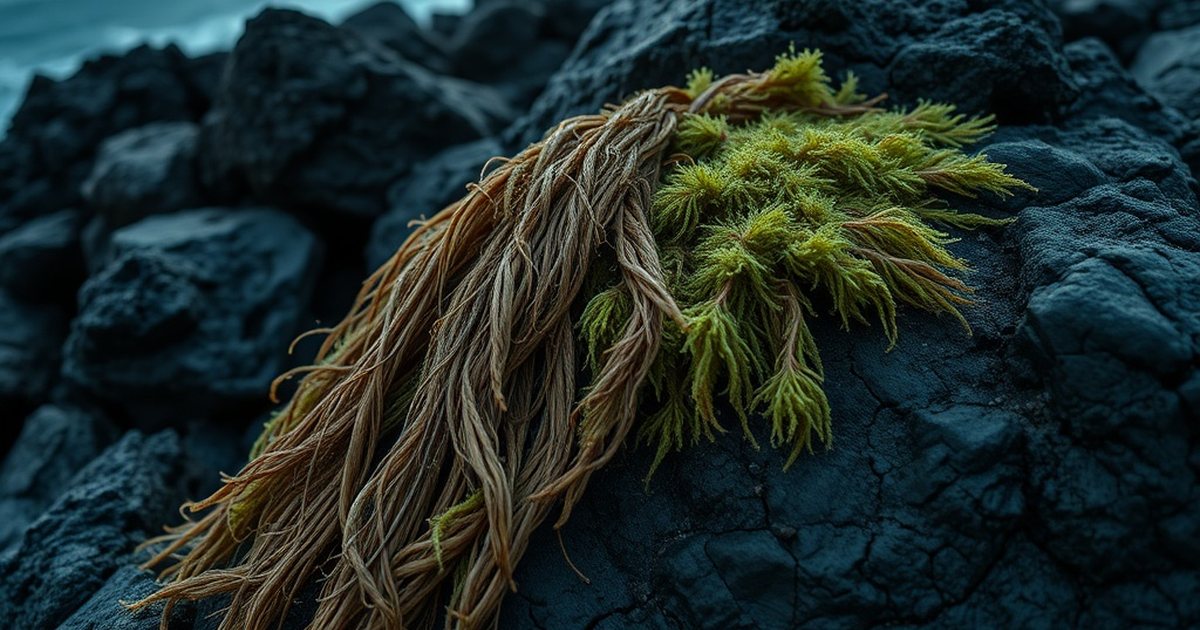
Without a certifying body, wildcrafted claims rely entirely on the brand’s transparency. Reputable suppliers disclose harvest coordinates, water-quality reports, and third-party certificates of analysis (COAs) for each lot. Absent that documentation, “wildcrafted” is a storytelling claim, not a quality guarantee.

What Certifications Miss: Iodine Variability and Heavy Metals
Iodine content in sea moss and bladderwrack can vary by an order of magnitude depending on species, geography, season, and drying method.[1][2] Bladderwrack (Fucus vesiculosus) typically contains far more iodine than Chondrus crispus.[2] No major certification — organic, MSC, or FoS — requires iodine disclosure or standardization on the label.[3]
Heavy-metal accumulation (arsenic, lead, cadmium, mercury) depends on water chemistry and harvest proximity to industrial runoff or volcanic activity. Organic standards address input restrictions, not background environmental contamination. Only batch-specific third-party testing (COAs) can verify that a given lot falls within safe limits for daily consumption.
How to Evaluate a Sea Moss Product Beyond the Badge
Look for a lot-specific certificate of analysis from an ISO-accredited lab showing iodine (mcg/g), arsenic (inorganic and total), lead, cadmium, and mercury.[4] The COA should match the lot number on the package. Brands that publish COAs publicly or on request are practicing transparency that certifications alone do not require.
Check the species name on the supplement facts panel. “Irish moss” should be Chondrus crispus; “bladderwrack” should be Fucus vesiculosus. Blends that do not disclose the ratio make iodine dosing unpredictable. If you have thyroid disease, are pregnant, or take levothyroxine, consult a clinician before using any seaweed supplement — certification does not make it safe for those populations.
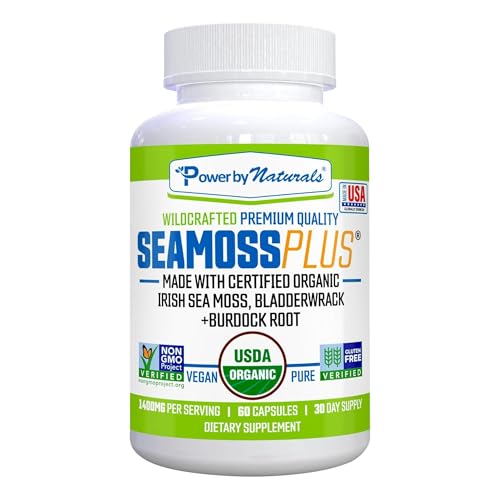
🛒 Where to Buy Sea Moss & Bladderwrack
- CleanseParasites Intra-Cellular Superfood Editor’s Pick
Contains sea moss and bladderwrack alongside black cumin seed and other superfood ingredients. - American Standard Supplements Organic Sea Moss, Bladderwrack & Burdock Root Capsules
capsules, 1200mg sea moss / 1200mg bladderwrack / 225mg burdock root per serving, 120 capsules — High-dose transparent-label blend, vegan, non-GMO, made in USA; clearly stated per-ingredient milligrams rather than a proprietary blend - Secret Element Sea Moss Capsules with Burdock Root, Bladderwrack & Muira Puama
capsules, 120 capsules — Budget-friendly 4-ingredient blend, gluten-free, made in USA - Nutrivein Organic Sea Moss 1600mg with Bladderwrack & Burdock
capsules, 1600mg sea moss per serving plus bladderwrack and burdock — Widely available mid-tier brand, marketed for immune/digestive/thyroid/skin support claims
As an Amazon Associate we earn from qualifying purchases. Quality varies widely — always choose a product with a published third-party test (COA) before buying.
A Note on the Evidence
This article is informational, not medical advice. Sea moss and bladderwrack supplements are not standardized; iodine content varies widely and can worsen thyroid dysfunction. Heavy-metal contamination risk depends on harvest waters and processing. Consult a healthcare professional before use, especially if you have a thyroid condition, are pregnant, or take medication.
Frequently Asked Questions
Does USDA Organic mean the sea moss is low in heavy metals?
No. Organic standards restrict synthetic inputs but do not set limits for environmental contaminants like arsenic or lead. Only a lot-specific COA can confirm heavy-metal levels.
Is MSC-certified bladderwrack safer than non-certified?
MSC certifies sustainable harvest practices, not safety or nutritional consistency. It does not replace contaminant testing.

What does Friend of the Sea add that Organic doesn't?
FoS covers both wild and farmed operations with environmental and social criteria. Organic covers input restrictions for farms only. Neither tests iodine or heavy metals per batch.
Can I trust a 'wildcrafted' label without a COA?
No. ‘Wildcrafted’ has no regulatory definition or audit. Without a certificate of analysis tied to the lot number, you have no verified data on iodine or contaminants.
Why does iodine content matter so much for sea moss supplements?
Excess iodine can trigger or worsen thyroid dysfunction, especially in people with existing thyroid disease, during pregnancy, or on thyroid medication. Bladderwrack-heavy blends can deliver many times the daily upper limit in a single serving.
Should I avoid sea moss if I have Hashimoto's or take levothyroxine?
People with autoimmune thyroid disease or on thyroid hormone replacement should consult their clinician before using any seaweed supplement. Certification does not mitigate iodine-related risks.
References
- Variability of iodine content in common commercially available edible seaweeds. Thyroid (2004). PMID 15588380
- Variability in iodine in temperate seaweeds and iodine accumulation kinetics of Fucus vesiculosus and Laminaria digitata. Journal of Phycology (2018). PMID 29130494
- Emergence of Seaweed and Seaweed-Containing Foods in the UK: Focus on Labeling, Iodine Content, Toxicity and Nutrition. Foods (2015). PMID 28231201
- Survey of arsenic content in edible seaweeds and their health risk assessment. Food and Chemical Toxicology (2024). PMID 38499235
These statements have not been evaluated by the Food and Drug Administration. This information is not intended to diagnose, treat, cure, or prevent any disease. Content is for informational purposes only and is not medical advice; consult a qualified healthcare provider before starting any supplement. As an Amazon Associate we earn from qualifying purchases.
