Sea moss, also known as Irish moss (Chondrus crispus), is a red seaweed harvested for its gel‑like polysaccharides and mineral content. It is sold in several preparations—raw dried whole fronds, rehydrated gel, and milled powder—each marketed with different claims about convenience, potency, and safety.
Choosing between these forms depends on how you plan to use the sea moss, your tolerance for preparation steps, and concerns about nutrient degradation or contaminants. This article outlines the practical differences, highlights what is known about nutrient stability, and notes where evidence is limited.
Key Takeaways
- Raw sea moss requires thorough rinsing and soaking but gives you full control over preparation.
- Sea moss gel offers immediate usability with a shorter refrigerated shelf life.
- Sea moss powder is the most concentrated, shelf‑stable form, yet any contaminants are also concentrated.
- Iodine content varies widely across all forms; third‑party testing is essential for safety.
- Choose the form that matches your lifestyle, but always verify supplier quality before regular use.
What Is Sea Moss and Why Forms Matter
Sea moss is valued primarily for its carbohydrate-rich polysaccharides (carrageenans) and a profile of trace minerals such as magnesium, calcium, potassium, and iodine. The iodine concentration can vary widely depending on species, harvest location, season, and processing methods, which means that no two batches are identical in mineral content [1].
Because the raw seaweed is tough and requires extensive soaking and rinsing to remove salt, sand, and potential debris, manufacturers offer pre‑processed forms to reduce preparation time. The gel is produced by soaking, rinsing, and blending the rehydrated seaweed with water until a smooth consistency is reached; the powder is made by drying the gel or raw moss and milling it to a fine particle size. Each step can affect moisture retention, polysaccharide structure, and the accessibility of minerals.
Raw Sea Moss: Characteristics and Preparation
Raw sea moss arrives as sun‑dried or air‑dried whole fronds, often with a salty oceanic odor and a brittle texture. Before consumption, it must be rinsed thoroughly to remove surface salt, sand, and any microscopic organisms, then soaked in fresh water for several hours (typically 4–12 h) until it expands and becomes pliable.

After soaking, the moss can be blended with water to create a gel at home, or it can be added directly to soups, stews, or smoothies where it will hydrate during cooking. The advantage of starting with raw material is that you control the washing and soaking steps, which may reduce exposure to processing aids or additives. However, the variability in iodine content and potential for heavy‑metal uptake from the harvest waters remains, and there is no standardized way to verify purity without third‑party testing.
Sea Moss Gel: How It's Made and What It Offers
Commercial sea moss gel is produced by taking pre‑cleaned, soaked sea moss, blending it with water, and sometimes adding a preservative (such as citric acid) or a sweetener for flavor. The final product is a translucent, viscous gel that can be spooned directly into beverages, desserts, or topical applications.

Because the gel retains a high water content, the concentration of minerals per gram is lower than in an equivalent weight of dried powder. However, the polysaccharides remain hydrated, which may preserve their gelling properties and potentially improve digestibility for some users. The gel format eliminates the need for home soaking and blending, offering immediate convenience, but it also introduces a shorter shelf life (usually 2–3 weeks refrigerated) and a higher risk of microbial growth if not stored properly.
Sea Moss Powder: Processing, Shelf Life, and Use
To make sea moss powder, the cleaned and soaked moss is either dehydrated at low temperatures or freeze‑dried, then milled into a fine powder. This process removes most of the water, resulting in a product that is lightweight, shelf‑stable for months, and easy to measure into capsules, smoothies, or baked goods.

The dehydration step can affect the polysaccharide structure; some studies on carrageenan note that excessive heat may lead to partial degradation, though the extent of this effect in typical sea moss drying protocols is not well characterized. The powder form provides the highest concentration of dry matter per serving, which can be advantageous for those seeking a consistent dose of minerals, but it also means that any variability in iodine or contaminants is concentrated in a smaller mass, making accurate sourcing and testing even more critical.
Nutrient Stability, Iodine Content, and Contamination Risks Across Forms
The primary nutrient of interest in sea moss is iodine, which supports thyroid hormone synthesis. Reported iodine levels in the red seaweed sold as sea moss sit well below the figures usually quoted. Across 30 retail samples of dulse and Irish moss, the Irish moss averaged 3.86 mg per kg dry weight, under 4 µg per gram[2], and in a Greenland study where eight people each ate 45 g of household Chondrus crispus, the seaweed delivered about 2.1 mg of iodine, roughly 47 µg per gram[3]. A seasonal survey of eleven temperate macroalgae put the red algae as a group at about 13 to 130 µg per gram, with kelps roughly a hundredfold higher[4]. Values in the thousands of µg per gram belong to kelp rather than to sea moss, where the highest figure in a 12-species commercial survey was 8,165 µg per gram in processed Laminaria digitata granules[5], so a product testing that high is blended or misidentified. Species, growth environment and processing still move the number within that range. Because iodine is water‑soluble, some loss can occur during prolonged soaking or rinsing, but most of the mineral remains bound to the seaweed matrix.
Heavy metals in seaweed (arsenic, lead, cadmium) depend on where it is harvested: a survey of seaweeds from the St. Lawrence River and Gulf found generally low concentrations and low health risk, but wild-crafted sea moss from polluted coastal waters can still be a source of contamination [6]. The risk is not eliminated by drying or milling; in fact, concentrating the biomass into powder can increase the metal load per gram if the source material is contaminated. Third‑party testing for iodine content and heavy metals is therefore the most reliable way to assess safety, regardless of whether you choose raw, gel, or powder form.
Overall, no form inherently preserves more nutrients than another; the differences lie in water content, convenience, shelf life, and the potential for processing‑related changes. Users should prioritize sourcing from reputable suppliers who provide certificates of analysis, and consider rotating sea moss with other iodine sources to avoid excessive intake.

🛒 Where to Buy Sea Moss & Bladderwrack
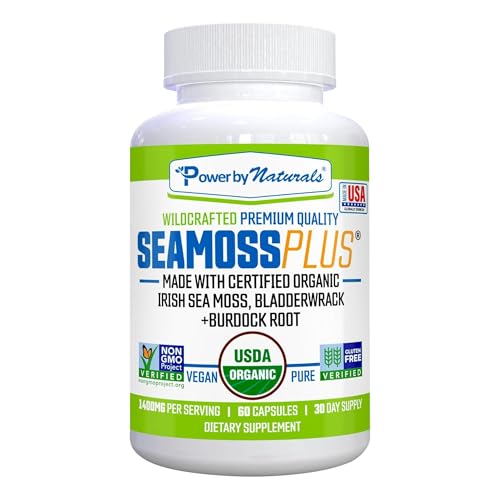
- CleanseParasites Intra-Cellular Superfood Editor’s Pick
Contains sea moss and bladderwrack alongside black cumin seed and other superfood ingredients. - American Standard Supplements Organic Sea Moss, Bladderwrack & Burdock Root Capsules
capsules, 1200mg sea moss / 1200mg bladderwrack / 225mg burdock root per serving, 120 capsules — High-dose transparent-label blend, vegan, non-GMO, made in USA; clearly stated per-ingredient milligrams rather than a proprietary blend - Secret Element Sea Moss Capsules with Burdock Root, Bladderwrack & Muira Puama
capsules, 120 capsules — Budget-friendly 4-ingredient blend, gluten-free, made in USA - Nutrivein Organic Sea Moss 1600mg with Bladderwrack & Burdock
capsules, 1600mg sea moss per serving plus bladderwrack and burdock — Widely available mid-tier brand, marketed for immune/digestive/thyroid/skin support claims
As an Amazon Associate we earn from qualifying purchases. Quality varies widely — always choose a product with a published third-party test (COA) before buying.
A Note on the Evidence
The information presented is for educational purposes only and does not constitute medical advice. Consult a qualified health professional before adding sea moss or any supplement to your regimen, especially if you have thyroid issues, are pregnant, or take medication.
Frequently Asked Questions
Is sea moss gel more nutritious than powder?
No inherent nutrient advantage exists; gel contains more water, so its mineral concentration per gram is lower than powder, but the total amount of polysaccharides and minerals consumed depends on the serving size you choose.
Does heating sea moss destroy its beneficial compounds?
Excessive heat can degrade some carrageenan polysaccharides, but typical home‑cooking temperatures (below boiling) are unlikely to cause major losses. Gentle warming is generally considered safe for preserving gel texture.

Can I eat raw sea moss without soaking?
Consuming raw, unsoaked sea moss is not recommended because it is very salty, tough to digest, and may contain sand or debris; thorough rinsing and soaking are needed to make it palatable and safe.
How much iodine is in a typical serving of sea moss powder?
Published measurements of Irish moss cluster low: under 4 µg per gram averaged across a 30-sample retail survey, and about 47 µg per gram in Greenland household seaweed, with red algae as a group running roughly 13 to 130 µg per gram. Figures in the thousands belong to kelp rather than sea moss. Batches still vary, so a certificate of analysis remains the only way to know what is in your serving.
Is sea moss safe for people with thyroid conditions?
Because of its unpredictable iodine content, sea moss can exacerbate both hypo‑ and hyper‑thyroid conditions; individuals with thyroid disease, those who are pregnant, or anyone on levothyroxine should consult a healthcare provider before use.
What should I look for on a label to ensure quality?
Seek products that specify the species (Chondrus crispus), provide a batch‑specific certificate of analysis for iodine and heavy metals, and list any additives or preservatives used in gel or powder formulations.
References
- Roleda MY et al. Iodine content in bulk biomass of wild-harvested and cultivated edible seaweeds: inherent variations determine species-specific daily allowable consumption. Food Chemistry (2018). PMID 29548461
- Darias-Rosales J et al. Risk assessment of iodine intake from the consumption of red seaweeds (Palmaria palmata and Chondrus crispus). Environmental Science and Pollution Research International (2020). PMID 32803579
- Andersen S et al. Iodine in Edible Seaweed, Its Absorption, Dietary Use, and Relation to Iodine Nutrition in Arctic People. Journal of Medicinal Food (2019). PMID 30990756
- Nitschke U et al. Variability in iodine in temperate seaweeds and iodine accumulation kinetics of Fucus vesiculosus and Laminaria digitata (Phaeophyceae, Ochrophyta). Journal of Phycology (2018). PMID 29130494
- Teas J et al. Variability of iodine content in common commercially available edible seaweeds. Thyroid (2004). PMID 15588380
- Phaneuf D et al. Evaluation of the contamination of marine algae (seaweed) from the St. Lawrence River and likely to be consumed by humans. Environmental Research (1999). PMID 10092431
These statements have not been evaluated by the Food and Drug Administration. This information is not intended to diagnose, treat, cure, or prevent any disease. Content is for informational purposes only and is not medical advice; consult a qualified healthcare provider before starting any supplement. As an Amazon Associate we earn from qualifying purchases.
