Sea moss has been marketed as a near-universal wellness supplement, but it is a whole food with real biological effects, some of which are unwanted. The two issues that come up most in the research are iodine content, which can push thyroid function in either direction, and carrageenan, a polysaccharide extracted from red seaweeds (including sea moss) that has a long and contested research history around gut irritation.
This article walks through what is actually documented about sea moss side effects: thyroid disruption, digestive symptoms, allergic reactions, and contamination risk, plus who should be more cautious. None of this is a reason to panic if you already eat sea moss occasionally, but it is a reason to source carefully and pay attention to dose.
Key Takeaways
- Sea moss is naturally high in iodine, which can trigger transient hyperthyroidism or interact badly with existing thyroid disease and thyroid medication [1] [2]
- Carrageenan, a polysaccharide in sea moss, has documented gastrointestinal irritation effects in animal research, with human relevance still debated in reviews [3] [4] [5]
- Unregulated, wildcrafted sea moss carries a documented risk of heavy metal contamination, including arsenic [6]
- Allergic reactions are possible though uncommon; start with a small amount and watch for symptoms
- Pregnant people, anyone with thyroid disease, and anyone on thyroid medication should talk to a doctor before regular use [7]
Thyroid Effects: Too Much Iodine Cuts Both Ways
Sea moss and other seaweeds are naturally rich in iodine, and iodine intake that is too high can be just as disruptive to thyroid function as too little. Case reports describe transient hyperthyroidism after people took kelp-containing supplements, with thyroid hormone levels rising and then normalizing after the supplement was stopped [1] [2].
The risk is not limited to adults. One case report documented delayed-onset congenital hypothyroidism in an infant linked to maternal iodine excess during pregnancy in a baby with an underlying genetic thyroid condition (DUOX2 mutations) [7]. This illustrates that iodine load from seaweed products can matter even before birth, and that individual genetic susceptibility changes the risk calculus.

Because sea moss products are not standardized, the iodine content of a given batch is often unknown to the consumer, which makes it difficult to dose predictably or stay within a safe range, especially for anyone with pre-existing thyroid disease or on thyroid medication.
Digestive Symptoms and the Carrageenan Question
Carrageenan is a sulfated polysaccharide naturally present in red seaweeds like sea moss, and it is also extracted and used as a food additive (sometimes labeled ‘processed eucheuma seaweed’). A substantial body of animal research has linked degraded and, in some studies, food-grade carrageenan to gastrointestinal inflammation and injury [3].
A critical review of the toxicology literature found consistent evidence of gut irritation in animal models, though it also noted ongoing debate about how directly these findings translate to typical human dietary exposure [4]. A more recent comprehensive review of food-grade carrageenan reached a similarly mixed conclusion: some studies show inflammatory effects on gut tissue, while regulatory bodies have generally continued to treat approved food-grade carrageenan as safe within typical intake levels, and the science is still not fully settled [5].

Separately, research on common dietary emulsifiers, a category that includes some seaweed-derived polysaccharides, found direct effects on human gut microbiota composition and function, which is a plausible mechanism for the bloating, altered bowel habits, or discomfort some people report after starting sea moss [8].

What About Gut Microbiome and Broader Health Claims?
Sea moss is often promoted as a gut-health booster, but the same polysaccharides responsible for its texture and proposed prebiotic effects are the ones under scrutiny for irritation. A 2025 study found distinct diet-microbiome associations in autism spectrum disorder, illustrating how diet-driven shifts in gut bacteria can have complex, population-specific effects that are not simple ‘good’ or ‘bad’ verdicts [9]. This kind of research underscores that the gut effects of seaweed polysaccharides are context-dependent, not a settled positive.
On the other side of the ledger, unrelated animal research on nattokinase (a fermented soybean enzyme, not sea moss) found it reduced carrageenan-induced tail thrombosis in mice on a high-fat diet [10]. This is worth mentioning only because it shows carrageenan is used deliberately in animal models specifically because it reliably triggers inflammatory and clotting responses, a research tool, not evidence that dietary sea moss causes clots in humans, but a reminder of how biologically active this compound class is considered in lab settings.
Allergic Reactions
Seaweed allergy is uncommon but documented, and cross-reactivity with other allergens (including certain shellfish or environmental allergens, depending on the individual) is possible. Because sea moss products vary in processing and may contain other ingredients, a reaction could stem from the moss itself, from added flavorings, or from contamination during harvesting and processing rather than from Chondrus crispus specifically.
Anyone trying sea moss for the first time should start with a small amount and watch for typical allergic symptoms: itching, hives, throat tightness, or gastrointestinal upset shortly after ingestion, and stop immediately if these occur.
Heavy Metal and Contamination Risk
Seaweeds concentrate minerals from seawater, which is part of their nutritional appeal, but the same mechanism means they can concentrate contaminants. An older but frequently cited analysis found that kelp-derived health food supplements were a source of elevated urinary arsenic in people who consumed them, tracing the arsenic back to the kelp itself [6].
Because sea moss is frequently wildcrafted rather than grown under controlled, tested conditions, contamination with arsenic, lead, or cadmium depends heavily on the specific harvest location and how the product was processed and dried. Third-party heavy metal testing, when available from a brand, is a more meaningful safety signal than harvest location claims or marketing copy alone.

Who Should Be Most Cautious
People with existing thyroid conditions (hypothyroidism, hyperthyroidism, autoimmune thyroid disease, or nodules), anyone on levothyroxine or other thyroid medication, and pregnant or breastfeeding people face the clearest documented risk from sea moss’s iodine content [1] [7] [2]. People with sensitive digestion, inflammatory bowel conditions, or a history of reacting to carrageenan-containing foods should also be cautious given the gastrointestinal research on carrageenan [3] [4] [5].
🛒 Where to Buy Sea Moss & Bladderwrack
- CleanseParasites Intra-Cellular Superfood Editor’s Pick
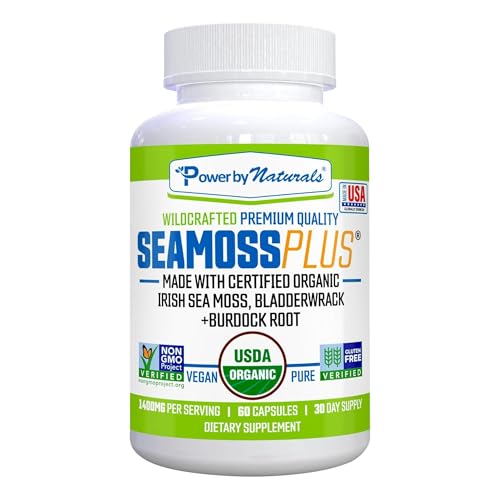
Contains sea moss and bladderwrack alongside black cumin seed and other superfood ingredients. - American Standard Supplements Organic Sea Moss, Bladderwrack & Burdock Root CapsulesLab-tested / studied
capsules, 1200mg sea moss / 1200mg bladderwrack / 225mg burdock root per serving, 120 capsules — High-dose transparent-label blend, vegan, non-GMO, made in USA; clearly stated per-ingredient milligrams rather than a proprietary blend - Secret Element Sea Moss Capsules with Burdock Root, Bladderwrack & Muira Puama
capsules, 120 capsules — Budget-friendly 4-ingredient blend, non-GMO, gluten-free, made in USA - Nutrivein Organic Sea Moss 1600mg with Bladderwrack & Burdock
capsules, 1600mg sea moss per serving plus bladderwrack and burdock — Widely available mid-tier brand, marketed for immune/digestive/thyroid/skin support claims
As an Amazon Associate we earn from qualifying purchases. Quality varies widely — always choose a product with a published third-party test (COA) before buying.

A Note on the Evidence
Much of the strongest evidence here comes from case reports and animal studies rather than large human trials, so individual risk varies. This is informational content, not medical advice; talk to a doctor before regular sea moss use if you have thyroid disease, are pregnant, or take thyroid medication.
Frequently Asked Questions
Can sea moss mess up your thyroid?
Yes, its naturally high iodine content has been linked to transient hyperthyroidism in case reports of people taking kelp-containing supplements [1] [2]. Since sea moss products are not standardized, iodine dose is often unpredictable.
Does sea moss cause digestive problems?
It can. The carrageenan in sea moss has been linked to gastrointestinal irritation in animal studies, and reviews of the human-relevant evidence remain mixed rather than conclusive [3] [5]. Some people report bloating or altered bowel habits after starting it.
Is sea moss safe during pregnancy?
Caution is warranted. A case report linked maternal iodine excess, which can come from seaweed products, to delayed-onset congenital hypothyroidism in an infant with an underlying genetic thyroid condition [7]. Pregnant people should discuss any iodine-containing supplement with their doctor first.

Can sea moss contain heavy metals?
Yes, research has documented elevated urinary arsenic in people consuming kelp-based supplements, since seaweeds concentrate minerals and contaminants from the water they grow in [6]. Third-party tested products reduce but do not eliminate this risk.
Who should avoid sea moss?
People with thyroid conditions, anyone taking thyroid medication like levothyroxine, pregnant or breastfeeding people, and those with known seaweed or carrageenan sensitivity should be cautious or avoid it without medical guidance [1] [7].
Is carrageenan in sea moss the same as the food additive?
They are chemically related; carrageenan is a polysaccharide naturally present in red seaweeds like sea moss and is also extracted for use as a food additive [5]. Research on both forms has raised gastrointestinal concerns, though regulatory bodies still generally treat food-grade carrageenan as safe within typical intake.
References
- Gherbon A et al. Transient Hyperthyroidism following the ingestion of complementary medications containing kelp seaweed: A case-report. Medicine (2019). PMID 31517826
- Eliason BC et al. Transient hyperthyroidism in a patient taking dietary supplements containing kelp. The Journal of the American Board of Family Practice (1998). PMID 9876004
- Tobacman JK et al. Review of harmful gastrointestinal effects of carrageenan in animal experiments. Environmental health perspectives (2001). PMID 11675262
- Cohen SM et al. A critical review of the toxicological effects of carrageenan and processed eucheuma seaweed on the gastrointestinal tract. Critical reviews in toxicology (2002). PMID 12389870
- Liu F et al. Food-grade carrageenans and their implications in health and disease. Comprehensive reviews in food science and food safety (2021). PMID 34146449
- Walkiw O et al. Health food supplements prepared from kelp–a source of elevated urinary arsenic. Clinical toxicology (1975). PMID 1175348
- Kasahara T et al. Delayed onset congenital hypothyroidism in a patient with DUOX2 mutations and maternal iodine excess. American journal of medical genetics. Part A (2013). PMID 23239635
- Naimi S et al. Direct impact of commonly used dietary emulsifiers on human gut microbiota. Microbiome (2021). PMID 33752754
- Wu Y et al. Distinct diet-microbiome associations in autism spectrum disorder. Nature communications (2025). PMID 41476057
- Chen X et al. Ameliorated effects of nattokinase on high-fat diet and carrageenan-induced tail-thrombosis mice. Journal of the science of food and agriculture (2025). PMID 40637357
These statements have not been evaluated by the Food and Drug Administration. This information is not intended to diagnose, treat, cure, or prevent any disease. Content is for informational purposes only and is not medical advice; consult a qualified healthcare provider before starting any supplement. As an Amazon Associate we earn from qualifying purchases.
