Sea moss (Chondrus crispus) and bladderwrack (Fucus vesiculosus) are sold in multiple formats — raw gel, capsules, loose powder, and gummies — each marketed for mineral density, thyroid support, and gut health. However, clinical research on these seaweeds in humans is limited, and most wellness claims exceed the available evidence.
This article examines how the physical form of a supplement may influence nutrient delivery, how consistently you can dose iodine and other actives, what you actually pay per serving, and why third-party testing matters more than the delivery format.
Key Takeaways
- No human clinical trials directly compare bioavailability of sea moss or bladderwrack across gel, capsule, powder, and gummy forms.
- Iodine content varies widely; without third-party lot testing, dosing accuracy is unreliable in any format.
- Gummies are typically the most expensive per gram of seaweed and often contain added sugars and low seaweed doses.
- Heavy metal contamination risk depends on harvest water quality and testing, not the supplement form.
- People with thyroid conditions, pregnancy, or on thyroid medication should consult a clinician before using any seaweed supplement.
Common Supplement Forms and How They Are Made
Sea moss gel is typically produced by soaking dried whole-leaf seaweed, blending it with water, and refrigerating the resulting mucilaginous matrix. Capsules contain either milled whole seaweed powder or a standardized extract, often combined with bladderwrack. Loose powder is simply dried, ground seaweed that can be added to smoothies or food. Gummies are made by mixing seaweed powder or extract with gelatin or pectin, sweeteners, flavorings, and sometimes additional vitamins.
Processing differences affect the matrix that carries the bioactive compounds. Gel retains the native polysaccharide structure (primarily carrageenan in Chondrus crispus and fucoidan in Fucus vesiculosus), while powders and capsules may undergo drying and milling that can alter polysaccharide integrity. Gummies add heat and excipients that may further degrade heat-sensitive compounds.
Bioavailability: What We Know and What We Don't
Bioavailability refers to the fraction of ingested compounds that reaches systemic circulation. For seaweeds, the key actives include iodine, fucoidan, carrageenan-family polysaccharides, and trace minerals. Human pharmacokinetic studies on these specific compounds from whole seaweed matrices are scarce. In vitro digestion models suggest that the gel matrix may slow gastric emptying, potentially modulating iodine release, but this has not been confirmed in vivo.

Capsules and powders bypass the gel matrix, delivering a more concentrated dose of dried seaweed. However, the cell walls of brown and red algae are resistant to human digestive enzymes, which may limit release of intracellular minerals and polysaccharides unless the seaweed is extensively processed or extracted. Gummies add sugars and gelling agents that could further affect digestion kinetics, but no comparative human studies exist.
Dosing Accuracy and Standardization Challenges
Iodine content in sea moss and bladderwrack varies dramatically by species, harvest location, season, and processing method.[1][2] Bladderwrack typically contains far higher iodine concentrations than Chondrus crispus.[2][3] Without batch-specific standardization, a single capsule or spoonful of gel can deliver anywhere from micrograms to milligrams of iodine — a range that spans from nutritional adequacy to potential toxicity.
Gel preparations are especially inconsistent because water content varies with soaking time and blending ratio. Powders offer more weight-based consistency but still reflect the raw material’s variability. Capsules can be standardized if the manufacturer tests each lot and adjusts fill weight, but many brands do not. Gummies add another layer of variability: the seaweed dose per gummy is often low (e.g., 100–200 mg) to accommodate flavor and texture, making it easy to under- or over-consume.

Cost Per Serving: Breaking Down the Economics
Cost per serving depends on the concentration of seaweed, the serving size recommended by the manufacturer, and the price per unit. Raw dried seaweed purchased in bulk is the least expensive per gram of seaweed. Gel — whether homemade or purchased — carries a premium for water weight and labor. Capsules and powders fall in the middle, with capsules adding encapsulation costs. Gummies are typically the most expensive per gram of seaweed due to formulation, manufacturing, and packaging overhead.
When comparing cost per milligram of iodine (if labeled), the calculation is only as reliable as the label claim.[4] Because iodine content is rarely guaranteed, cost-per-iodine estimates are speculative. Consumers should calculate cost per gram of verified seaweed material using third-party certificates of analysis, not marketing serving sizes.

Safety Considerations: Iodine, Heavy Metals, and Contaminants
Excessive iodine intake can trigger or worsen thyroid dysfunction, particularly in individuals with pre-existing thyroid disease, during pregnancy, or when taking thyroid medication.[5][6] Bladderwrack-heavy blends pose a higher risk due to naturally elevated iodine levels. The tolerable upper intake level for iodine is 1,100 µg/day for adults[3]; a single serving of some seaweed products can exceed this.
Seaweeds bioaccumulate heavy metals — arsenic, lead, cadmium, mercury — from their growing waters.[7][8][6] Wildcrafted sea moss from unmonitored areas carries higher contamination risk. Third-party testing for heavy metals, microbial load, and iodine content is the only reliable way to assess safety. The delivery form (gel, capsule, powder, gummy) does not mitigate contamination; only sourcing and testing do.
Practical Guidance for Choosing a Form
If you prioritize minimal processing and culinary versatility, homemade gel from whole-leaf, tested seaweed offers control over concentration and additives. Capsules provide convenience and portability but require trust in the brand’s standardization and testing. Loose powder is cost-effective for high-volume use (e.g., daily smoothies) but demands accurate weighing. Gummies may improve adherence for those who dislike the taste or texture of seaweed, but they deliver low seaweed doses per unit and often contain added sugars.
Regardless of form, look for products that publish lot-specific certificates of analysis for iodine and heavy metals. Avoid brands that make disease-treatment claims. Consult a healthcare provider before using seaweed supplements if you have thyroid conditions, are pregnant or breastfeeding, or take medications affecting iodine metabolism.
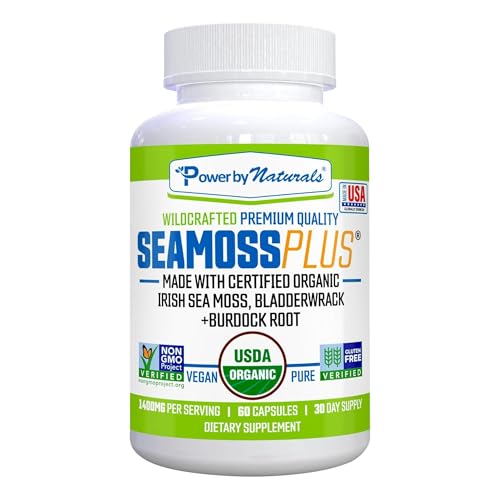
🛒 Where to Buy Sea Moss & Bladderwrack
- CleanseParasites Intra-Cellular Superfood Editor’s Pick
Contains sea moss and bladderwrack alongside black cumin seed and other superfood ingredients. - American Standard Supplements Organic Sea Moss, Bladderwrack & Burdock Root Capsules
capsules, 1200mg sea moss / 1200mg bladderwrack / 225mg burdock root per serving, 120 capsules — High-dose transparent-label blend, vegan, non-GMO, made in USA; clearly stated per-ingredient milligrams rather than a proprietary blend - Secret Element Sea Moss Capsules with Burdock Root, Bladderwrack & Muira Puama
capsules, 120 capsules — Budget-friendly 4-ingredient blend, gluten-free, made in USA - Nutrivein Organic Sea Moss 1600mg with Bladderwrack & Burdock
capsules, 1600mg sea moss per serving plus bladderwrack and burdock — Widely available mid-tier brand, marketed for immune/digestive/thyroid/skin support claims
As an Amazon Associate we earn from qualifying purchases. Quality varies widely — always choose a product with a published third-party test (COA) before buying.
A Note on the Evidence
Sea moss and bladderwrack supplements are not standardized; iodine content varies widely and can worsen thyroid dysfunction, especially with existing conditions, pregnancy, or thyroid medication. Heavy metal contamination is a documented risk in wildcrafted products. Consult a healthcare provider before use.

Frequently Asked Questions
Is sea moss gel more bioavailable than capsules?
There are no human studies comparing absorption of iodine, fucoidan, or minerals from gel versus capsules. The gel matrix may slow gastric emptying, but clinical significance is unknown.
Can I get consistent iodine dosing from sea moss powder?
Only if the manufacturer standardizes each batch and provides a certificate of analysis. Raw seaweed iodine content varies by species, location, and season.

Are gummies a good way to take sea moss for thyroid support?
Gummies usually contain small amounts of seaweed per piece (often 100–200 mg) and added sugars. They are not a reliable source of standardized iodine for thyroid support.
Does cooking or blending sea moss gel destroy nutrients?
Heat can degrade some heat-sensitive compounds (e.g., certain vitamins), but iodine and polysaccharides are relatively stable. Blending does not significantly reduce mineral content.
How do I know if a sea moss product is tested for heavy metals?
Reputable brands publish third-party certificates of analysis (COAs) for each lot, showing arsenic, lead, cadmium, and mercury levels. If a COA is not available, assume it has not been tested.
Is bladderwrack safer or more effective than sea moss?
Bladderwrack typically contains much higher iodine, increasing both potential thyroid benefit and risk of excess. Neither has robust clinical evidence for broad wellness claims.
References
- Variability of iodine content in common commercially available edible seaweeds. Thyroid (2004). PMID 15588380
- Variability in iodine in temperate seaweeds and iodine accumulation kinetics of Fucus vesiculosus and Laminaria digitata. Journal of Phycology (2018). PMID 29130494
- Risk assessment of iodine intake from the consumption of red seaweeds (Palmaria palmata and Chondrus crispus). Environmental Science and Pollution Research (2020). PMID 32803579
- Emergence of Seaweed and Seaweed-Containing Foods in the UK: Focus on Labeling, Iodine Content, Toxicity and Nutrition. Foods (2015). PMID 28231201
- Transient hyperthyroidism following the ingestion of complementary medications containing kelp seaweed: A case report. Medicine (Baltimore) (2019). PMID 31517826
- Elemental Composition of Algae-Based Supplements by Energy Dispersive X-ray Fluorescence. Plants (Basel) (2021). PMID 34685850
- Survey of arsenic content in edible seaweeds and their health risk assessment. Food and Chemical Toxicology (2024). PMID 38499235
- Trace metal occurrence in Mediterranean seaweeds. Environmental Science and Pollution Research (2018). PMID 29368198
These statements have not been evaluated by the Food and Drug Administration. This information is not intended to diagnose, treat, cure, or prevent any disease. Content is for informational purposes only and is not medical advice; consult a qualified healthcare provider before starting any supplement. As an Amazon Associate we earn from qualifying purchases.
