Sea moss (Chondrus crispus) and bladderwrack (Fucus vesiculosus) have grown popular as mineral-dense seaweeds, but rising demand has brought adulterated products to market. Consumers now encounter bleached “gold” moss, cornstarch-thickened gels, and mislabeled species sold as premium wildcrafted material.
This guide covers practical identification methods — color, smell, texture, and rehydration behavior — so you can distinguish authentic whole-leaf sea moss from common fakes. No laboratory equipment is required, only careful observation and a few minutes of testing.
Key Takeaways
- Authentic dried sea moss is dark purple-red to brown, fan-branched, and smells briny — not gold, chalky, or chemical.
- Bleached moss rehydrates fast and turns mushy; real moss rehydrates slowly into slippery, resilient fronds.
- Cornstarch-adulterated gels fail the cold-water dispersion test and stain blue-black with iodine solution.
- Species substitution (Gracilaria, Kappaphycus) is common; verify morphology and demand traceable sourcing.
- Third-party COAs for heavy metals and microbes matter more than marketing terms like “wildcrafted” or “organic.”
Why Fake Sea Moss Exists
Authentic wildcrafted Chondrus crispus grows in cold North Atlantic waters and is harvested by hand, limiting supply. Bladderwrack (Fucus vesiculosus) is more abundant but differs in polysaccharide profile and iodine concentration.[1][2] Price gaps create incentive to substitute cheaper seaweeds, bleach darker species to mimic “gold” moss, or stretch gels with cornstarch, tapioca, or carrageenan extract.
Bleaching removes pigments (phycoerythrin, chlorophyll) using peroxide or sunlight overexposure, producing a golden-tan color that resembles sun-dried premium moss. However, the process also degrades heat-sensitive minerals and alters the natural polysaccharide matrix. Cornstarch or modified starch added to pre-made gels creates a thick, spoonable texture that mimics high-carrageenan sea moss gel but lacks the mineral complexity and fucoidan content of the whole seaweed.
Visual Inspection: Color, Structure, and Debris
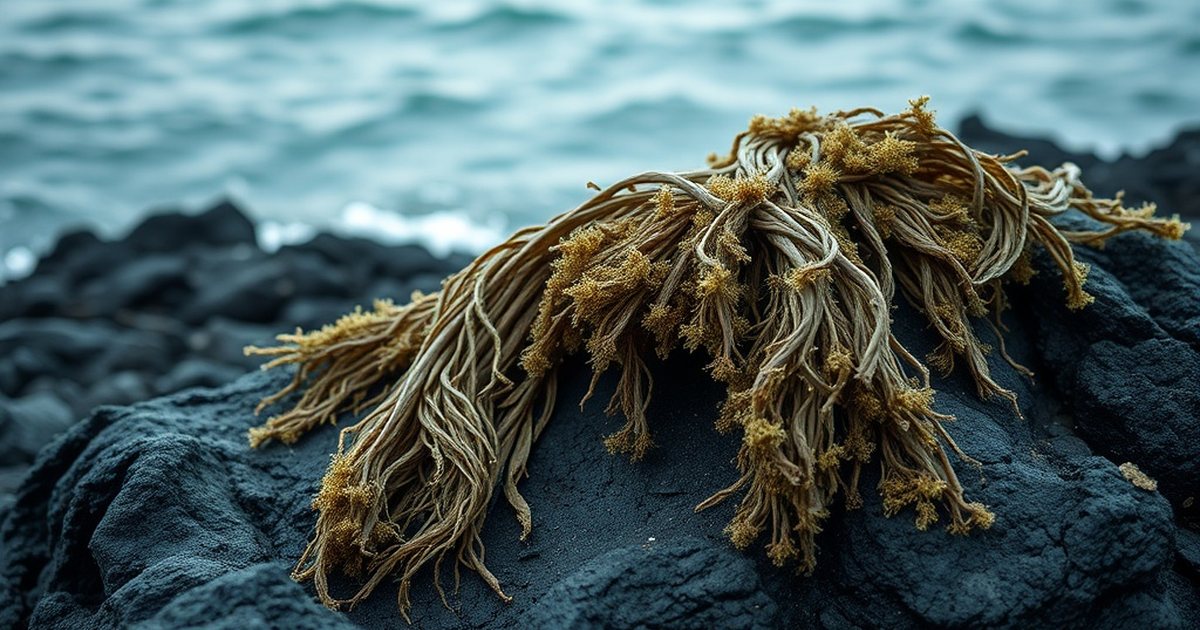
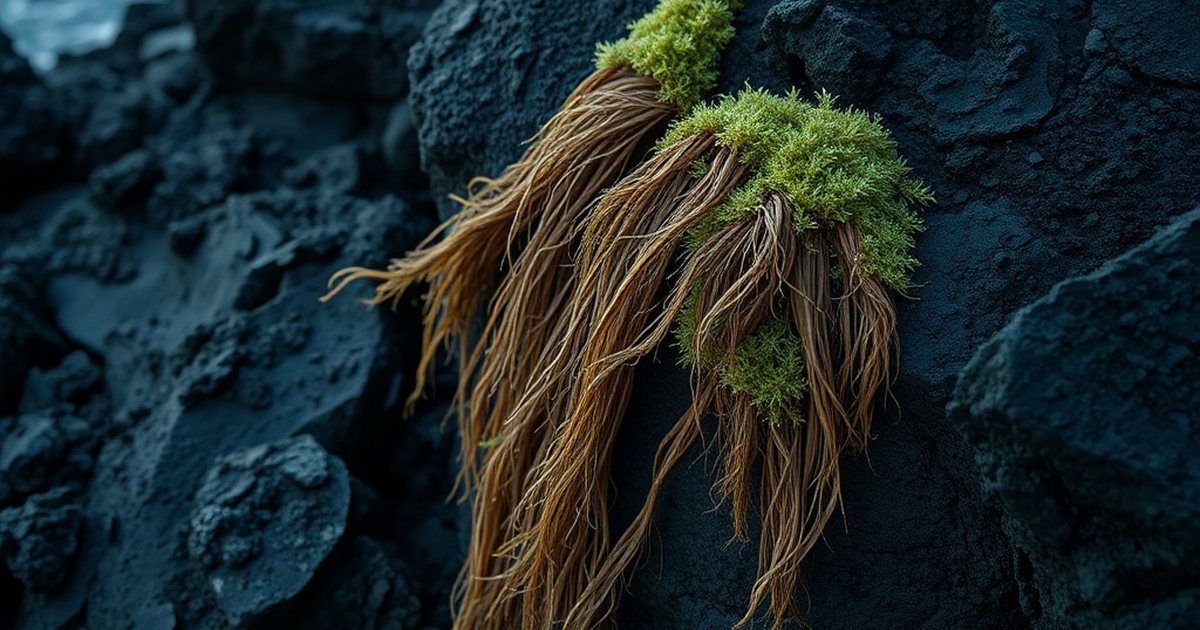
Authentic dried Chondrus crispus ranges from deep purple-red to dark brown, often with a slight iridescent sheen. The fronds are flat, fan-shaped, and dichotomously branched (splitting in pairs). Bladderwrack shows distinct midribs and paired air bladders (pneumatocysts) along branched straps. Neither species is naturally bright gold or uniform beige.

Bleached moss appears uniformly pale gold to cream, often with a matte, chalky surface. The branching pattern may look melted or fused because peroxide softens cell walls. Excess salt crystals (beyond a light natural coating) can indicate heavy rinsing in brine to mask odor or weight the product. Look for sand, shell fragments, or epiphytic algae — some wildcrafted moss carries these, but excessive debris suggests poor post-harvest handling.
Smell Test: Oceanic vs. Chemical vs. Starchy
Hold a small handful of dried moss to your nose. Authentic sea moss carries a briny, mineral ocean scent — think wet rocks, iodine, and dried kelp. It should not smell fishy, rotten, or strongly of ammonia (which signals protein degradation from poor drying).
Bleached moss often has a faint chemical undertone: sharp, slightly sweet, or like diluted peroxide. If the product smells like dry flour, cardboard, or cooked corn, starch adulteration is likely. Pre-made gels that smell neutral, sweet, or like boiled starch instead of mineral-rich seawater are suspect.
Rehydration and Texture Tests
Place 5–10 g of dried moss in a bowl of cold filtered water. Authentic Chondrus crispus rehydrates in 15–30 minutes, expanding 3–4× in volume. The fronds become slippery, translucent, and distinctly cartilaginous — they resist tearing and spring back when bent. Bladderwrack rehydrates similarly but feels tougher due to its midrib and air bladders.
Bleached moss often rehydrates faster (5–10 minutes) and turns mushy or disintegrates because cell structure was damaged by oxidizers. It may leave the water cloudy with dissolved solids. For gels: scoop a teaspoon into cold water. Real sea moss gel disperses into fine, slippery filaments. Cornstarch-thickened gel clumps, settles as a white sediment, or forms a pasty lump that does not disperse. A drop of iodine solution (from a pharmacy) on the gel turns blue-black if starch is present — a simple confirmatory test.

Species Substitution: What You Might Actually Be Buying
Gracilaria (ogonori) and Kappaphycus (eucheuma) are warm-water red algae farmed at scale for carrageenan extraction. They are sometimes sold dried as “sea moss” or “Irish moss.” Gracilaria is cylindrical and wiry, not fan-shaped; Kappaphycus has brittle, branching straps. Both yield gel but have different mineral and polysaccharide profiles[3][1] — notably lower fucoidan and different iodine levels.
Some “gold sea moss” is simply sun-bleached Chondrus or Gracilaria left too long on drying racks. Prolonged UV exposure reduces pigment but also degrades iodine and heat-sensitive nutrients. Without species verification (microscopy or DNA barcoding), visual cues and sourcing transparency are your best tools.
Sourcing Questions That Reduce Risk
Ask the seller: harvest location (specific coast, not just country), harvest method (hand-cut vs. raked), drying method (shade-dried vs. sun-dried vs. kiln), and whether the batch has third-party heavy-metal and microbiological certificates of analysis (COAs). Legitimate wildcrafters and small processors typically provide lot-specific COAs for arsenic, lead, cadmium, mercury, and total plate count.[4][5]
Be wary of bulk resellers who cannot trace beyond “Atlantic” or “Caribbean.” Pre-made gels should list only sea moss, water, and perhaps lime/lemon juice (used traditionally to aid gelling). Ingredients like “carrageenan,” “xanthan gum,” “modified starch,” or “natural flavors” indicate an industrial product, not a whole-food gel.
🛒 Where to Buy Sea Moss & Bladderwrack
- CleanseParasites Intra-Cellular Superfood Editor’s Pick
Contains sea moss and bladderwrack alongside black cumin seed and other superfood ingredients. - American Standard Supplements Organic Sea Moss, Bladderwrack & Burdock Root CapsulesLab-tested / studied
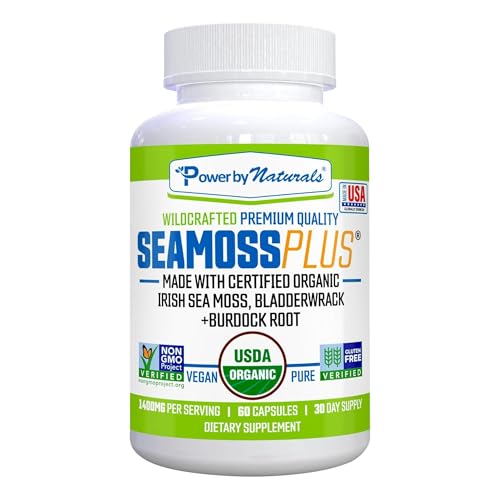
capsules, 1200mg sea moss / 1200mg bladderwrack / 225mg burdock root per serving, 120 capsules — High-dose transparent-label blend, vegan, non-GMO, made in USA; clearly stated per-ingredient milligrams rather than a proprietary blend - Secret Element Sea Moss Capsules with Burdock Root, Bladderwrack & Muira Puama
capsules, 120 capsules — Budget-friendly 4-ingredient blend, non-GMO, gluten-free, made in USA - Nutrivein Organic Sea Moss 1600mg with Bladderwrack & Burdock
capsules, 1600mg sea moss per serving plus bladderwrack and burdock — Widely available mid-tier brand, marketed for immune/digestive/thyroid/skin support claims
As an Amazon Associate we earn from qualifying purchases. Quality varies widely — always choose a product with a published third-party test (COA) before buying.
A Note on the Evidence
Sea moss and bladderwrack are foods, not standardized supplements; iodine content varies widely and can worsen thyroid conditions, especially with existing dysfunction, pregnancy, or thyroid medication. Heavy-metal contamination is documented in unregulated wildcrafted products. This information is educational and not medical advice; consult a qualified healthcare provider before regular use.
Frequently Asked Questions
Can I rely on color alone to spot fake sea moss?
No. Natural color varies by species, harvest season, and drying method. Use color alongside structure, smell, and rehydration behavior for a reliable assessment.
Is all gold sea moss fake?
Not necessarily. Extended sun-drying can bleach Chondrus crispus to a golden-tan, but this also degrades nutrients. True “gold” moss marketed as a premium variety is often a marketing term for bleached or warm-water species.

Does the iodine starch test work on dried moss?
It works best on gels. For dried moss, rehydrate a small amount first, then test the liquid. Starch from adulteration will leach out and react.
Are heavy metals a real concern with sea moss?
Yes. Seaweeds bioaccumulate arsenic, lead, and cadmium from harvest waters. Wildcrafted moss from untested areas carries higher risk. Always request lot-specific COAs.
Can I make gel from bleached moss?
You can, but the gel will be weaker, cloudier, and lower in heat-sensitive minerals and polysaccharides. The oxidative damage from bleaching reduces the functional quality of the carrageenan matrix.
What is the simplest at-home test for authenticity?
The cold-water rehydration test: 5 g dried moss in 200 mL cold water. Authentic moss expands 3–4× in 15–30 minutes into slippery, tear-resistant fronds. Fakes turn mushy, dissolve, or leave starchy sediment.
References
- Variability in iodine in temperate seaweeds and iodine accumulation kinetics of Fucus vesiculosus and Laminaria digitata. Journal of Phycology (2018). PMID 29130494
- Risk assessment of iodine intake from the consumption of red seaweeds (Palmaria palmata and Chondrus crispus). Environmental Science and Pollution Research (2020). PMID 32803579
- Trace metal occurrence in Mediterranean seaweeds. Environmental Science and Pollution Research (2018). PMID 29368198
- Elemental Composition of Algae-Based Supplements by Energy Dispersive X-ray Fluorescence. Plants (Basel) (2021). PMID 34685850
- Survey of arsenic content in edible seaweeds and their health risk assessment. Food and Chemical Toxicology (2024). PMID 38499235
These statements have not been evaluated by the Food and Drug Administration. This information is not intended to diagnose, treat, cure, or prevent any disease. Content is for informational purposes only and is not medical advice; consult a qualified healthcare provider before starting any supplement. As an Amazon Associate we earn from qualifying purchases.
