Sea moss (Chondrus crispus) and bladderwrack (Fucus vesiculosus) have moved from traditional coastal diets into mainstream wellness routines, often marketed as mineral-dense superfoods. The distinction between wildcrafted (harvested from natural ocean beds) and farmed (cultivated on lines or in tanks) products is frequently highlighted on labels, yet the implications for purity and contamination are rarely explained with evidence.
Both categories carry tradeoffs. Wildcrafted seaweeds reflect the chemistry of their harvest waters — including industrial pollutants, legacy radionuclides, and variable iodine concentrations — while farmed operations can control some inputs but face their own challenges with biofouling, nutrient management, and scale. Understanding these differences requires looking at environmental monitoring data rather than brand narratives.
Key Takeaways
- Wildcrafted sea moss reflects the contaminant profile of its harvest waters — heavy metals and legacy radionuclides included — making location-specific testing essential.
- Farmed sea moss can reduce some contamination risks through site selection and water management, but open-water farms still share the ambient environment, and tank systems introduce operational variables.
- Iodine content varies widely in both wildcrafted and farmed products; batch-specific analysis is the only way to avoid excessive intake, especially for people with thyroid conditions.
- No labeling term (wildcrafted, organic, raw) guarantees purity; third-party certificates of analysis for heavy metals, iodine, and microbes are the only reliable quality signal.
- Consumers should request harvest coordinates, species verification, and full COAs from suppliers — and consult a clinician before regular use if they have thyroid disease, are pregnant, or take thyroid medication.
What "Wildcrafted" and "Farmed" Actually Mean
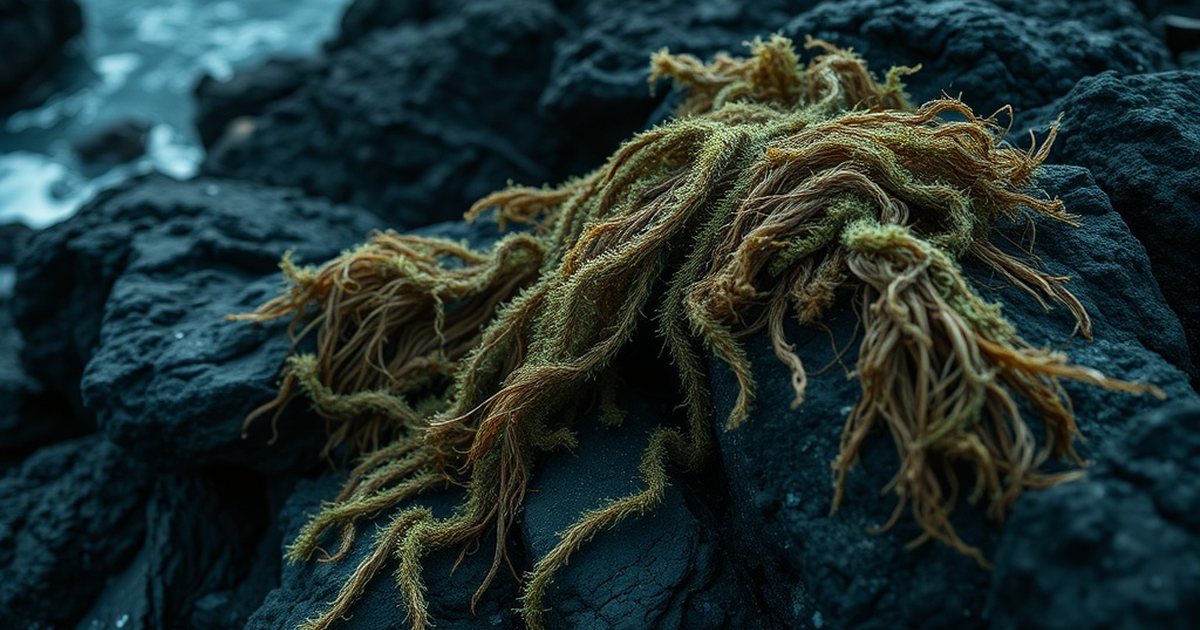
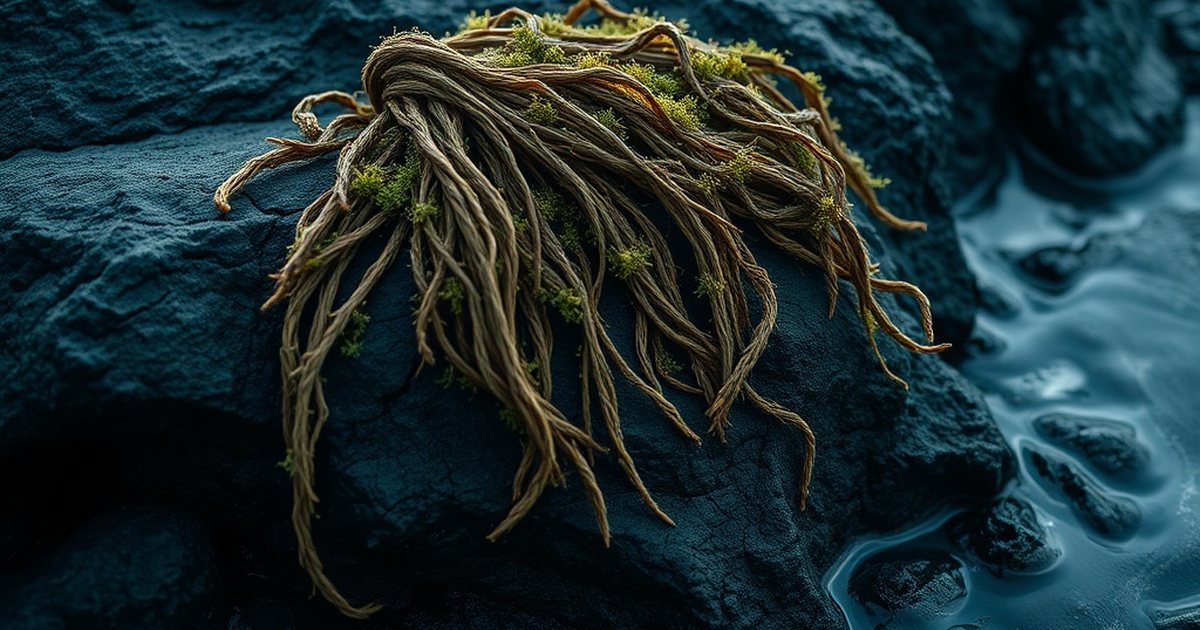
Wildcrafted sea moss is collected from natural rocky shores or subtidal beds where the algae grow without human intervention. Harvesters typically hand-cut fronds at low tide or by diving, targeting specific species like Chondrus crispus in the North Atlantic or Gracilaria species in warmer waters. Because the organism grows in situ, its tissue composition — minerals, polysaccharides, iodine, and any contaminants — mirrors the surrounding seawater and sediment over its lifespan.
Farmed sea moss is cultivated on longlines, rafts, or in land-based tank systems. In open-water farming, juvenile spores or fragments are seeded onto ropes suspended in coastal bays; in tank culture, seawater is pumped through controlled systems where temperature, light, and nutrient dosing can be managed. Farming allows harvest timing, species selection, and some degree of water-quality oversight, but it does not automatically eliminate environmental exposures, especially for open-water operations.

Heavy Metal Accumulation in Wild Harvest Zones
Seaweeds are efficient bioaccumulators of trace elements, including toxic heavy metals such as arsenic, lead, cadmium, and mercury. The concentration in tissue depends on water chemistry, sediment resuspension, proximity to industrial discharge, and the species’ own uptake physiology. A study of major seafoods from the Zhoushan Fishery — one of China’s largest fishing grounds — found detectable heavy metal residues across multiple marine species, underscoring that coastal waters receiving urban and industrial runoff can transfer contaminants into the marine food web [1]. While that study focused on fish and shellfish rather than seaweeds, the same hydrodynamic and sediment processes govern algal exposure.
For wildcrafted sea moss, harvest location is the primary determinant of heavy metal load. Areas near historic mining, smelting, shipping lanes, or wastewater outfalls pose higher risk. Even remote coasts can receive atmospherically deposited mercury. Without batch-specific third-party certificates of analysis (COAs) for arsenic (speciated as inorganic vs organic), lead, cadmium, and mercury, consumers have no reliable way to assess a wildcrafted product’s purity.
Radionuclide Legacy in North Atlantic Waters
The North Atlantic — a primary source region for Chondrus crispus — has been monitored for anthropogenic radionuclides since the mid-20th century. Discharges from the Sellafield nuclear reprocessing plant in the UK have released technetium-99, cesium-137, plutonium isotopes, and other radionuclides into the Irish Sea, with transport northward along the Scottish coast and into the wider North Atlantic and Arctic waters [2]. These particles bind to fine sediments and can be resuspended, becoming available for uptake by benthic algae.
While regulatory limits for radionuclides in food exist (e.g., EURATOM, Codex), routine testing of seaweed supplements for technetium-99 or plutonium is uncommon. Wildcrafted harvests from the Irish Sea, western Scotland, Iceland, or Norway may carry a detectable signature of this legacy contamination. Farmed operations in the same hydrographic regime face similar water-column exposures unless they use filtered or deep-water intake, but they have the option to site facilities in lower-background zones and to schedule harvests away from known plume events.
Iodine Variability: A Separate but Critical Purity Issue
Iodine content in sea moss and bladderwrack varies by species, season, age of the thallus, salinity, and nitrogen availability — not solely by cultivation method. Bladderwrack (Fucus vesiculosus) typically contains 300–6,000 µg iodine per gram dry weight; Chondrus crispus is lower but still highly variable. A single 5 g serving of a bladderwrack-heavy blend can exceed the tolerable upper intake level (1,100 µg/day for adults) many times over.

This variability matters because excess iodine can trigger or worsen thyroid dysfunction — particularly in people with pre-existing autoimmune thyroiditis, nodular goiter, or those taking levothyroxine. Neither wildcrafted nor farmed labeling guarantees a consistent iodine dose. Only analytical testing of the finished batch can inform safe serving sizes, and most retail products do not provide this data.
Farmed Sea Moss: Controlled Inputs, New Variables
Land-based tank farming offers the greatest control over water source (e.g., deep-sea water, filtered seawater, or synthetic salt), nutrient regimes, and harvest timing. This can reduce heavy metal and radionuclide uptake if the intake water is clean and the system is closed to sediment resuspension. However, tank systems require energy for pumping, lighting, and temperature control, and they can accumulate metabolites or biofouling organisms that necessitate cleaning agents — introducing their own residue risks if not managed under food-grade HACCP plans.
Open-water longline farming sits between wildcrafted and tank culture. The algae grow in natural seawater, so they remain exposed to dissolved and particulate contaminants in that water body. Farmers can choose sites with better water-quality classifications (e.g., EU Shellfish Water Directive zones), avoid harvest after storm-driven sediment resuspension, and rotate crops to limit bioaccumulation time. Still, they cannot fully decouple from the ambient environment.
Nutritional Composition: Does Cultivation Method Change the Profile?
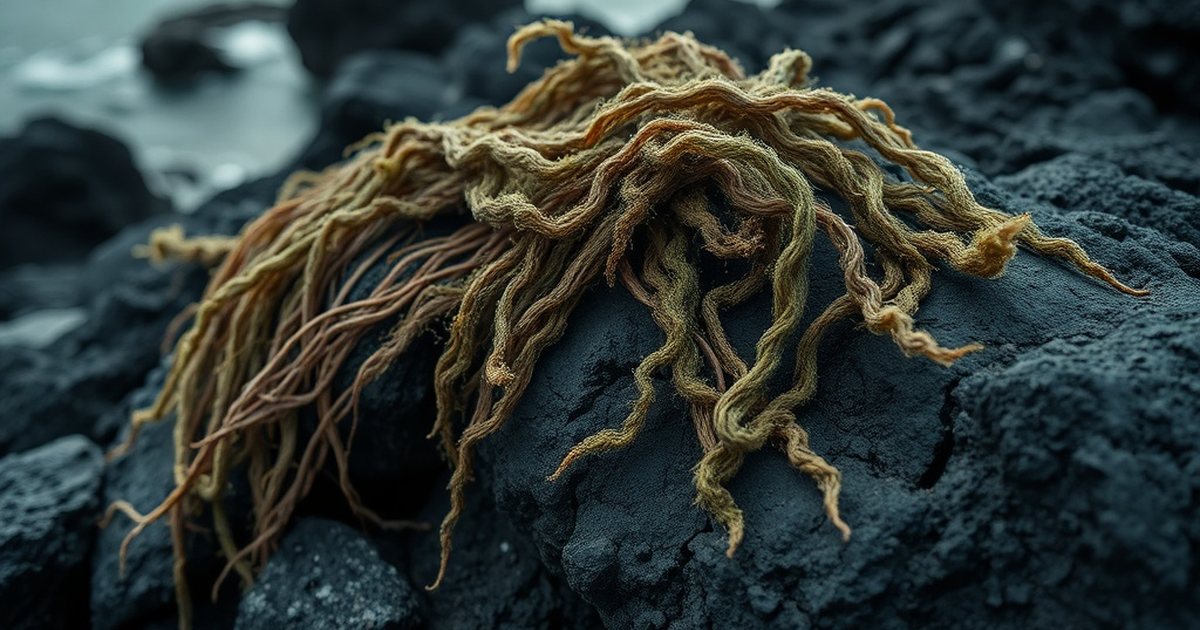
Polysaccharide yield (carrageenan in Chondrus, fucoidan in Fucus) and mineral density are influenced by growth rate, light, and nutrient availability. Fast-growing farmed seaweed under optimal nitrogen may have higher protein and lower structural polysaccharide content per dry weight than slow-growing wild plants in nutrient-poor water. Conversely, wild plants in high-flow, high-light environments may concentrate more UV-protective compounds (e.g., mycosporine-like amino acids) and structural fibers.
These differences are real but modest compared to the variation introduced by species misidentification (many products labeled “sea moss” are actually Gracilaria or Kappaphycus), drying method (sun vs oven vs freeze-dry), and adulteration with fillers. The cultivation method alone is not a reliable proxy for nutritional superiority.
Sourcing Transparency and Third-Party Testing: What to Ask For
Because the FDA does not evaluate sea moss or bladderwrack supplements for safety or efficacy before market, and because no mandatory standardization exists for iodine, heavy metals, radionuclides, or microbial limits, the burden of verification falls on the buyer. Reputable suppliers — whether selling wildcrafted or farmed material — should provide: (1) species identification via DNA barcoding or morphological voucher; (2) harvest or farm location with coordinates; (3) batch-specific COAs from ISO 17025-accredited labs covering arsenic (speciated), lead, cadmium, mercury, iodine, and major microbial indicators; (4) radionuclide screening if harvested from known affected zones (Irish Sea, Baltic, certain Pacific regions).
Marketing terms like “wildcrafted,” “organic,” “raw,” or “premium” have no regulatory definition for seaweed supplements in the US. An “organic” claim on seaweed typically refers to the farming process (e.g., no synthetic fertilizers) under private standards, not to contaminant absence. A wildcrafted product from a pristine Arctic fjord with full COAs is preferable to a farmed product from an unmonitored bay with no testing — and vice versa.
🛒 Where to Buy Sea Moss & Bladderwrack

- CleanseParasites Intra-Cellular Superfood Editor’s Pick
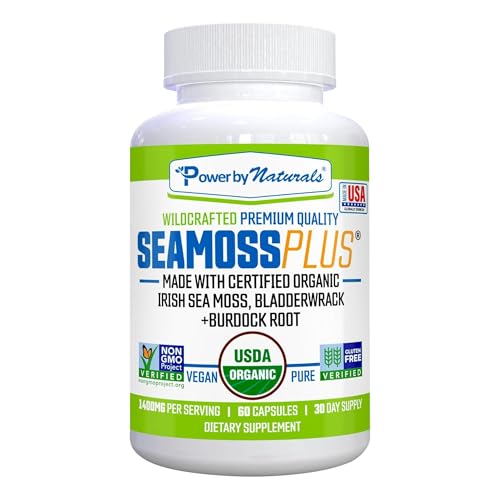
Contains sea moss and bladderwrack alongside black cumin seed and other superfood ingredients. - American Standard Supplements Organic Sea Moss, Bladderwrack & Burdock Root CapsulesLab-tested / studied
capsules, 1200mg sea moss / 1200mg bladderwrack / 225mg burdock root per serving, 120 capsules — High-dose transparent-label blend, vegan, non-GMO, made in USA; clearly stated per-ingredient milligrams rather than a proprietary blend - Secret Element Sea Moss Capsules with Burdock Root, Bladderwrack & Muira Puama
capsules, 120 capsules — Budget-friendly 4-ingredient blend, non-GMO, gluten-free, made in USA - Nutrivein Organic Sea Moss 1600mg with Bladderwrack & Burdock
capsules, 1600mg sea moss per serving plus bladderwrack and burdock — Widely available mid-tier brand, marketed for immune/digestive/thyroid/skin support claims
As an Amazon Associate we earn from qualifying purchases. Quality varies widely — always choose a product with a published third-party test (COA) before buying.
A Note on the Evidence
This article is informational, not medical advice. Sea moss and bladderwrack supplements are not standardized; iodine content varies widely and can trigger or worsen thyroid dysfunction, especially with existing thyroid conditions, pregnancy, or levothyroxine use. Heavy metal and radionuclide contamination depends on harvest waters and processing. Consult a qualified healthcare professional before regular use.
Frequently Asked Questions
Is wildcrafted sea moss more nutritious than farmed?
Not necessarily. Nutrient and polysaccharide profiles depend more on species, season, light, and nutrient availability than on wild vs farmed status. Fast growth under optimal farm conditions can alter composition modestly, but species misidentification and drying method cause larger variation.
Does 'organic' certification mean the sea moss is free of heavy metals?
No. Organic standards for seaweed (where they exist) address farming inputs and practices, not environmental contaminant levels. Heavy metals and radionuclides from the surrounding water can still accumulate in certified organic products.
Can farmed sea moss avoid radionuclide contamination from Sellafield?
Open-water farms in the North Atlantic share the same water mass as wild harvests, so they can be exposed to the same technetium-99 and cesium-137 plumes documented in the region [2]. Tank farms using deep-sea or filtered intake water can largely avoid this pathway, but few supplement brands disclose their water source.

How much iodine is in a typical serving of sea moss?
It varies enormously — from under 50 µg to over 5,000 µg per 5 g dry weight depending on species (Chondrus vs Fucus), harvest season, and processing. Without a batch-specific COA, you cannot know the dose. Excess iodine can worsen thyroid dysfunction in susceptible individuals.
What heavy metals should I look for on a certificate of analysis?
At minimum: inorganic arsenic (speciated, not total arsenic), lead, cadmium, and mercury. The Zhoushan Fishery study illustrates that coastal waters impacted by industrial activity can transfer these metals into marine organisms [1], and seaweeds are efficient bioaccumulators.
Should I avoid wildcrafted sea moss entirely?
Not if the supplier provides transparent sourcing coordinates and full third-party testing for the specific batch. A well-documented wildcrafted harvest from a clean, monitored zone can be safer than an untested farmed product. The decisive factor is data, not the label.
References
- Wang JY et al. [Analysis on heavy metal pollution in major seafoods from Zhoushan Fishery, China]. Zhonghua liu xing bing xue za zhi = Zhonghua liuxingbingxue zazhi (2012). PMID 23290839
- Kershaw PJ et al. Continuing contamination of north Atlantic and Arctic waters by Sellafield radionuclides. The Science of the total environment (1999). PMID 10568270
These statements have not been evaluated by the Food and Drug Administration. This information is not intended to diagnose, treat, cure, or prevent any disease. Content is for informational purposes only and is not medical advice; consult a qualified healthcare provider before starting any supplement. As an Amazon Associate we earn from qualifying purchases.
