Sea moss (Chondrus crispus, also called Irish moss) has become a fixture in skincare marketing, often shown blended into smoothies or slathered on as a gel with promises of glowing, hydrated skin. Most of that messaging outruns the science. Sea moss itself has not been directly studied in human skin trials, but it belongs to a broader family of red and brown seaweed polysaccharides, including carrageenan, agar-derived compounds, and fucoidan, that has genuine, published research behind it for skin barrier function and inflammatory skin conditions.
This article separates what is actually supported by research on seaweed-derived compounds from what is simply implied by association with ‘sea moss.’ The relevant evidence covers skin barrier repair, UV damage, sensitive skin, and atopic dermatitis, mostly using isolated algae compounds in lab and animal models rather than sea moss gel applied directly to human skin.
Key Takeaways
- Research on algae-derived compounds (sacran, fucoidan, neoagarotetraose) shows real barrier-repair and anti-inflammatory effects in cell and animal studies, but this is not the same as clinical proof that sea moss gel works on human skin
- Fucoidan research is more relevant to bladderwrack (a brown algae) than to sea moss (a red algae), a distinction most marketing blurs
- Sea moss-related compounds show promise for UV-damaged skin barrier recovery and atopic dermatitis support in preclinical research [1][2]
- No cited study tested a commercial sea moss gel or supplement directly on human skin outcomes
- Sourcing matters more than marketing: wildcrafted sea moss can carry heavy metal contamination risk depending on harvest waters
The proposed mechanism: why seaweed compounds might matter for skin
The skin barrier depends on an intact outer layer (the stratum corneum) and enough moisture retention to keep irritants, allergens, and microbes out while keeping water in. Red and brown algae produce complex sulfated polysaccharides, including carrageenan (from sea moss), fucoidan (from brown seaweeds like bladderwrack), agar-derived sugars, and species-specific polymers like sacran, that can form moisture-binding gels and, in some formulations, interact with skin barrier proteins.
One specific algae-derived polysaccharide, sacran (extracted from the cyanobacterium Aphanothece sacrum, a different organism from sea moss but often discussed alongside it in skincare science), has been studied directly as an artificial skin barrier material, showing it can form a physical film that mimics some barrier properties [3]. This is the clearest mechanistic thread connecting large algae-sugar molecules to actual barrier function, though it is a specific compound, not sea moss gel as sold to consumers.

Barrier repair and UV damage: what animal and cell studies show
A 2026 study on neoagarotetraose, a sugar derived from red algae processing (agar breakdown), found it reduced UVB-induced skin barrier damage in both mice and human keratinocyte (HaCaT) cell cultures, with improvements in barrier-related markers after UV exposure [1]. This suggests some red-algae-derived sugars may support skin recovery after sun damage, at least in these models.
Separately, extracts from Antarctic marine algae were shown to protect epithelial barrier integrity in laboratory research, reinforcing that marine algae compounds broadly, not one specific species, have repeatable barrier-protective effects across different experimental systems [4]. None of this research used whole sea moss gel or sea moss extract specifically; it used isolated compounds or extracts from related but distinct algae species.
Fucoidan and inflammatory skin responses
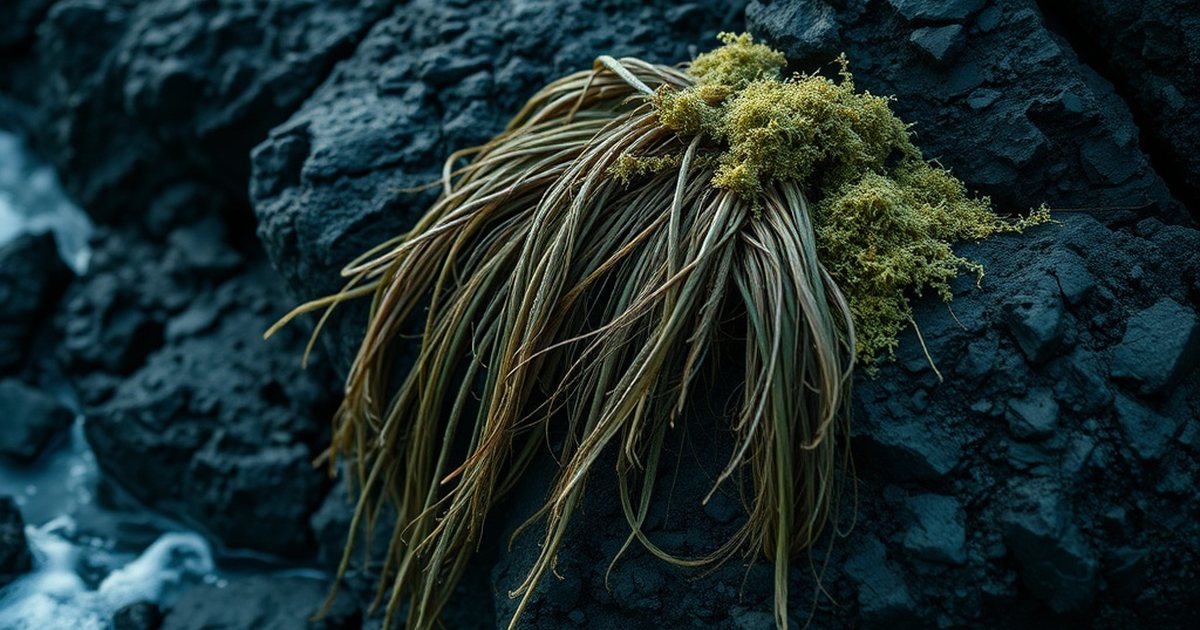
Fucoidan, a sulfated polysaccharide concentrated in brown seaweeds like bladderwrack (not primarily in sea moss, which is a red algae), has more direct inflammatory skin research behind it. A low molecular weight fucoidan fraction reduced inflammation and improved skin barrier deterioration in keratinocytes exposed to fine dust particles in vitro, a model for pollution-triggered skin stress [5].

This is a meaningful distinction for anyone shopping for ‘sea moss and bladderwrack’ skin products: the fucoidan research applies more to bladderwrack than to sea moss itself, since fucoidan content differs substantially between red and brown seaweed species.
Atopic dermatitis and sensitive skin
A 2024 review examined the beneficial roles seaweed-derived compounds may play in atopic dermatitis (eczema), summarizing research on how various algae polysaccharides and extracts have shown anti-inflammatory and barrier-supportive effects relevant to this chronic condition [2]. This is a review of preclinical and early research, not a confirmation that any specific sea moss product treats eczema in humans.
A market-facing review of marine ingredients for sensitive skin similarly found that seaweed and algae-derived compounds are increasingly used in formulations targeting reactive or compromised skin, citing their moisture-retention and calming properties as the rationale, while noting that ingredient-level evidence and finished-product evidence are not the same thing [6].
Where the evidence gap actually is
None of the cited research tested sea moss gel, sea moss capsules, or oral sea moss supplementation for skin outcomes in human clinical trials. The evidence base is built from isolated algae-derived polysaccharides (sacran, neoagarotetraose, fucoidan) tested in cell cultures, animal models, or as formulation ingredients, some sourced from sea moss’s relatives (other red or brown algae) rather than sea moss itself.
This matters because ‘seaweed contains beneficial compounds’ and ‘this jar of sea moss gel from a specific brand will visibly improve your skin’ are very different claims. The former has decent support. The latter has essentially none published on sea moss specifically, topical or oral.
🛒 Where to Buy Sea Moss & Bladderwrack
- CleanseParasites Intra-Cellular Superfood Editor’s Pick
Contains sea moss and bladderwrack alongside black cumin seed and other superfood ingredients. - American Standard Supplements Organic Sea Moss, Bladderwrack & Burdock Root CapsulesLab-tested / studied
capsules, 1200mg sea moss / 1200mg bladderwrack / 225mg burdock root per serving, 120 capsules — High-dose transparent-label blend, vegan, non-GMO, made in USA; clearly stated per-ingredient milligrams rather than a proprietary blend - Secret Element Sea Moss Capsules with Burdock Root, Bladderwrack & Muira Puama
capsules, 120 capsules — Budget-friendly 4-ingredient blend, non-GMO, gluten-free, made in USA - Nutrivein Organic Sea Moss 1600mg with Bladderwrack & Burdock
capsules, 1600mg sea moss per serving plus bladderwrack and burdock — Widely available mid-tier brand, marketed for immune/digestive/thyroid/skin support claims
As an Amazon Associate we earn from qualifying purchases. Quality varies widely — always choose a product with a published third-party test (COA) before buying.

A Note on the Evidence
This article summarizes research on algae-derived compounds broadly, most of which was not conducted on sea moss specifically or in human clinical trials; treat topical seaweed skincare as a plausible-but-unproven category rather than a documented treatment. This is informational only, not medical advice, consult a healthcare provider before using seaweed supplements if you have a thyroid condition, are pregnant, or take thyroid medication.
Frequently Asked Questions
Does sea moss gel actually improve skin when applied topically?
There is no direct clinical research on sea moss gel applied to human skin. The supportive evidence comes from related algae-derived compounds like sacran and neoagarotetraose tested in cell and animal models, which show barrier-repair effects [3][1], but this has not been confirmed for consumer sea moss gel products.
Is bladderwrack better than sea moss for skin?
The fucoidan research, which shows anti-inflammatory and barrier-protective effects, is more relevant to bladderwrack since fucoidan is concentrated in brown seaweeds [5]. Sea moss is a red algae and its main polysaccharide is carrageenan, not fucoidan, so the two shouldn’t be assumed interchangeable for skin benefits.
Can sea moss help with eczema or atopic dermatitis?
A 2024 review found seaweed-derived compounds show anti-inflammatory and barrier-supportive properties relevant to atopic dermatitis [2], but this summarizes preclinical and ingredient-level research, not confirmed clinical outcomes from sea moss products specifically.

Does eating sea moss improve skin from the inside?
None of the cited evidence tested oral sea moss supplementation for skin outcomes. The research covered here is topical or in vitro, involving isolated compounds, not oral consumption of sea moss.
Is sea moss safe to use on skin or take as a supplement?
Topical use in a clean, well-sourced product is generally considered low risk for most people, though allergic reactions are possible with any new ingredient. Oral sea moss and bladderwrack carry iodine content that varies widely and can affect thyroid function, especially in bladderwrack-heavy blends, during pregnancy, or in those on thyroid medication.
What should I look for when buying a sea moss product for skin?
Third-party testing for heavy metals (arsenic, lead, cadmium) matters more than marketing claims, since unregulated wildcrafted sea moss can carry contamination risk depending on harvest waters and processing. A market review of marine ingredients for sensitive skin also notes formulation quality varies significantly across brands [6].
References
- Wu N et al. Neoagarotetraose from Marine Red Algae Ameliorates UVB-Induced Skin Barrier Damage in Mice and HaCaT Keratinocytes. Marine biotechnology (New York, N.Y.) (2026). PMID 42240706
- Kim AR et al. The Beneficial Roles of Seaweed in Atopic Dermatitis. Marine drugs (2024). PMID 39728140
- Masaki H et al. [Function of Sacran as an Artificial Skin Barrier and the Development of Skincare Products]. Yakugaku zasshi : Journal of the Pharmaceutical Society of Japan (2019). PMID 30828013
- Ko SH et al. Antarctic Marine Algae Extracts as a Potential Natural Resource to Protect Epithelial Barrier Integrity. Marine drugs (2022). PMID 36135751
- Fernando IPS et al. Low molecular weight fucoidan fraction ameliorates inflammation and deterioration of skin barrier in fine-dust stimulated keratinocytes. International journal of biological macromolecules (2021). PMID 33220376
- Ferreira MS et al. Marine Ingredients for Sensitive Skin: Market Overview. Marine drugs (2021). PMID 34436303
These statements have not been evaluated by the Food and Drug Administration. This information is not intended to diagnose, treat, cure, or prevent any disease. Content is for informational purposes only and is not medical advice; consult a qualified healthcare provider before starting any supplement. As an Amazon Associate we earn from qualifying purchases.
