Sea moss (Chondrus crispus), a red algae commonly known as Irish moss, is a rich source of sulfated galactans collectively termed carrageenans (primarily kappa-, iota-, and lambda-carrageenan). These high-molecular-weight polysaccharides constitute the structural matrix of the seaweed and have been the focus of pharmacological research for decades due to their ability to interact with viral envelopes and mammalian immune receptors in laboratory settings.
Despite widespread social media claims positioning sea moss as a potent antiviral and immune booster, the scientific evidence supporting these effects in humans remains almost entirely preclinical. This article summarizes the specific in vitro and mechanistic findings for sea moss-derived sulfated polysaccharides, highlights the structural nuances that drive bioactivity, and outlines the significant safety and translational gaps that separate cell-culture data from clinical reality.
Key Takeaways
- In vitro data confirms that lambda- and kappa-carrageenans from Chondrus species can inhibit viral entry (e.g., HIV-1, HSV) and modulate immune signaling (TLR4, macrophage polarization, leukocyte activation), but these effects are highly structure-dependent.
- Native sea moss carrageenans are high-molecular-weight polymers with negligible oral bioavailability; the promising immunomodulatory oligosaccharides cited in research are enzymatically derived fractions not present in significant amounts in whole sea moss gels or powders.
- Zero human clinical trials support the use of sea moss for antiviral protection, immune enhancement, or cancer therapy; all cited evidence is from cell culture, animal models, or pharmaceutical formulation studies.
- Sea moss supplements are unstandardized: iodine content varies by orders of magnitude and poses a clear risk for thyroid dysfunction, while heavy metal contamination (arsenic, lead, cadmium) is a documented hazard in untested wildcrafted batches.
- Third-party testing for iodine content and heavy metals is a non-negotiable safety requirement; consumers with thyroid conditions, on thyroid medication, or who are pregnant should avoid these products unless supervised by a clinician.
The Primary Bioactives: Carrageenan Composition in Chondrus crispus
Chondrus crispus synthesizes a mixture of kappa- and lambda-carrageenan, differing in their degree and position of sulfation on the galactose backbone. Kappa-carrageenan possesses one sulfate group per disaccharide repeating unit and forms strong gels with potassium ions, while lambda-carrageenan carries three sulfate groups per disaccharide, remains non-gelling, and exhibits higher charge density. This structural distinction is not merely chemical trivia; it dictates the polymer’s affinity for viral glycoproteins and host pattern-recognition receptors. Research on the closely related species Chondrus armatus confirms that both kappa- and lambda-fractions isolated from this genus exhibit distinct bioactivity profiles in gastrointestinal cancer models, underscoring that the specific carrageenan phenotype matters for biological outcomes [1].

Commercial sea moss gels and powders contain these native polysaccharides alongside minerals, proteins, and pigments. However, the carrageenan content and kappa/lambda ratio vary significantly based on harvest season, geography, and processing (e.g., washing, drying, heat extraction). Unlike pharmaceutical-grade carrageenan used as a food additive (E407), which is standardized for viscosity and gel strength, whole sea moss supplements are not standardized for polysaccharide profile or sulfation degree. This variability makes it impossible to extrapolate dosages or effects from controlled laboratory studies to a retail product.
Antiviral Mechanisms Observed In Vitro: Entry Inhibition and Synergy
The most replicated antiviral mechanism for carrageenans in vitro is the blockade of viral attachment and entry into host cells. The dense negative charge of sulfated polysaccharides allows them to mimic heparan sulfate proteoglycans—the primary attachment receptors for many enveloped viruses—thereby acting as decoys that bind viral envelope proteins irreversibly or with high affinity. A comparative study evaluating carrageenans from red seaweed families including Gigartinaceae (the taxonomic family containing Chondrus) demonstrated significant inhibition of HIV-1 infection in T-cell lines, with efficacy correlating strongly with sulfate content and molecular weight [2]. This study highlights that not all carrageenans are equal; structural heterogeneity across species and families translates to orders-of-magnitude differences in antiviral potency.
Beyond standalone activity, carrageenans have been investigated as enhancers of conventional antivirals. A 2026 study formulated a complex of carrageenan with acyclovir, encapsulated in liposomes, targeting herpes simplex virus (HSV). The carrageenan-acyclovir complex demonstrated superior antiviral activity compared to free acyclovir in vitro, attributed to sustained release and potential synergistic interference with viral entry [3]. While this represents a sophisticated drug-delivery strategy rather than evidence for eating sea moss, it confirms the mechanistic plausibility of carrageenan-virus interactions. No human clinical trials have tested sea moss or dietary carrageenan for the treatment or prevention of HIV, HSV, or any other viral infection.
Immunomodulatory Pathways: TLR4 Signaling, Leukocyte Activation, and Macrophage Polarization
Lambda-carrageenan has emerged as the most immunomodulatory fraction in preclinical models, largely through interactions with Toll-like receptor 4 (TLR4), a key sensor of bacterial lipopolysaccharide (LPS) that also recognizes endogenous danger signals. A seminal study demonstrated that lambda-carrageenan suppresses allergic airway inflammation in a mouse model via both MyD88-dependent and -independent TLR4 signaling pathways, effectively rebalancing Th2/Th1 responses and reducing IgE production [4]. This finding reveals a nuance often missed in marketing: lambda-carrageenan can be anti-inflammatory in specific contexts, rather than broadly ‘immune-boosting.’

Direct effects on innate immune cells have been documented in non-mammalian and mammalian systems. In vitro exposure of head-kidney leukocytes (the functional equivalent of bone marrow) from gilthead seabream (Sparus aurata) to lambda-carrageenan enhanced phagocytic activity, respiratory burst, and expression of pro-inflammatory cytokines (IL-1β, TNF-α) and antimicrobial peptides [5]. While fish immunology differs from humans, the conservation of TLR pathways suggests a fundamental capacity of lambda-carrageenan to activate myeloid cells. Further supporting this, lambda-carrageenan oligosaccharides (lower molecular weight derivatives) inhibited gastric carcinoma growth in vitro and in vivo partly by repolarizing tumor-associated macrophages from an M2 (pro-tumor) to an M1 (anti-tumor) phenotype and enhancing cytotoxic T-cell infiltration [6]. The kappa/lambda fractions from Chondrus armatus similarly showed anticancer activity in human gastrointestinal cancer cell lines linked to immunomodulatory mechanisms [1].
Structure-Function Relationships: Why Molecular Weight and Sulfation Pattern Dictate Activity
A critical theme across the cited literature is that bioactivity is exquisitely sensitive to fine structure. The HIV-1 inhibition study [2] found that lambda-carrageenans (higher sulfation) generally outperformed kappa/iota forms, but that source-specific variations in 3,6-anhydro-galactose content and glycosidic linkage conformation created significant variance even within the same carrageenan type. The antitumor study [6] utilized lambda-carrageenan *oligosaccharides* (enzymatically depolymerized), which exhibited enhanced bioavailability and macrophage modulation compared to the native high-molecular-weight polymer. This distinction is vital: the native carrageenan in sea moss gel is a large, viscous polymer (100–1000 kDa) that is poorly absorbed across the intestinal epithelium.
Food-grade carrageenan (undegraded) is generally regarded as safe (GRAS) as a thickener, but it is not systemically bioavailable in significant amounts. Degraded carrageenan (poligeenan, <10–20 kDa) is a known inflammatory agent in animal models and is not permitted in food. The oligosaccharides showing promising immunomodulation in cancer models [6] occupy a middle ground—small enough for potential uptake or local immune interaction in the gut-associated lymphoid tissue (GALT), but distinct from both the supplement matrix and the harmful poligeenan. Consuming whole sea moss does not deliver these specific oligosaccharides in defined quantities.
The Translation Gap: From Cell Culture to Clinical Reality
The leap from in vitro antiviral and immunomodulatory data to human health outcomes is bridged by three major chasms: bioavailability, metabolism, and physiological context. Native carrageenans are high-molecular-weight polyanions that resist gastric digestion and pancreatic enzymatic hydrolysis. They transit the small intestine largely intact, reaching the colon where they may be fermented by microbiota into short-chain fatty acids (SCFAs) or excreted. Systemic exposure to the intact polysaccharide—and thus direct interaction with systemic immune cells or circulating viruses—is negligible after oral ingestion.
Furthermore, the concentrations used in vitro (often 1–100 µg/mL) are achieved by direct addition to cell culture media. Achieving equivalent local concentrations at mucosal surfaces (e.g., nasal passages, throat, gut lumen) via oral supplements is theoretically possible for topical effects (e.g., lozenges, nasal sprays), but this is a pharmaceutical formulation question, not a dietary one. No randomized controlled trials (RCTs) exist evaluating Chondrus crispus supplementation for viral incidence, severity, or immune biomarkers in humans. The anticancer and macrophage polarization data [6][1] derive from injected or intraperitoneally administered oligosaccharides in rodent models, not oral feeding of whole sea moss.
Safety Context: Iodine Excess, Heavy Metals, and Thyroid Vulnerability
While the polysaccharide fraction drives the mechanistic research discussed above, the whole sea moss product carries distinct risks unrelated to carrageenan bioactivity. Sea moss accumulates iodine from seawater in variable concentrations, though the highest published seaweed figures come from kelps rather than red algae: seasonal measurements of temperate species place the Rhodophyta, the group that includes Chondrus crispus, on the order of 13 to 127 µg per gram of dry weight [7]. Bladderwrack (Fucus vesiculosus), frequently blended with sea moss in ‘thyroid support’ supplements, contains even higher and more variable iodine levels. Chronic excessive iodine intake can precipitate or exacerbate hypothyroidism, hyperthyroidism (Jod-Basedow phenomenon), or autoimmune thyroiditis (Hashimoto’s), particularly in individuals with pre-existing thyroid nodules, autoimmunity, or those taking levothyroxine.
Additionally, as a marine filter-feeder, wildcrafted sea moss bioaccumulates heavy metals—arsenic (often as inorganic arsenic), lead, and cadmium—depending on harvest water quality. Because supplements are not FDA-approved drugs, they are not required to undergo batch testing for contaminants or iodine standardization prior to sale. Third-party certificates of analysis (CoAs) for iodine speciation and heavy metals are the only reliable quality signal; marketing claims regarding ‘wildcrafted’ or ‘organic’ status do not guarantee safety. Pregnant individuals, those with thyroid disease, and patients on thyroid medication should avoid unstandardized sea moss products unless explicitly cleared by their endocrinologist.

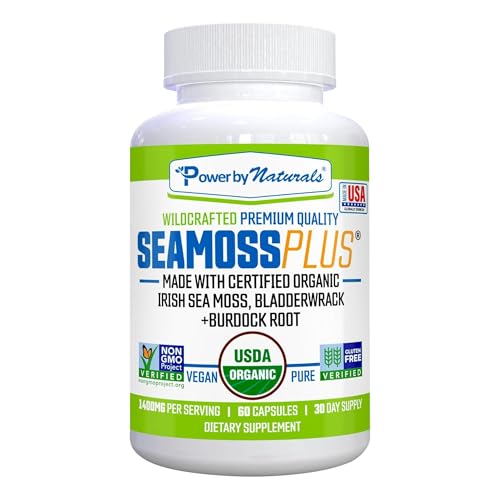
🛒 Where to Buy Sea Moss & Bladderwrack
- CleanseParasites Intra-Cellular Superfood Editor’s Pick
Contains sea moss and bladderwrack alongside black cumin seed and other superfood ingredients. - American Standard Supplements Organic Sea Moss, Bladderwrack & Burdock Root CapsulesLab-tested / studied
capsules, 1200mg sea moss / 1200mg bladderwrack / 225mg burdock root per serving, 120 capsules — High-dose transparent-label blend, vegan, non-GMO, made in USA; clearly stated per-ingredient milligrams rather than a proprietary blend - Secret Element Sea Moss Capsules with Burdock Root, Bladderwrack & Muira Puama
capsules, 120 capsules — Budget-friendly 4-ingredient blend, non-GMO, gluten-free, made in USA - Nutrivein Organic Sea Moss 1600mg with Bladderwrack & Burdock
capsules, 1600mg sea moss per serving plus bladderwrack and burdock — Widely available mid-tier brand, marketed for immune/digestive/thyroid/skin support claims
As an Amazon Associate we earn from qualifying purchases. Quality varies widely — always choose a product with a published third-party test (COA) before buying.

A Note on the Evidence
In vitro findings on sulfated polysaccharides do not translate to proven clinical benefits in humans; sea moss products vary widely in iodine and heavy metal content, posing significant risks for thyroid dysfunction and toxic exposure—consult a qualified healthcare provider before use, especially if pregnant, managing thyroid disease, or taking medication.
Frequently Asked Questions
Does sea moss kill viruses in the human body?
No human evidence supports this. In vitro studies show carrageenans can block viral attachment for HIV-1 and HSV in cell culture [2][3], but these polysaccharides are not absorbed systemically after oral ingestion, making direct antiviral action in vivo unlikely.
Can sea moss boost the immune system?
Lambda-carrageenan demonstrates immunomodulatory effects in laboratory models—suppressing allergic inflammation via TLR4 [4], activating fish leukocytes [5], and repolarizing macrophages in cancer models [6]—but ‘boosting’ is an imprecise term, and no human trials confirm clinical immune enhancement from eating sea moss.
Is lambda-carrageenan more effective than kappa-carrageenan for immunity?
Preclinical data suggests lambda-carrageenan (higher sulfation) has stronger immunomodulatory and certain antiviral profiles [4][6][2], but Chondrus crispus contains a mix of both. The ratio varies by batch, and the native polymers differ from the oligosaccharides used in key studies.
Are carrageenan supplements safe for daily use?
Food-grade (undegraded) carrageenan is GRAS as a thickener, but whole sea moss supplements deliver uncontrolled iodine doses and potential heavy metals. Degraded carrageenan (poligeenan) is harmful and not allowed in food. Safety of high-dose daily sea moss intake is not established, especially for thyroid-vulnerable populations.

Should I take sea moss for COVID-19, flu, or cold prevention?
There is no evidence—mechanistic or clinical—supporting sea moss for prevention or treatment of SARS-CoV-2, influenza, or common colds. In vitro data on other enveloped viruses does not predict efficacy against these specific pathogens in humans.
What should I look for on a sea moss supplement label?
Prioritize products with third-party Certificates of Analysis (CoAs) verifying iodine content (µg per serving) and heavy metal limits (arsenic, lead, cadmium, mercury). Avoid proprietary blends hiding bladderwrack content. ‘Wildcrafted’ or ‘organic’ labels do not guarantee contaminant testing or iodine standardization.
References
- Tiasto VA et al. κ- and λ-Carrageenans from Marine Alga Chondrus armatus Exhibit Anticancer In Vitro Activity in Human Gastrointestinal Cancers Models. Marine drugs (2022). PMID 36547888
- Shulgin A et al. Comparative study of HIV-1 inhibition efficiency by carrageenans from red seaweeds family gigartinaceae, Tichocarpaceae and Phyllophoraceae. Heliyon (2024). PMID 39050420
- Yermak IM et al. Carrageenan-Acyclovir Complex and Its Liposomal Form. International journal of molecular sciences (2026). PMID 42074011
- Tsuji RF et al. Suppression of allergic reaction by lambda-carrageenan: toll-like receptor 4/MyD88-dependent and -independent modulation of immunity. Clinical and experimental allergy : journal of the British Society for Allergy and Clinical Immunology (2003). PMID 12580919
- Campos-Sánchez JC et al. In vitro effects of λ-carrageenin in the head-kidney leucocytes of gilthead seabream (Sparus aurata). Fish & shellfish immunology (2022). PMID 35842113
- Tang M et al. The Antitumor Potential of λ-Carrageenan Oligosaccharides on Gastric Carcinoma by Immunomodulation. Nutrients (2023). PMID 37432179
- Nitschke U et al. Variability in iodine in temperate seaweeds and iodine accumulation kinetics of Fucus vesiculosus and Laminaria digitata (Phaeophyceae, Ochrophyta). Journal of Phycology (2018). PMID 29130494
These statements have not been evaluated by the Food and Drug Administration. This information is not intended to diagnose, treat, cure, or prevent any disease. Content is for informational purposes only and is not medical advice; consult a qualified healthcare provider before starting any supplement. As an Amazon Associate we earn from qualifying purchases.
