Sea moss (Chondrus crispus, Irish moss) and bladderwrack (Fucus vesiculosus) are mineral-dense red and brown seaweeds traditionally eaten as food and used in folk remedies. Social media claims now promote sea moss gel masks and capsules for acne, collagen support, and skin barrier repair, but human clinical trials specifically on sea moss for these endpoints are essentially absent.
The proposed skin-relevant mechanisms center on sulfated polysaccharides (carrageenan in sea moss; fucoidan in bladderwrack), trace minerals (zinc, sulfur, selenium), and vitamins that may influence hydration, inflammation, and matrix remodeling. However, most cited research involves related brown seaweed extracts, isolated fucoidan fractions, or mineral-rich waters — not whole sea moss gel or supplements — and iodine variability raises safety concerns for thyroid health.
Key Takeaways
- No human clinical trials evaluate sea moss (Chondrus crispus) or bladderwrack (Fucus vesiculosus) specifically for acne, collagen synthesis, or barrier repair — topical or oral.
- Proposed mechanisms (fucoidan anti-inflammatory effects, carrageenan hydration, mineral cofactors) are supported only by related seaweed extracts, isolated fractions, or mineral-water studies, not whole sea moss products.
- Topical sea moss gel acts mainly as a carrageenan hydrogel: temporary hydration and occlusion, not pharmacologic barrier restoration.
- Oral supplements carry significant iodine variability and heavy metal contamination risk; thyroid dysfunction can worsen skin outcomes.
- Third-party testing for iodine content and heavy metals is the minimum quality benchmark — marketing claims are not.
Proposed Mechanisms: Polysaccharides, Minerals, and Inflammation Pathways
Sea moss is rich in carrageenan-family galactans, while bladderwrack contributes fucoidan — both are sulfated polysaccharides studied for bioactivity. In vitro, a low-molecular-weight fucoidan fraction reduced pro-inflammatory cytokine release and improved markers of barrier integrity in human keratinocytes challenged with fine-dust particulate matter [1]. This suggests a plausible pathway by which brown seaweed polysaccharides could mitigate environmentally triggered barrier stress.
Mineral content (zinc, sulfur, magnesium) is often highlighted for acne and barrier roles. Dead Sea mineral research shows that high-mineral waters can modulate skin inflammation, enhance hydration, and support barrier recovery, though the mineral profile differs from sea moss [2]. No controlled trial has tested whether the mineral matrix in whole sea moss gel or powder translates to comparable skin effects.

Acne pathophysiology involves IL-17/γδ T-cell axis amplification during barrier disruption [3]. While fucoidan and carrageenan derivatives show anti-inflammatory properties in cell and animal models, direct evidence that sea moss interrupts this axis in human acne is lacking.
Topical Gel Masks: Carrageenan as a Film-Former and Hydration Agent
Sea moss gel is essentially a carrageenan hydrogel. Carrageenans are widely used in cosmetics as thickeners, stabilizers, and film-formers that can provide immediate occlusion and water-binding — effects that may temporarily improve stratum corneum hydration and reduce transepidermal water loss (TEWL). These are physical, not pharmacologic, actions.
A 2025 study on a proprietary ingredient (Encorelane) demonstrated improved barrier function and reduced aging signs in sensitive skin [4]. While this illustrates that barrier-supportive topical actives can be measured clinically, Encorelane is not sea moss, and no comparable trial exists for raw or commercial sea moss gel masks.
Anecdotal reports of reduced redness or breakouts after sea moss mask use may reflect temporary hydration, placebo, or concurrent routine changes. Without controlled split-face or vehicle-controlled studies, causality cannot be assigned to sea moss polysaccharides or minerals.

Oral Supplementation: Systemic Delivery vs. Iodine Risk
Oral sea moss or bladderwrack supplements aim to deliver minerals (zinc, selenium, sulfur) and polysaccharides systemically. Zinc and selenium have established roles in skin antioxidant defense and immune regulation, but the dose in a typical sea moss capsule is unstandardized and often low relative to studied therapeutic doses.

Bladderwrack is a concentrated iodine source. Iodine excess can trigger or worsen thyroid dysfunction — especially in people with autoimmunity, nodular disease, pregnancy, or on levothyroxine — and thyroid status directly affects skin (dryness, hair loss, impaired healing). Wildcrafted sea moss also carries heavy metal contamination risk (arsenic, lead, cadmium) depending on harvest waters and processing, though the available accumulation data comes from Sargassum species rather than sea moss itself [5]. Third-party testing is essential but not universal.
A review of Sargassum species (brown seaweeds) highlights diverse bioactive compounds with potential skin benefits, but emphasizes that composition varies by species, season, and location [5]. This variability applies equally to bladderwrack and sea moss, making dose-response predictions unreliable.
Collagen Claims: Indirect Support at Best
Sea moss is sometimes marketed as a ‘plant-based collagen’ or collagen booster. It contains no collagen (an animal protein). Its vitamin C and mineral cofactors (copper, zinc) are required for collagen synthesis, but so are many foods. No human trial shows sea moss intake increases skin collagen density or reduces wrinkles.
Marine collagen peptides (from fish skin) have demonstrated bioactivity in animal models of barrier disruption and inflammation [6], but this is distinct from seaweed polysaccharides. Conflating marine collagen with sea moss misrepresents the evidence.
Acne: Theoretical Anti-Inflammatory Potential, No Clinical Proof
Fucoidan’s ability to dampen keratinocyte inflammation in a particulate-matter model [1] and the known role of IL-17 amplification in barrier-driven inflammation [3] provide a mechanistic rationale for studying brown seaweed extracts in acne. However, acne is multifactorial (sebum, C. acnes, follicular hyperkeratinization, hormones), and no human trial has tested sea moss or bladderwrack — topical or oral — for acne lesions, severity, or relapse.
Topical carrageenan gels are non-comedogenic in standard use, but occlusion from thick masks could theoretically worsen folliculitis in oily, acne-prone skin. Individual response varies.
Barrier Repair: Hydration vs. Structural Restoration
Barrier repair requires lipid replenishment (ceramides, cholesterol, fatty acids), not just hydration. Sea moss gel provides humectant and occlusive effects that may support barrier recovery indirectly by reducing TEWL during the repair process. This is similar to any well-formulated hydrogel.
The Encorelane study [4] shows that specific, characterized actives can measurably improve barrier metrics in sensitive skin. Sea moss gel lacks such characterization: polysaccharide molecular weight, sulfation degree, mineral content, and contaminant profile differ batch to batch. Without standardization, reproducibility is low.

🛒 Where to Buy Sea Moss & Bladderwrack

- CleanseParasites Intra-Cellular Superfood Editor’s Pick
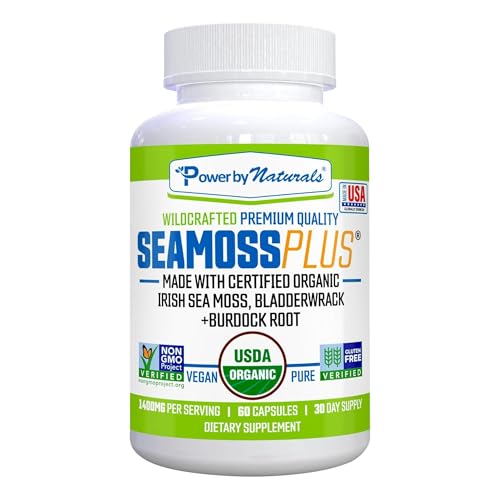
Contains sea moss and bladderwrack alongside black cumin seed and other superfood ingredients. - American Standard Supplements Organic Sea Moss, Bladderwrack & Burdock Root CapsulesLab-tested / studied
capsules, 1200mg sea moss / 1200mg bladderwrack / 225mg burdock root per serving, 120 capsules — High-dose transparent-label blend, vegan, non-GMO, made in USA; clearly stated per-ingredient milligrams rather than a proprietary blend - Secret Element Sea Moss Capsules with Burdock Root, Bladderwrack & Muira Puama
capsules, 120 capsules — Budget-friendly 4-ingredient blend, non-GMO, gluten-free, made in USA - Nutrivein Organic Sea Moss 1600mg with Bladderwrack & Burdock
capsules, 1600mg sea moss per serving plus bladderwrack and burdock — Widely available mid-tier brand, marketed for immune/digestive/thyroid/skin support claims
As an Amazon Associate we earn from qualifying purchases. Quality varies widely — always choose a product with a published third-party test (COA) before buying.
A Note on the Evidence
Sea moss and bladderwrack are not standardized; iodine and heavy metal content vary widely. People with thyroid disease, iodine sensitivity, pregnancy, or on thyroid medication should avoid or use only under medical supervision. No supplement replaces evidence-based dermatologic care for acne or barrier disorders.
Frequently Asked Questions
Does sea moss gel help acne?
No clinical evidence supports sea moss gel for acne. Fucoidan from brown seaweed reduced inflammation in keratinocytes exposed to particulate matter [1], but this has not been tested in human acne. Thick occlusive masks may worsen breakouts in some people.
Can taking sea moss supplements improve skin collagen?
Sea moss contains no collagen. It provides vitamin C and trace minerals (copper, zinc) that are cofactors for collagen synthesis, but so do many foods. No trial shows sea moss intake increases skin collagen; the collagen-peptide trials that do show benefit used fish-derived peptides, not seaweed [6].

Is topical sea moss safe for sensitive skin?
Carrageenan hydrogels are generally well-tolerated as cosmetic vehicles, but raw or poorly preserved gels risk microbial contamination. No standardized safety data exists for homemade or unregulated commercial sea moss masks. Patch test first.
Why is iodine content a concern with sea moss and bladderwrack?
Bladderwrack is very high in iodine; sea moss varies widely. Excess iodine can trigger hyperthyroidism, hypothyroidism, or autoimmunity — especially with existing thyroid disease, pregnancy, or levothyroxine use. Thyroid dysfunction directly impairs skin barrier and healing.
How do I choose a safer sea moss product?
Look for third-party certificates of analysis (COA) showing iodine content per serving and heavy metal limits (arsenic, lead, cadmium). Avoid products without batch testing. Prefer cultivated over wildcrafted if water quality is unverified. Consult a clinician if you have thyroid conditions.
Are Dead Sea minerals similar to sea moss minerals?
Dead Sea water has a unique high-magnesium, high-bromide profile studied for barrier and inflammatory skin conditions [2]. Sea moss mineral composition differs and is unstandardized; effects cannot be extrapolated.
References
- Fernando IPS et al. Low molecular weight fucoidan fraction ameliorates inflammation and deterioration of skin barrier in fine-dust stimulated keratinocytes. International journal of biological macromolecules (2021). PMID 33220376
- Portugal-Cohen M et al. Dead Sea minerals: New findings on skin and the biology beyond. Experimental dermatology (2019). PMID 30903724
- Polese B et al. Prostaglandin E(2) amplifies IL-17 production by γδ T cells during barrier inflammation. Cell reports (2021). PMID 34320346
- Wang L et al. Efficacy of Encorelane in Enhancing Barrier Function and Reducing Aging Signs in Sensitive Skin. Journal of cosmetic dermatology (2025). PMID 40952030
- Lee MK et al. The Beneficial Roles of Sargassum spp. in Skin Disorders. Journal of medicinal food (2024). PMID 38526569
- Guo X et al. Cod (Gadus) skin collagen peptide powder reduces inflammation, restores mucosal barrier function, and inhibits fibrosis in dextran sodium sulfate-induced colitis in mice. Journal of ethnopharmacology (2023). PMID 37277083
These statements have not been evaluated by the Food and Drug Administration. This information is not intended to diagnose, treat, cure, or prevent any disease. Content is for informational purposes only and is not medical advice; consult a qualified healthcare provider before starting any supplement. As an Amazon Associate we earn from qualifying purchases.
