Sea moss (Chondrus crispus) and bladderwrack (Fucus vesiculosus) are sold as powders, capsules, gels, and blended formulas, but labels often leave out the details that determine safety and quality. Because these products are regulated as dietary supplements rather than drugs, there is no mandatory standardization for iodine content, heavy-metal limits, or species verification.
This guide walks through what to look for on a supplement facts panel and accompanying documentation so you can compare products objectively and avoid common pitfalls such as undisclosed iodine doses, species misidentification, and contamination risk.
Key Takeaways
- Verify the Latin species name (Chondrus crispus or Fucus vesiculosus) and plant part used.
- Require a quantified iodine amount per serving and compare it to the 1,100 µg/day upper limit.
- Demand a lot-specific certificate of analysis for arsenic, lead, cadmium, and mercury.
- Prefer farmed or certified wildcrafted sources with transparent harvest locations.
- Avoid products with disease-treatment claims or missing FDA disclaimer language.
Confirm the Species and Plant Part
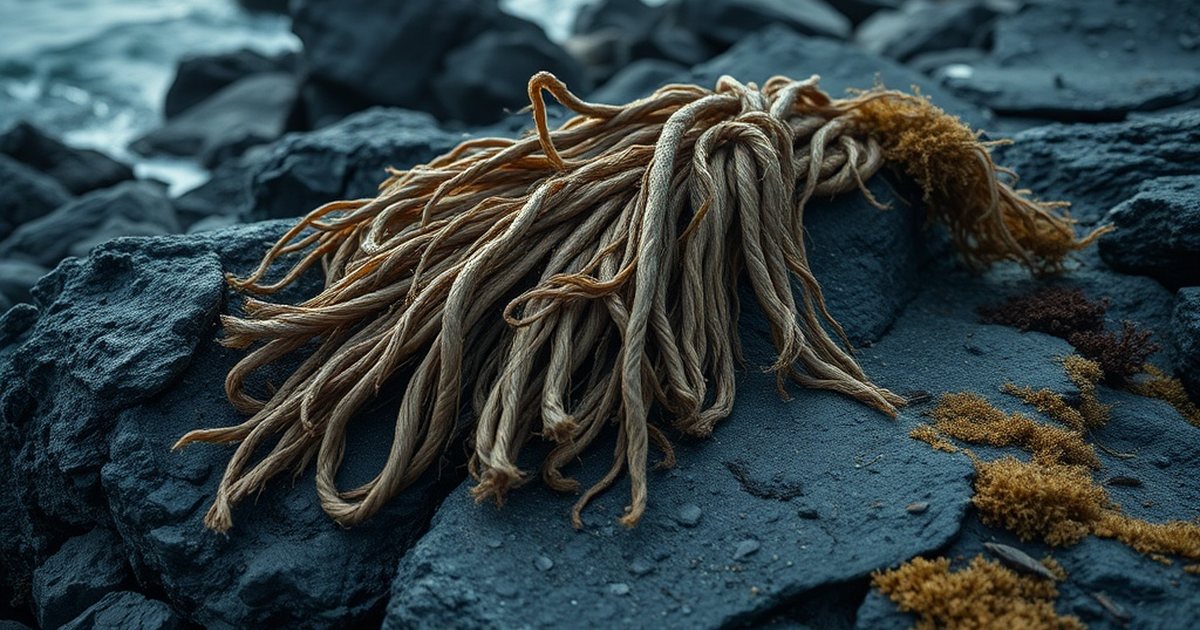
True sea moss is Chondrus crispus, a red alga that grows on rocky Atlantic coasts. Bladderwrack is Fucus vesiculosus, a brown alga with distinctive air bladders. Some products label “Irish moss” but contain Gracilaria or other red algae farmed in warmer waters; these have different polysaccharide profiles and typically lower iodine concentrations. The label should state the Latin binomial and whether the whole thallus or only the gel-extracted fraction is used.
Identify the Harvest Origin and Cultivation Method
Wildcrafted seaweed absorbs whatever is in the surrounding water, including arsenic, lead, cadmium, and mercury. Products should disclose the country and, ideally, the specific region or certification body (e.g., organic aquaculture standards from the EU, Canada, or USDA). Farmed seaweed grown in monitored, food-grade waters generally carries lower heavy-metal risk than wild harvest from untested sites. If the label only says “Atlantic” or “Caribbean” without further detail, request a certificate of analysis (COA) from the manufacturer.

Evaluate Iodine Disclosure and Serving Context
Iodine content in seaweed varies by species, season, and processing, and species is by far the largest of those terms. A seasonal survey of eleven temperate macroalgae placed the kelps at roughly 10 to 100 micromoles per gram dry weight (about 1,300 to 12,700 µg per gram), the fucoids such as bladderwrack an order of magnitude below that (about 130 to 1,300), and the red algae, the group Chondrus crispus belongs to, an order lower again (about 13 to 130)[1]. Direct measurement agrees: across 30 retail samples of dulse and Irish moss, the Irish moss averaged 3.86 mg per kg dry weight, under 4 µg per gram[2]. A sea moss product whose label implies kelp-order iodine is describing a blend or a misidentified species. A responsible label lists iodine per serving in micrograms and references the daily value (150 µg for adults) and the tolerable upper intake level (1,100 µg) [3]. Products that provide only “naturally occurring iodine” without a quantified amount make it impossible to assess safety, especially for people with thyroid disease, those on levothyroxine, or pregnant individuals [4].
Check for Third-Party Testing and Heavy-Metal Limits
Reputable brands publish COAs from ISO-accredited labs testing each lot for arsenic (inorganic), lead, cadmium, and mercury. Look for results reported in parts per million (ppm) or micrograms per serving, compared to recognized limits such as USP <2232>, California Prop 65, or AHPA guidance. A QR code or batch number linking to the COA is stronger than a generic “tested for purity” claim. If no COA is available, treat the product as unverified.
Distinguish Whole Seaweed from Extracts and Blends
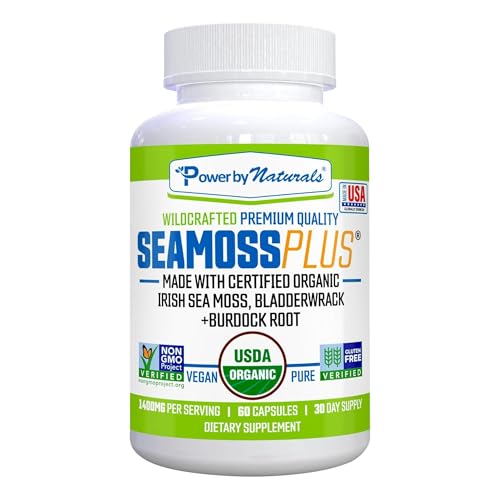
Some supplements use carrageenan-extracted residue (mostly fiber) or standardized fucoidan extracts rather than whole dried seaweed. These differ in mineral density, polysaccharide content, and iodine level. Blends that combine sea moss, bladderwrack, and burdock root or other herbs further complicate dosing. The ingredient list should specify the form (whole powder, extract ratio, concentrate) and the amount of each component per serving so you can calculate total iodine and polysaccharide intake.
Watch for Red-Flag Marketing Language
Claims such as “92 minerals,” “cures thyroid issues,” “detoxifies heavy metals,” or “FDA approved” are not compliant with DSHEA regulations for dietary supplements. Structure/function claims (e.g., “supports thyroid health”) must carry the standard disclaimer: “This statement has not been evaluated by the FDA. This product is not intended to diagnose, treat, cure, or prevent any disease.” Absence of this disclaimer, or language implying disease treatment, indicates regulatory non-compliance and often correlates with poorer quality control.
🛒 Where to Buy Sea Moss & Bladderwrack

- CleanseParasites Intra-Cellular Superfood Editor’s Pick
Contains sea moss and bladderwrack alongside black cumin seed and other superfood ingredients. - American Standard Supplements Organic Sea Moss, Bladderwrack & Burdock Root Capsules
capsules, 1200mg sea moss / 1200mg bladderwrack / 225mg burdock root per serving, 120 capsules — High-dose transparent-label blend, vegan, non-GMO, made in USA; clearly stated per-ingredient milligrams rather than a proprietary blend - Secret Element Sea Moss Capsules with Burdock Root, Bladderwrack & Muira Puama
capsules, 120 capsules — Budget-friendly 4-ingredient blend, gluten-free, made in USA - Nutrivein Organic Sea Moss 1600mg with Bladderwrack & Burdock
capsules, 1600mg sea moss per serving plus bladderwrack and burdock — Widely available mid-tier brand, marketed for immune/digestive/thyroid/skin support claims
As an Amazon Associate we earn from qualifying purchases. Quality varies widely — always choose a product with a published third-party test (COA) before buying.
A Note on the Evidence
Seaweed supplements are not standardized; iodine content varies widely and can exacerbate thyroid conditions [5]. Heavy-metal contamination depends on harvest waters and processing. This information is educational and not medical advice; consult a qualified healthcare professional before use, especially if you have a thyroid disorder, take medication, or are pregnant.
Frequently Asked Questions
What is the difference between Chondrus crispus and Gracilaria?
Chondrus crispus is a cold-water red alga traditionally called Irish moss; Gracilaria species are warm-water farmed red algae often sold as “sea moss” but with different gel properties and typically lower iodine content. The label should specify which species is used.
How much iodine is too much from sea moss supplements?
The tolerable upper intake level for iodine is 1,100 µg per day for adults. A single serving of some bladderwrack-heavy products can exceed this limit, which may trigger or worsen thyroid dysfunction, especially in susceptible individuals.
Can I rely on a 'proprietary blend' listing for iodine content?
No. Proprietary blends hide the individual amounts of each ingredient, making it impossible to calculate iodine exposure. Choose products that disclose the milligrams of each seaweed per serving.
Does organic certification guarantee low heavy metals?
Organic standards restrict certain farming inputs but do not automatically guarantee low environmental contaminants. Always request the heavy-metal COA regardless of organic status.
Who should avoid sea moss and bladderwrack supplements?
People with diagnosed thyroid disorders (Hashimoto’s, Graves’, nodules), those taking thyroid medication, pregnant or breastfeeding individuals, and anyone with iodine sensitivity should consult a healthcare provider before use.
Is sea moss gel safer than capsules or powders?
Gel preparation (soaking and blending) may reduce iodine somewhat through water discard, but the effect is inconsistent. Contamination risk depends on the raw material, not the final form. All forms require the same sourcing and testing scrutiny.
References
- Nitschke U et al. Variability in iodine in temperate seaweeds and iodine accumulation kinetics of Fucus vesiculosus and Laminaria digitata (Phaeophyceae, Ochrophyta). Journal of Phycology (2018). PMID 29130494
- Darias-Rosales J et al. Risk assessment of iodine intake from the consumption of red seaweeds (Palmaria palmata and Chondrus crispus). Environmental Science and Pollution Research International (2020). PMID 32803579
- Teas J et al. Variability of iodine content in common commercially available edible seaweeds. Thyroid (2004). PMID 15588380
- Wu W et al. Adverse effects on the thyroid of Chinese pregnant women exposed to long-term iodine excess: optimal and safe tolerable upper intake levels of iodine. Nutrients (2023). PMID 37049475
- Roleda MY et al. Iodine content in bulk biomass of wild-harvested and cultivated edible seaweeds: inherent variations determine species-specific daily allowable consumption. Food Chemistry (2018). PMID 29548461
These statements have not been evaluated by the Food and Drug Administration. This information is not intended to diagnose, treat, cure, or prevent any disease. Content is for informational purposes only and is not medical advice; consult a qualified healthcare provider before starting any supplement. As an Amazon Associate we earn from qualifying purchases.

Pingback: Sea Moss Gel vs Capsules: Quality and Safety
Pingback: Sea Moss Certifications: Organic, MSC, and Quality
Pingback: Sea Moss Forms Compared: Bioavailability and Cost
Pingback: Heavy Metals in Sea Moss: Arsenic, Lead, Cadmium