Sea moss (Chondrus crispus), a red seaweed traditionally consumed in coastal diets, has gained attention for its sulfated polysaccharide content — primarily carrageenan-family compounds — which resist human digestion and reach the colon intact. There, they may serve as fermentable substrates for beneficial gut bacteria, a hallmark of prebiotic activity.
Research to date consists mainly of animal studies, in vitro fermentation models, and narrative reviews; human clinical trials specifically testing whole sea moss or its isolated polysaccharides for prebiotic outcomes are lacking. This article summarizes the available evidence, explains the proposed mechanisms, and highlights important safety considerations including iodine variability and heavy metal contamination.
Key Takeaways
- Sea moss (Chondrus crispus) contains sulfated polysaccharides (carrageenans) that resist human digestion and can be fermented by gut microbes in animal and in vitro models, producing beneficial SCFAs and shifting microbiota composition.
- Evidence for prebiotic effects comes from rat studies, poultry models, and human colonic fermentation simulators — not from human clinical trials.
- Structural variability (sulfation degree, molecular weight) means prebiotic activity is not uniform across all sea moss products; standardized extracts are needed for reliable research and dosing.
- Iodine content in sea moss supplements is highly variable and can pose thyroid risks, especially for people with thyroid conditions, on thyroid medication, or pregnant.
- Heavy metal contamination (arsenic, lead, cadmium) is a documented concern in wildcrafted sea moss; third-party testing for purity and iodine specification should guide product selection.
What Are Sulfated Polysaccharides in Sea Moss?
Chondrus crispus is rich in sulfated galactans — chiefly kappa- and lambda-carrageenan — which are high-molecular-weight, highly sulfated polysaccharides that form the structural matrix of the seaweed’s cell walls. Unlike digestible carbohydrates, these polysaccharides resist hydrolysis by human digestive enzymes and arrive in the large intestine largely intact, where they can be fermented by resident microbes. This resistance to host digestion and availability for microbial fermentation aligns with the current scientific definition of a prebiotic: a substrate selectively utilized by host microorganisms conferring a health benefit.
The degree of sulfation, molecular weight, and glycosidic linkage pattern influence both the fermentability and the specific bacterial taxa stimulated. A 2020 review of algal polysaccharides as prebiotics noted that structural heterogeneity across seaweed species and even harvest batches leads to variable prebiotic effects, underscoring the need for standardized extracts in research [1].

Animal Evidence: Rat and Poultry Models
In a 2015 controlled study, rats fed a diet supplemented with cultivated Chondrus crispus (2.5% supplementation) showed differing colonic microbiota composition compared to controls, including increased Bifidobacterium breve, and higher concentrations of short-chain fatty acids (SCFAs) — particularly acetate, propionate, and butyrate — which are key microbial metabolites linked to gut barrier integrity and immune modulation [2]. The same study reported enhanced host immune parameters, including increased secretory IgA and altered cytokine profiles, suggesting a gut-immune axis mediated by the seaweed’s polysaccharides.
A separate study in layer hens found that dietary inclusion of Chondrus crispus (0.5%, 1% or 2%) altered gut microbiota composition, reducing Clostridium perfringens while increasing beneficial bacteria such as Bifidobacterium longum, and improved egg quality parameters [3]. While poultry physiology differs from humans, these findings support the concept that Chondrus crispus polysaccharides can modulate gut microbial ecology in vivo.
In Vitro Human Gut Models
A 2025 study used a validated in vitro human colonic fermentation model (simulating the proximal, transverse, and distal colon) to test three red seaweeds, including Chondrus crispus. Fermentation of Chondrus crispus alongside other red seaweeds in an in vitro gut model increased beneficial species such as Akkermansia muciniphila and, with some seaweeds, Bacteroides ovatus, a species associated with fiber degradation [4]. The authors noted that the observed effects were polysaccharide-dependent and varied between seaweed species, highlighting the importance of species-specific characterization.
Earlier work (2019) evaluated oligosaccharides derived from enzymatic hydrolysis of three marine algae (not including Chondrus crispus) and demonstrated prebiotic potential in vitro, with selective stimulation of bifidobacteria and lactobacilli and SCFA production [5]. While not directly testing sea moss, this study supports the broader principle that algal-derived oligosaccharides can exhibit prebiotic activity when rendered more fermentable through controlled hydrolysis.

Proposed Mechanisms: From Polysaccharide to Microbial Metabolite
The prebiotic effects attributed to sea moss are thought to follow a sequential pathway: (1) sulfated polysaccharides escape upper GI digestion; (2) specific gut bacteria — notably Bacteroides species equipped with polysaccharide utilization loci (PULs) encoding sulfatases and glycoside hydrolases — degrade the polymers; (3) primary degraders release oligosaccharides and monosaccharides that cross-feed secondary fermenters; (4) collective fermentation yields SCFAs (acetate, propionate, butyrate), which lower luminal pH, inhibit pathogens, nourish colonocytes, and signal through host receptors (e.g., GPR43, GPR109A) to regulate immunity and metabolism.
The 2020 review emphasized that algal polysaccharides’ high sulfation density can both enhance selectivity for specialized degraders and, paradoxically, hinder fermentation if sulfation exceeds the enzymatic capacity of the microbiota [1]. This may explain why some studies report dose-dependent or biphasic effects, and why enzymatic pre-treatment (as in PMID 30889794) can increase prebiotic efficacy.
Gaps Between Current Evidence and Wellness Claims
Despite mechanistic plausibility and supportive animal/in vitro data, no randomized controlled trials have tested whole sea moss or standardized Chondrus crispus extracts for prebiotic outcomes in humans. Social media claims often extrapolate from rodent microbiota shifts or SCFA measurements to broad assertions about “healing the gut,” “reducing bloating,” or “balancing the microbiome” — outcomes not yet validated in human intervention studies.
Additionally, the sulfated polysaccharides in sea moss (carrageenans) are distinct from the fucoidan found in brown seaweeds like bladderwrack (Fucus vesiculosus); conflating the two obscures their different structures, fermentability, and biological activities. The 2020 review explicitly cautioned that “algal polysaccharides are not a monolithic group” and that prebiotic potential must be established for each specific polysaccharide preparation [1].
Safety, Variability, and Practical Considerations
Sea moss supplements are not standardized: iodine content varies widely (from <100 to >5,000 mcg per serving) depending on species, harvest location, season, and processing. Excess iodine can trigger or worsen thyroid dysfunction, particularly in individuals with pre-existing thyroid disease, those on levothyroxine, or during pregnancy. Bladderwrack-heavy blends amplify this risk.
Unregulated wildcrafted sea moss has been found to carry heavy metals (arsenic, lead, cadmium) at levels exceeding safety thresholds in some batches, contingent on harvest water quality and drying methods. Third-party testing for iodine specification and heavy metals is essential; marketing claims about “wildcrafted” or “organic” do not guarantee purity. The FDA has not evaluated sea moss for the treatment, cure, or prevention of any disease.
🛒 Where to Buy Sea Moss & Bladderwrack
- CleanseParasites Intra-Cellular Superfood Editor’s Pick
Contains sea moss and bladderwrack alongside black cumin seed and other superfood ingredients. - American Standard Supplements Organic Sea Moss, Bladderwrack & Burdock Root Capsules
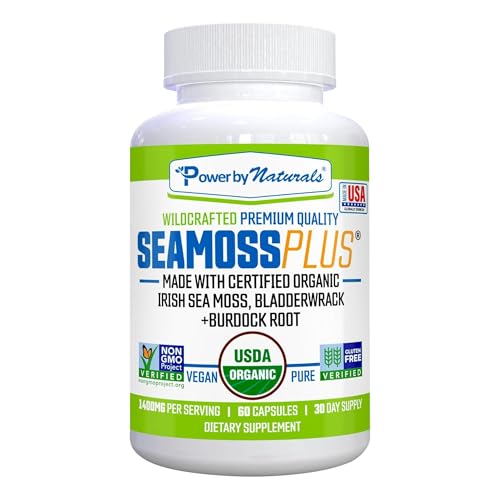
capsules, 1200mg sea moss / 1200mg bladderwrack / 225mg burdock root per serving, 120 capsules — High-dose transparent-label blend, vegan, non-GMO, made in USA; clearly stated per-ingredient milligrams rather than a proprietary blend - Secret Element Sea Moss Capsules with Burdock Root, Bladderwrack & Muira Puama
capsules, 120 capsules — Budget-friendly 4-ingredient blend, gluten-free, made in USA - Nutrivein Organic Sea Moss 1600mg with Bladderwrack & Burdock
capsules, 1600mg sea moss per serving plus bladderwrack and burdock — Widely available mid-tier brand, marketed for immune/digestive/thyroid/skin support claims
As an Amazon Associate we earn from qualifying purchases. Quality varies widely — always choose a product with a published third-party test (COA) before buying.

A Note on the Evidence
Current prebiotic evidence for sea moss is limited to animal and in vitro models; no human trials confirm gut health benefits. Iodine variability and heavy metal contamination pose real risks — especially for thyroid-vulnerable populations. Consult a healthcare professional before using sea moss supplements.
Frequently Asked Questions
Does sea moss act as a prebiotic in humans?
No human clinical trials have tested sea moss for prebiotic effects. Evidence comes from a rat study showing increased Bifidobacterium and SCFAs [2], and an in vitro human gut model showing microbiota shifts and SCFA production with Chondrus crispus [4].
What compounds in sea moss are responsible for prebiotic activity?
Sulfated galactans — primarily kappa- and lambda-carrageenan — are the main polysaccharides in Chondrus crispus that resist digestion and reach the colon for microbial fermentation [1].
Can sea moss help with bloating or IBS?
There is no clinical evidence supporting sea moss for bloating, IBS, or other digestive symptoms. Fermentation of sulfated polysaccharides produces gas as a byproduct, which could worsen bloating in sensitive individuals.

Is sea moss safe for people with thyroid conditions?
Sea moss iodine content varies widely and can exceed safe limits. Excess iodine may trigger or worsen thyroid dysfunction, especially in those with existing thyroid disease, on levothyroxine, or pregnant. Consult a clinician before use.
How do I choose a safer sea moss supplement?
Look for products with third-party certificates of analysis specifying iodine content per serving and testing for arsenic, lead, and cadmium. Avoid products making disease-treatment claims; the FDA has not evaluated sea moss for any medical use.
Are sea moss and bladderwrack the same for gut health?
No. Sea moss (red seaweed) provides carrageenan-family sulfated galactans; bladderwrack (brown seaweed) provides fucoidan and laminarin — different polysaccharides with distinct structures, fermentability, and iodine profiles. They should not be conflated.
References
- Gotteland M et al. The Pros and Cons of Using Algal Polysaccharides as Prebiotics. Frontiers in nutrition (2020). PMID 33072794
- Liu J et al. Prebiotic effects of diet supplemented with the cultivated red seaweed Chondrus crispus or with fructo-oligo-saccharide on host immunity, colonic microbiota and gut microbial metabolites. BMC complementary and alternative medicine (2015). PMID 26271359
- Kulshreshtha G et al. Feed supplementation with red seaweeds, Chondrus crispus and Sarcodiotheca gaudichaudii, affects performance, egg quality, and gut microbiota of layer hens. Poultry science (2014). PMID 25352682
- López-Santamarina A et al. Modulatory effects of red seaweeds (Palmaria palmata, Porphyra umbilicalis and Chondrus crispus) on the human gut microbiota via an in vitro model. Food chemistry (2025). PMID 39987804
- Han ZL et al. Evaluation of Prebiotic Potential of Three Marine Algae Oligosaccharides from Enzymatic Hydrolysis. Marine drugs (2019). PMID 30889794
These statements have not been evaluated by the Food and Drug Administration. This information is not intended to diagnose, treat, cure, or prevent any disease. Content is for informational purposes only and is not medical advice; consult a qualified healthcare provider before starting any supplement. As an Amazon Associate we earn from qualifying purchases.

Pingback: Sea Moss Antiviral and Immune Effects: In-Vitro Data